Choose timezone
Your profile timezone:
The XIX International Conference on Interconnections between Particle Physics and Cosmology (PPC2026)/4th Gordon Godfrey Workshop on Astroparticle Physics took place on 31 August - 4 September 2026 at The University of New South Wales (UNSW) in Sydney, Australia, hosted by the Sydney Consortium for Particle Physics and Cosmology. It brought together a wide range of theorists and experimentalists to discuss the latest ideas and results in particle physics and cosmology.
The meeting featured invited plenary talks covering topics of recent interest, as well as a number of parallel sessions to provide an opportunity for junior scientists to present their work.
A public talk was given by Prof Tamara Davis (U Queensland) on Tuesday 1 September titled "Peering over the Edge of the Universe".
We thank everyone for their contributions and look forward to seeing you again in Sydney in the future.

Plenary speakers:
Francesca Chadha-Day (Durham U, IPPP)
Spencer Collaviti (EPFL)
Matt Dolan (U Melbourne)
Richard Easther (U Auckland)
Francesco Filippini (INFN Bologna)
Kaori Fuyuto (KEK)
Fei Gao (Tsinghua U)
Srubabati Goswami (PRL Ahmedabad)
Koichi Hamaguchi (Tokyo U)
Cullan Howlett (U Queensland)
Tao Han (U Pittsburgh)
Robin Leboucher (U British Columbia)
Jia Liu (Peking U)
Simona Murgia (UC Irvine)
Shohei Okawa (APCTP)
Harish Potti (U Sydney)
Christian Reichardt (U Melbourne)
Nick Rodd (LBNL)
Philipp Schicho (U Geneva)
Elizabeth Simmons (UC San Diego)
Anna Suliga (NYU)
Tim Tait (UC Irvine)
Marco Taoso (INFN Turin)
Takuya Tashiro (U Tokyo)
Eric Thrane (Monash U)
Jorinde van de Vis (CERN)
Liantao Wang (U Chicago)
Wei Wang (SYSU)
Jingqiang Ye (CUHK-Shenzhen)
Please do not respond to any communication purporting to assist you in the organisation of any aspect of your travel (visa application, flights, accommodation, etc.). It's a scam.
Using the monodromy-type coupling between the axion monopole, we construct a natural model for dark matter-dark energy interaction. I will overview the challenge in realizing such a scenario in general, and describe why our setup overcomes those difficulties. I will also present the main observational implications for this model.
With the milestone discovery of the Higgs boson at the LHC, precision measurements of the electroweak physics at high energies hold the key to understand the Standard Model (SM) and to uncover new physics beyond the SM. After a brief overview of the properties of the longitudinal gauge bosons and the Higgs boson, we revisit the Goldstone boson equivalence theorem and define the “electroweak symmetry restoration” (EWSR) quantitatively. We present some examples to examine the EWSR at the LHC and beyond, in particular via the processes with "radiation amplitude zeros” by separating out the gauge sector and the scalar sector. We discuss what we may learn from testing the EWSR at high energies.
TBA
TBA
When coupled to gravity, the Standard Model Higgs field can undergo non-trivial post-inflationary dynamics. In scenarios involving a short kination phase, the rapid change in spacetime curvature may destabilize the electroweak vacuum via curvature-induced tachyonic instabilities, effectively triggering a gravitationally driven phase transition. This mechanism can generate a rapid growth of Higgs fluctuations, the transient formation of field inhomogeneities, and an efficient conversion of vacuum energy into radiation, offering a minimal reheating channel within the Standard Model framework.
In this talk, I will describe the mechanism and discuss its cosmological implications. The interplay between spacetime curvature, vacuum stability, and non-perturbative dynamics leads to a predictive setup linking electroweak-scale physics to potentially observable stochastic gravitational-wave backgrounds.
Neutrinos are the known portal to the beyond-Standard Model physics. Any new self-interaction among the active neutrinos other than the electroweak interaction gives rise to rich phenomenology in the cosmological observables. In this talk, I'll present a novel scenario where the active neutrinos are partially converted into a hidden sector radiation in the early Universe. This hidden sector radiation particles behave like neutrinos and can effectively mimic the cosmology of self-interacting neutrinos. This mechanism simultaneously relaxes the self-interaction bounds on dark radiation and the bound on neutrino mass, thereby opening up new parameter space for nonstandard neutrino cosmology. I'll also show the implications of the latest JWST observation data on neutrino self-interaction models.
In a multiverse born from eternal inflation, collisions between bubble universes can leave potentially observable imprints in the Cosmic Microwave Background (CMB) radiation. Specifically, these take the form of sharply defined circular hot or cold spots in CMB temperature map. In this paper, we employ an algorithm based on optimal filtering techniques to identify candidates for bubble collision signatures in the Planck CMB map. We discuss three possible candidate features, two of which were previously reported in the Wilkinson Microwave Anisotropy Probe (WMAP) data, one of which is the anomalous CMB Cold Spot. We also discuss the analysis done to validate our results and discuss future searches using CMB polarisation data that could reveal further information about our findings.
Grand unified theories and other extensions of the Standard Model predict topological defects such as Cosmic strings. These are 1-dimensional strings, formed during the symmetry-breaking phase transitions of the early universe. Propagating strings created overdense envelopes of primordial gas (called wakes), resulting in overdensities of neutral hydrogen. The electrons in ground-state neutral hydrogen undergo a hyperfine transition, either emitting or absorbing 21 cm radiation, which has redshifted to radio band frequencies. Cosmic string wakes will exhibit enhanced or reduced emissions of 21 cm, which would be distinguishable on data captured by radio interferometers. We conduct the first observational search for these signatures in radio interferometric data. We present simulations of cosmic string wake signals incorporating foreground contamination, cosmological noise, and the realistic instrumental response of the Murchison Widefield Array (MWA), leveraging years of archival data alongside recent observations. The wake signatures have a characteristic ridge-like pattern in Fourier space. To exploit geometric pattern detection and filter Gaussian noise, we test higher-order correlation functions (3-point or higher), and compare them with a Gaussian Process regression approach, which models the correlation of noise and data points. Together, the simulation framework and analysis pipeline motivate our MWA data analysis strategy, aiming to detect or place upper limits on the string tension Gµ.
The search for neutrinoless double beta (0$\nu\beta\beta$) decay is considered as the most promising way to prove the Majorana nature of neutrinos as well as to give an indication on the mass hierarchy and on the absolute mass scale. The discovery of 0$\nu\beta\beta$ decay would moreover open the way for theories predicting the observed matter anti-matter asymmetry of the universe being a consequence of lepton number violation through leptogenesis.
Building upon the success of GERDA and MAJORANA experiments, the LEGEND (Large Enriched Germanium Detector for Neutrinoless $\beta\beta$ Decay) Collaboration aims at building a $^{76}$Ge-based 0$\nu\beta\beta$ experiment to fully span the inverted neutrino mass ordering region.
The LEGEND project will proceed in two phases. The first phase, LEGEND-200, began operations at Gran Sasso National Laboratory in Italy in spring 2023, with an initial deployment of 142 kg of high-purity, enriched germanium detectors. By combining an exposure of 61 kg·yr with data from GERDA and MAJORANA experiments, the highest half-life sensitivity to date in the search for 0$\nu\beta\beta$ decay in $^{76}$Ge has been achieved. A new deployment of high performance detectors is currently taking data, and additional detectors will be installed in the future. In the second phase, the enriched germanium mass will increase to 1000 kg in a new experimental setup. With a background index of $\sim 10^{-5}$ cts/(keV·kg·year) and with an exposure of 10 t·yr, LEGEND-1000 will be able to reach a 3$\sigma$ half-life discovery sensitivity of $1.3 \times 10^{28}$yr.
This talk will explain the working principle of the LEGEND experiment, highlight the performance of the detectors employed, present the first results on 0$\nu\beta\beta$ decay, and provide an update on the current status of data taking by LEGEND-200. Finally, the status of the future LEGEND-1000 phase will be discussed.
This work is supported by the U.S. DOE, and the NSF, the LANL, ORNL and LBNL LDRD programs; the European ERC and Horizon programs; the German DFG, BMBF, and MPG; the Italian INFN; the Polish NCN and MNiSW; the Czech MEYS; the Slovak RDA; the Swiss SNF; the UK STFC; the Canadian NSERC and CFI; the LNGS and SURF facilities.
In this contribution we would like to present the progress of OPOSSUM. OPOSSUM aims to discriminate Single Site Events from Multi Site Events in mK calorimeters for rare-event searches. The OPOSSUM project, funded by an ERC Starting Grant in 2024, aims to improve by an order of magnitude the sensitivity of neutrinoless double-beta decay (0νββ) experiments,a key process which would redefine our understanding of neutrinos and physics beyond the Standard Model.
At the heart of OPOSSUM lies a novel discrimination strategy to positively identify 0nBB events while rejecting dominant background sources such as alpha and gamma interactions in TeO₂. Thanks to its 33% isotopic abundance, 130-Te represents a leading 0nBB candidate, avoiding the need for isotopic enrichment. In OPOSSUM, TeO2 prototype crystals will be equipped with six Microwave Kinetic Inductance Detectors (MKIDs), alongside existing thermistors. This technique has the potential to reduce the existing radioactive background below 10⁻⁴ counts/keV/kg/y, enabling sensitivity to the inverted hierarchy mass region.
We will report on the first implementation steps of superconducting films on TeO₂, Al and Ti/TiN films with resonator geometries to optimize the quality factor for particle detection. This represents a crucial milestone toward full event-topology discrimination in large-mass cryogenic detectors.
The recent observation of coherent elastic neutrino–nucleus scattering (CEvNS) from solar $^8$B neutrinos in dark matter direct detection experiments marks the beginning of the so-called neutrino fog era and further establishes these detectors as powerful low-energy neutrino observatories. Recent results from XENONnT, PandaX-4T, and LUX-ZEPLIN open new opportunities to test Standard Model predictions and search for new physics, in complementarity with dedicated neutrino experiments. In this talk, I will discuss the phenomenological implications of these measurements, including the extraction of the weak mixing angle at low momentum transfer and constraints on new interactions mediated by heavy or light particles. I will also examine the implications of these results for dark matter direct detection, particularly regarding the characterization of the neutrino fog and its impact on future discovery limits.
A new generation of detectors—DUNE, Hyper-Kamiokande, and JUNO—will record unprecedented samples of solar, supernova, and reactor neutrinos, transforming the field into a precision science. Fully exploiting this data demands matching advances in theory, since the interpretation of low-energy neutrino signals hinges on neutrino–nucleus cross sections that presently carry large, often unquantified uncertainties. The flavor-blind neutral-current channel is especially valuable, giving direct access to the total all-flavor neutrino flux, yet it remains poorly modeled. I will present work on improvements to the cross section prediction, prospects for uncertainty quantification, and what improved cross sections mean for DUNE's astrophysical neutrino program—from sharper flux measurements to tighter extractions of oscillation parameters.
The strong CP problem arises from the apparent smallness of the QCD theta parameter, which is experimentally constrained to satisfy |theta| <~ 10^-10 despite being allowed by the local symmetries of the Standard Model. In this talk I revisit the conceptual assumptions underlying the theta-dependent formulation of QCD, with particular emphasis on the role of topology, global gauge structure, and the definition of topological charge in the continuum theory.
I discuss the distinction between local topological-density correlations, which are essential for known nonperturbative QCD phenomena such as the eta-prime mass and topological susceptibility, and the stronger assumption that the continuum functional integral must be fundamentally decomposed into globally classified smooth topological sectors. The analysis suggests that a vanishing theta parameter is consistent with a formulation of QCD based only on local gauge invariance and causal locality, while the conventional form of the strong CP problem arises after introducing additional global structure.
The implications for axion physics and nonperturbative QCD will also be briefly discussed.
I will describe a generic phenomenon that arises in systems supporting transitions between distinct topological states, together with the corresponding fermionic zero modes. In particular, I will argue for the formation of a condensate of composite fermion operators that spontaneously breaks an anomalous symmetry. The phase of the condensate gives rise to a collective, propagating particle state, which is predicted to exist in the electroweak sector of the Standard Model, in the simplest supersymmetric extensions of General Relativity.
Based on: G. Dvali, A. Kobakhidze and O. Sakhelashvili, Phys. Rev. D 110, no.8, 8 (2024); Phys. Rev. D 111, no.11, 11 (2025) and Phys. Rev. D 112, no.9, 093006 (2025).
The thermodynamics of semiclassical black holes is described by the Wick rotated path integral in imaginary time—the partition function on the Euclidean Schwarzschild manifold. In this talk, I will argue that the non-trivial topology of this manifold leads to additional contributions to the partition function supporting $CP$ violation and a physical $\theta$-term even in the simplest case of pure electromagnetism. I will show how these configurations, consisting of integer charge dyons, can be understood as windings around two independent 2-spheres in the single point compactification of the spacetime. This analysis allows us to find the complete family of classical solutions contributing to the electromagnetic partition function in the saddle-point approximation. I interpret the resulting correlators, Wick rotated back into Lorentzian spacetime, as measuring an asymmetric flux between left- and right-handed polarisations in Hawking photons. I will briefly speculate as to consequences in cosmology and axion physics.
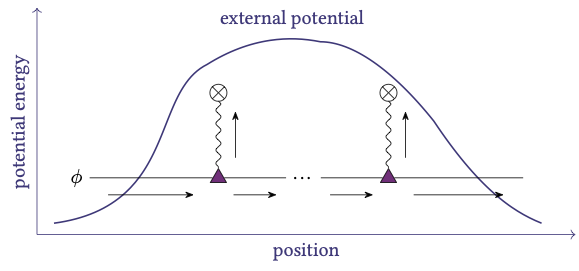
Quantum tunnelling of a particle through a potential barrier, while widely understood in quantum mechanics, has yet to receive a systematic treatment in quantum field theory (QFT) for particles coupled to an external field. Distinct QFT effects, such as the exchange of virtual particles and particle-antiparticle pair production and annihilation, can affect the dynamics of tunnelling in nontrivial ways, including transmission probabilities and tunnelling times. Our interest lies in determining the quantum corrections to particles tunnelling through an external (classical background) potential barrier. This is challenging as the interaction with the barrier is non-perturbative in the potential, requiring resummation of Feynman diagrams to all orders.
The first work by Zielinski et al. [1] aimed to reproduce relativistic quantum mechanics (RQM) using a field-theoretic approach for free scalar fields with a Dirac-delta barrier. Later, Zielinski et al. [2] suggested a more general approach for an interacting scalar theory with arbitrary potentials. However, the latter was left as an equation due to difficulty in analytical and numerical tractability. Recent developments by Fleming [3] on spinor fields highlighted a tractable approach by constructing a system of ordinary differential equations to obtain the transmission and reflection amplitudes. Yet this relied on spinor algebra and explicit expressions for the propagators to obtain the coupled equations.
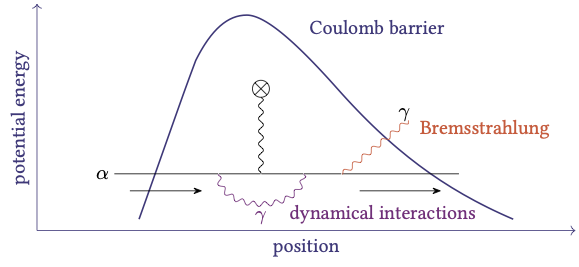
We generalise Fleming's core idea to present a general formulation based on self-consistent integral equations that can describe both scalar and spinor tunnelling through arbitrary scalar and vector potentials with finite support. This directly provides avenues for exploring barrier tunnelling in physically relevant theories such as scalar QED and QED in nuclear physics. The formulation can be reduced to a set of ordinary differential equations under certain conditions, further simplifying the numerical solution. Preliminary calculations were performed using a toy interacting scalar theory $A\phi^2$ with a light mediator (mass half that of the tunnelling particle) and the Dirac-delta potential. Results show $\sim 0.7-1.2\%$ quantum corrections to RQM at one-loop order, for unit dimensionless coupling to the mediator. As next steps, we aim to apply this formalism to scalar QED to explore $\alpha$-decay of nuclei and to address long-standing questions, including the effect of Bremsstrahlung during tunnelling [4] and, possibly, tunnelling times.
[1] R. Zielinski, C. Simenel, and P. McGlynn, Eur. Phys. J. C 84, 992 (2024).
[2] R. Zielinski, P. McGlynn, and C. Simenel, Eur. Phys. J. C 84, 967 (2024).
[3] M. Fleming, “Non-Perturbative Spinor Tunnelling in Interacting Quantum Fields”, Honours Thesis (The Australian National University, 2025).
[4] N. G. Kelkar and M. Nowakowski, Phys. Rev. C 89, 014602 (2014).
Caustic skeleton theory is an analytical phase-space based formalism that predicts that the cosmic web is composed of a hierarchy of singularities that manifest as walls, filaments and cluster nodes, arising from the evolution of the dark matter cosmological fluid. We pull caustic skeleton theory into the observational reality of the cosmic web in the Local Universe by applying it to the Manticore-Local re-simulations: Bayesian constrained reconstructions of the Local Universe from the 2M++ galaxy catalogue. We extract the three-dimensional multi-scale caustic skeleton of two canonical weblike structures in our Local Universe, the Coma Cluster and the Pisces-Perseus ridge - as they represent the most prominent cluster node and filamentary artery in the nearby Universe. One of the most interesting aspects of the theory is that it predicts two topologically distinct classes of filaments (A4 swallowtail and D4 umbilic caustics) that form through fundamentally different folding histories yet appear morphologically similar enough, on the surface, to be overlooked by conventional structure identifiers. Thus, caustic skeleton theory enables a novel topological characterisation of the Pisces-Perseus Supercluster, one of the most studied filamentary complexes in the nearby Universe, as a distinctly D4-dominated structure.
Upcoming cosmological surveys, such as the Roman Space Telescope, will deliver unprecedented data for studies of the large-scale structure of the Universe. These observations will shed new light on cosmic evolution and the nature of its fundamental components, including dark matter and dark energy. Fully exploiting these datasets requires theoretical predictions that are both accurate and computationally efficient across an extended cosmological parameter space.
To address this challenge, we constructed the Goku simulation suite—the first N-body simulation suite spanning 10 cosmological parameters, including the five standard ΛCDM parameters and extensions that account for dynamical dark energy, massive neutrinos, the effective number of neutrino species, and the running of the primordial spectral index. Based on these simulations, we trained GokuNEmu, a neural-network emulator for the nonlinear matter power spectrum, using advanced multifidelity machine learning techniques.
GokuNEmu provides fast and accurate predictions for next-generation cosmological analyses. We are currently applying the emulator to weak-lensing and galaxy-clustering data from the Dark Energy Survey (DES). In parallel, we are extending the framework to additional summary statistics, including the halo mass function and non-Gaussian weak-lensing statistics, with the goal of further improving constraining power.
Type Ia supernovae remain one of the key observational probes of dark energy, but their cosmological constraining power depends on constructing Hubble diagrams with well-understood biases. In future high-statistics time-domain surveys, such as TiDES and LSST-era spectroscopic follow-up programmes, host-galaxy redshifts will often need to be obtained under finite spectroscopic resources. It is therefore important to understand whether shallow host-galaxy follow-up recovers all galaxy populations equally.
Using OzDES DR2 spectra together with DES-SN5YR host-galaxy data, we construct shallow three-exposure spectra for 1,280 supernova host galaxies and test redshift recovery using MARZ. We find a strong host-dependent selection effect: star-forming hosts are recovered with 35.9\% completeness, while passive hosts are recovered with only 16.4\% completeness. This difference arises because narrow nebular emission lines remain identifiable at low signal-to-noise, whereas passive galaxies rely primarily on weaker continuum and absorption features.
These results show that shallow spectroscopic follow-up does not merely reduce the total number of recovered redshifts; it systematically skews the recovered host-galaxy population towards star-forming systems. We discuss the implications for future surveys using supernovae to constrain dark energy.
Dark matter coupled to the Standard Model only through gravity is usually regarded as beyond the reach of laboratory searches. In models with large extra dimensions this expectation can be altered, since the short-distance gravitational potential is enhanced and scales as $1/r^{1+n}$. I will discuss dark-matter scattering in Arkani-Hamed–Dimopoulos–Dvali scenarios, where exchange of Kaluza–Klein graviton modes induces an effective dark-matter–nucleon interaction. Confronting this interaction with xenon-based direct-detection data gives bounds on the fundamental higher-dimensional Planck scale ($M_D$), with the strongest sensitivity for heavy dark matter in two extra dimensions. I will also discuss complementary constraints from resonant scalar dark-matter annihilation through on-shell Kaluza–Klein modes into Standard Model final states. These results show that gravitationally mediated dark matter can be probed by a combination of underground direct detection, collider limits, and indirect gamma-ray searches.
The 21-cm signal is emerging as a powerful cosmological probe of dark matter. However, constraints derived from heating-based signatures are subject to significant astrophysical uncertainties, which depend sensitively on the choice of fiducial model. We illustrate this in the context of accreting primordial black holes with masses in the range $1-10^{3}$ M$_\odot$, showing how changes in poorly constrained astrophysical parameters can weaken the expected signal, and thus constraints.
To address this challenge, we introduce a novel mechanism by which dark matter can boost the 21-cm signal through the production of exotic Lyman-α photons. This channel offers a potentially more robust avenue for constraining dark matter models, as it is less degenerate with standard astrophysical processes. We discuss the implications of this channel for upcoming 21-cm experiments, and the broader prospects for using the 21-cm line as a robust dark matter probe.
Lack of conclusive experimental evidences in favour of thermally produced dark matter (DM) candidates have made non-thermal DM production mechanisms popular among the community. In this talk, I will discuss two distinct possibilities: (1) DM production from inflaton decays, and (2) DM production from reheaton decays. While the inflaton provides a compelling framework for explaining the large-scale homogeneity and isotropy of the Universe, the reheaton is an intermediate particle originating from the inflaton that can play a crucial role in establishing the standard radiation-dominated era prior to Big-Bang Nucleosynthesis (BBN). I will also discuss how, in the first scenario, Lyman-$\alpha$ forest observations, and in the second, measurements of the inflationary stochastic gravitational wave background (SGWB), can serve as powerful probes of non-thermal DM.
On (unstable) Riemann space-time whose tangent space possesses NLSUSY structure, i.e., specified by Majorana spinor coordinate ψαi (i=1…N) besides the ordinary Minkowski coordinates xa , we find the unified vierbein waμ and obtain straightforwardly new Einstein-Hilbert(EH)-type action (Nonlinear-supersymmetric general relativity(NLSGR)) LNLSGR (waμ) equipping the cosmological term and the global NLSUSY invariance.
Due to NLSUSY structure of space-time LNLSGR (waμ) would collapse(Big collapse(BC)) to the vacuum configuration of NLSGR, i.e. the ordinary EH action for graviton eaμ, NLSUSY action for Goldstone(G) fermion ψαi (fundamental matter, called superon) and their gravitational interaction described by superon-graviton(SGM) action LSGM. (eaμ ψαi )
BC induces the inflation of space-time(quantum inflation) by Pauli principle.
Simultaneously the universal attractive force graviton would dictate the evolution(vaccum) of LSGM (eaμ, ψαi) and produce all possible gravitational composites of superons constituting the LSUSY supermultiplet for equivalent global LSUSY action(called NL/L SUSY relation), which may be regarded as
the ignition of the Big Bang of the universe.
By the linearization of NLSUSY( NL/L SUSY relation), NLSGR(SGM) paradigm bridges naturally the primordial cosmology(NLSUSY) and the (low energy) particle physics(LSUSY) emerging in the true vacuum, which provides new insights into unsolved problems of cosmology, SM and mysterious relations between them, e.g. the space-time dimension four, the origin of SUSY breaking, the dark energy and the dark matter, the dark energy density≃( neutrino mass)4 , the three-generations structure of quarks and leptons, the rapid expansion of space-time and the fate of black hole and the universe etc. [References]:
[1] K. Shima, Invited talk at the symposium, 100 Years Werner Heisenberg-Works and Impact-, September 26-30, Bamberg, Germany. Proceeding: Fortschr. Phys. 50 (2002) 5--7, 717, eds. D. Leust and W. Schleich.
[2] K. Shima, Invited talk at Conference on Cosmology, Gravitational Waves and Particles ,2017, NTU, Singapore (Uploaded at YouTube by IAS). Proceedings of CCGWP, ed. Harald Fritzsch, (World Scientific, Singapore, 2017), 301.
[3] K. Shima, Temporal preliminary report: arXiv:2012.01646[hep-th]
Massive Abelian p-form gauge theories possess dualities that hold classically, but may be broken at the quantum level in non-trivial topological spacetimes. We demonstrate this in the BF model for massive gauge theories in d dimensions, where a p-form and a (d-p-1)-form are topologically coupled together in a gauge invariant way. Integrating out the (d-p-1)-form from its equation of motion results in a massive p-form and vice versa. We then show that in the path integral quantisation of the theory, integrating out the (d-p-1)-form results in a determinant that is different to that when integrating out the p-form. This difference is dependent on the topology of spacetime, resulting in different counterterms for renormalising their divergences. We compute these counterterms for a few non-trivial topological spacetimes, explicitly showing that the duality is broken at the quantum level.
We study the cosmological implications of the minimal non-linear realisation of scale invariance within the Standard Model (SM). This framework provides a technically natural explanation for the hierarchy between the Planck scale and the electroweak scale and introduces only a light, feebly coupled dilaton field beyond the SM particles. Although the model is almost indistinguishable from the minimal SM at low energies, its cosmological consequences differ dramatically. In particular, the electroweak Higgs field remains trapped in the symmetric phase until the Universe cools to very low temperatures, $T_c^{(\chi)}\sim 28$ MeV, where the first-order QCD chiral symmetry-breaking phase transition triggers the electroweak phase transition. This scenario offers intriguing possibilities for the production of primordial black holes, low-frequency gravitational waves, and multi-quark and lepton nuggets, which we explore in some detail using simplified approximations.
At present, the LIGO, Virgo, and KAGRA (LVK) Collaborations have announced the discovery of 218 gravitational-wave events. The forthcoming release of fifth gravitational-wave transient catalog GWTC-5 will increase the number of detections significantly. In this talk I summarise some of the most exciting developments associated with LVK detections with a focus on fundamental physics and cosmology. I describe how the observation of a gap in the distribution of black-hole masses teaches us about the nuclear physics of pair instability supernovae. I discuss how gravitational-wave astronomers used the exceptionally loud event GW250114 to test Hawking's area law. Time permitting, I discuss what we have learned about the formation of binary black holes.
Tentative evidence suggests that the cores of massive neutron stars consist of deconfined quark matter. In this talk, I argue that the formation of such a quark matter core during a galactic supernova could be accompanied by the emission of gravitational waves in the MHz band, and I discuss the computation of the signal. Gravitational wave signals from phase transitions in supernovae constitute a new target for high-frequency gravitational wave detectors, demonstrating that such detectors may offer unique opportunities for testing quantum chromodynamics in an otherwise inaccessible regime.
The observed baryon asymmetry of the Universe provides a fundamental probe of high-scale physics and the thermal history of the electroweak plasma. Within the Standard Model, sphaleron processes partially convert a primordial $B-L$ asymmetry into baryon number, and the corresponding sphaleron conversion factor is a key ingredient in quantitative predictions of baryogenesis scenarios.
In this talk, I go beyond the equilibrium treatment and solve a Boltzmann equation describing the evolution of baryon number through the electroweak crossover. By incorporating higher-order corrections to the grand canonical partition function, as well as the temperature dependence of the Higgs expectation value and the sphaleron rate, I present a precision determination of the sphaleron conversion factor and assess the impact of flavor effects.
I’ll discuss an Effective Field Theory (EFT) approach to the deuterium burning nuclear processes that are responsible for the primordial deuterium produced during Big Bang Nucleosynthesis. The EFT approach accurately describes low energy physics below the size of the nuclei, and makes manifest structural features and relationships between observables. It allows for estimates of theoretical uncertainties due to the EFT truncation via power counting, with its parameters calibrated from a mixture of experimental data and nuclear theory calculations. It is constructed using on-shell amplitude methods which identify all tree-level interaction structures, including factorized pieces and higher order boundary terms without need for an explicit Lagrangian. The success of the methodology suggests that amplitude-constructed EFTs are a useful tool to describe low energy nuclear reactions.
Dark matter (DM) constitutes most of the matter content of the Universe, yet its particle nature remains unknown. While laboratory searches and cosmological probes have placed strong constraints on many candidate models, astrophysical environments provide a complementary avenue to test DM interactions under extreme conditions. Stars are particularly promising laboratories: as they move through their host halos, DM particles may scatter with stellar constituents, lose energy, and become gravitationally captured. Once accumulated, DM can alter stellar evolution through annihilation heating, enhanced luminosity, or—in the case of heavy non-annihilating DM—through self-gravitation and eventual collapse. Understanding capture in realistic stellar environments is therefore essential for connecting stellar observations to particle DM physics.
In this talk, I will discuss the capture of heavy DM in rapidly evolving massive stars, with emphasis on the first stellar populations and their later metal-enriched descendants. Using stellar evolution simulations from the zero-age main sequence to advanced burning stages, we show that DM capture depends sensitively on the changing internal structure and composition of the star. During the early hydrogen- and helium-dominated phases, capture is largely controlled by scattering on light nuclei. As nuclear burning proceeds, metal production generates a dense core surrounded by a lighter envelope, substantially enhancing the capture of ultra-heavy DM and requiring a multi-component treatment with several nuclear targets.
I will also highlight recent advances in the theory of heavy-DM capture in compact stars, where multiple scatterings, realistic trajectories, nuclear form factors, and in-medium thermalization effects become crucial. These developments clarify how efficiently heavy DM can be trapped and transported to stellar centers, and how rapidly it can thermalize after capture.
Our results indicate that, for viable regions of parameter space beyond current direct-detection bounds, heavy annihilating DM may reach capture–annihilation equilibrium within the short lifetime of a massive star. For non-annihilating DM, the accumulated population can become self-gravitating and potentially collapse into a black hole capable of consuming the host star from within. These findings demonstrate that accurate stellar modeling, combined with improved capture formalisms, opens a powerful new window on heavy DM through massive stars and stellar remnants.
General Relativity (GR) is the classical interpretation of gravitational interaction. Equivalently, GR can be represented as an effective field theory (EFT) of the non-trivial self-interacting theory of a massless spin-2 particle. The Planck mass sets the high-energy cutoff, which is where we expect to see the effects of quantum gravity. Various modifications to gravity significantly lower the cutoff energy by increasing the scaling of tree-level amplitudes. For instance, standard massive gravity has scaling ~ $s^5 / (m^8 (M_{\text{Pl}})^2)$, whereas the de Rham-Gabadadze-Tolley (dRGT) model of massive gravity ameliorates this with a lower scaling ~ $s^3 / (m^4 (M_{\text{Pl}})^2)$, where s is the Mandelstam centre-of-momentum energy squared. A compactified five-dimensional theory of gravity both preserves the scaling behaviour of general relativity and generates an infinite tower of massive spin-2 fields. These properties arise from the spontaneous breaking of diffeomorphism invariance, leaving residual symmetries that preserve the 5D scaling in the 4D EFT.
This presentation investigates the surprising properties found in the scattering amplitudes of massive spin-2 Kaluza-Klein modes and analyses their origins in the hidden symmetries inherent to the compactified five-dimensional gravity framework. We also discuss an extension in which an intermediate brane is placed in the 5D bulk, creating two distinct sections of 5D Anti de Sitter (AdS) space, along with the resulting amplitude properties.
The interplay between theoretical cosmology and particle physics seeks to answer some of the fundamental questions related to our Universe’s formation and constituents. Today, it is well-established that the elusive entity known as "dark matter" accounts for nearly 30% of the cosmic energy budget[1][2]. Several particle physics models of dark matter are being extensively studied; however, there has yet to be any luck with its detection. The weakly interacting massive particles
(WIMPs) are a class of cold (negligible free-streaming effects) dark matter (CDM) candidates whose number density evolution is mainly dictated by the commonly known chemical freeze-out mechanism. These are one of the most theoretically motivated dark matter candidates because
calculations leading to the present-day dark matter relic density produce an interaction cross- section of the weak scale. However, all the experiments dedicated to the search for WIMPs have produced null results and the ΛCDM model of cosmology, though successful in describing structure formation on large length scales, has tensions with observations on small (sub-galactic), non-linear length scales. These
shortcomings require us to move beyond the cold WIMP paradigm to explore other particle models like the feebly interacting massive particles (FIMPs) that behave as warm dark matter (WDM) with significant free-streaming length, washing off structures in small scales[3][4].
The mass of thermally produced WDM has stringent constraints from observations, hence, the idea is to look at non-thermal production mechanisms and at scenarios where the dark matter relic has
a mixture of warm and cold components. In this talk I will be describing such scenarios and try to motivate the connection between the particle models of warm dark matter and their cosmological impact on structure formation.
References
[1] B. Dutta, Dark matter, Indian J. Phys. 97 (2023) 3269.
[2] B.-L. Young, A survey of dark matter and related topics in cosmology, Front. Phys. (Beijing)
12 (2017) 121201.
[3] R. Murgia, A. Merle, M. Viel, M. Totzauer and A. Schneider, ”Non-cold” dark matter at small
scales: a general approach, JCAP 11 (2017) 046 [1704.07838].
[4] A. Banerjee, S. Das, A. Maharana, E.O. Nadler and R.K. Sharma, Nonthermal warm dark
matter limits from small-scale structure, Phys. Rev. D 108 (2023) 043518 [2305.15736].
The nature of dark matter remains unknown and its origin is currently one of the most important questions in physics. Direct searches for WIMP dark matter particle interactions with ordinary matter are carried out with large detectors located in underground laboratories to suppress the background of cosmic rays.
In this talk I will introduce the DarkSide-20k experiment and its physics program. The detector is now under construction in the Gran Sasso National Laboratory (LNGS) in Italy, the largest underground physics facility in the world devoted to astroparticle physics. The experiment is designed to directly detect dark matter by observing weakly interacting massive particles (WIMPs) scattering off the nuclei in 20 tonnes of underground-sourced liquid argon in the dual phase time projection chamber (TPC). The light generated during the interactions in the liquid argon is detected by custom silicon photomultipliers (SiPMs) assemblies of size 20 cm by 20 cm. The data acquisition system (DAQ) for the DarkSide-20k experiment is designed to acquire signals from the 2720 channels of these photosensors in a triggerless mode.
Recent detection of stochastic gravitational wave background by pulsar timing arrays (PTAs) missions opens a new window of testing fundamental physics laws at energy scales far beyond what is reached by particle physics experiments and/or by astrophysical observations; I will discuss the PTAs data in the context of massive gravity independently of the gravitational wave signal origin (astrophysical or cosmological). More precisely, PTAs probe the stochastic gravitational wave background through the angular cross-correlations of timing residuals. For an isotropic tensor background in general relativity, the expected overlap reduction function (ORF) is the Hellings--Downs (HD) correlation. We investigate how a non-zero graviton mass modifies this prediction through a massive dispersion relation and additional vector and scalar polarizations, producing an effective ORF. We introduce a phenomenological scaling prescription, to ensure decoupling the vector and scalar sectors relative to the tensor sector in the massless limit, thereby ensuring that the ORF smoothly approaches the HD correlation as $m_g/\omega \to 0$. This prescription clarifies how to meaningfully compare the effective ORF in massive gravity with observed PTA angular correlations. Finally, I will address the NANOGrav 15 years dataset to determine how the graviton mass affects PTA timing-residual modeling.
The Gauss-Bonnet invariant connects foundational aspects of geometry with physical phenomena in a variety of ways. Teleparallel gravity offers a novel direction in which to use the Gauss-Bonnet invariant to go beyond standard cosmology. In this work, we explore the cosmological perturbations of teleparallel gravity generalized through the Gauss-Bonnet invariant. This is crucial in understanding the viability of these models beyond background analyses. We do this by taking a gauge-invariant approach, followed by popular gauge choices. It is essential to take this approach to understand the stability and healthiness of the underlying theory. We determine the equations of motion for all perturbative modes and provide a physical interpretation of the new contributions for each mode.
The present study explores the thermal evolution and emission properties of neutron stars by combining $f(R,T)$-modified equilibrium stellar backgrounds with the NSCool cooling framework. We compute stellar mass and pressure profiles by solving the Tolman-Oppenheimer-Volkoff equations in both Einstein gravity and modified gravity by employing the APR, FPS, and SLy equations of state. Using these profiles as input to the standard NSCool, the study assesses the redshifted photon ($L_\gamma^\infty$) as well as surface temperature ($T_s^{\infty}$) for neutron stars with $1.4 \rm M_\odot$. It quantifies their dependence and sensitivity on the modified-gravity parameter ($\lambda$), equations of state, and the adopted microphysical inputs. Our results show that the modified-gravity parameter shifts the cooling and luminosity tracks relative to general relativity. It suggests that the interpretation of these shifts must be considered alongside standard-cooling uncertainties, in particular nucleon pairing (superfluidity) and the envelope $T_s$-$T_b$ relation. These findings on redshifted photon luminosities $L_\gamma^\infty$ and surface temperature $T_s^{\infty}$ are discussed in the context of available temperature and luminosity observations.
Black hole (BH) superradiance is a powerful probe of ultralight axions. If nature contains a boson with a mass of order $10^{-12}$ eV, vacuum fluctuations will lead to its efficient production around spinning stellar mass BHs, forming a gravitational atom that both drains the BH spin and decays to produce near-monochromatic gravitational waves. Existing superradiance constraints derive primarily from spin measurements of a handful of identified BHs, but in this talk I will present a detailed study of the understudied population level effect: gravitational waves arising from both the 100 million BHs in the Milky Way and the stochastic signal from axion clouds throughout the universe. We study the impact of a broad range of systematic uncertainties on the BH properties and compute the projected axion sensitivity for LIGO, as well as future instruments including high-frequency detectors, which, in the most optimistic cases, could reach the lowest masses available to the projected sensitivity of axion dark matter searches. I will then discuss related current work explicitly illustrating how LVK observations of BH populations can lead to multiple pathways for further probing axions.
We propose a class of dark matter models based on a chiral $U(1)$ gauge symmetry acting on a dark sector. The chiral $U(1)$ protects the masses of the dark sector fermions, and also guarantees the stability of the dark matter particle by virtue of an unbroken discrete N gauge symmetry. We identify 38 such $U(1)$ models which are descendants of a chiral $SU(3)×SU(2)$ gauge symmetry, consisting of a minimal set of fermions with simple $U(1)$ charge assignments. We show how these models can also be utilized to generate small Majorana neutrino masses radiatively via the scotogenic mechanism with the dark sector particles circulating inside loop diagrams. We further explore the phenomenology of the simplest model in this class, which admits a Majorana fermion, Dirac fermion or a scalar field to be the dark matter candidate, and show the consistency of various scenarios with constraints from relic density and direct detection experiments.
In this talk, I will discuss a novel origin for the disparity between quark and lepton flavour mixing based on the refractive nature of neutrino masses. We postulate that the fundamental mixing in both the quark and lepton sectors is CKM-like, together with tiny vacuum neutrino masses, while the observed PMNS mixing matrix emerges dynamically from coherent forward scattering of neutrinos on an ultralight dark matter background. The resulting in-medium Hamiltonian rotates CKM mixing angles into large effective lepton mixings, naturally realising quark--lepton complementarity without invoking new flavour symmetries. This framework links neutrino mass generation, flavour mixing, and dark matter, and predicts environment-dependent neutrino oscillation effects testable in current and future experiments.
The RES-NOVA project hunts neutrinos from the cosmos (e.g. Sun, Supernovae) via coherent elastic neutrino-nucleus scattering (CEνNS) using an array of archaeological lead (Pb) based cryogenic detectors. The high CEνNS cross-section on Pb and the ultra-high radiopurity of archaeological Pb enable the operation of a highly sensitive neutrino observatory, equally sensitive to all neutrino flavors, with dimensions at the cm-scale. The first phase of the RES-NOVA project is planning to operate a demonstrator detector with a total volume of about (30 cm)3. It will be sensitive to SN bursts from the entire Milky Way Galaxy with >3σ sensitivity while running PbWO4 detectors with a 1 keV energy threshold. The main SN parameters can potentially be constrained with high precision while looking at (anti-)νμ/τ. The innovative experimental approach allows for delivering important physics results also in other astroparticle physics sectors, like direct Dark Matter searches and the detection of solar neutrinos.
In this poster, the potential of this new experimental approach will be outlined, as well as complementary aspects with the currently used technologies. In addition, the experimental sensitivity and the performance of the first prototype detectors will be shown.
Direct detection of the cosmic neutrino background (CνB) provides a unique window into the early Universe but remains experimentally challenging. I will present a study of CνB-induced coherent transitions in polarised nuclear spin samples, described within an open quantum system framework that includes realistic experimental effects such as dephasing and imperfect polarisation. Using an efficient numerical method that enables the treatment of very large spin ensembles, I will forecast the sensitivity of future experiments to the local CνB overdensity. I will show that experiments such as CASPEr, while primarily designed for axion dark matter searches, can establish competitive constraints on this parameter.
The formalism of Bayesian model selection provides a very elegant way of ranking different physical models in terms of how compatible they are with a given set of observed data. However, its practical application is often hampered by the challenge of having to compute the Bayesian evidence – a multi-dimensional integral over the product of likelihood and prior probability. This usually necessitates a large number of function calls to the likelihood, which may become prohibitive in case of ``slow'', costly to evaluate likelihoods. A possible solution to this problem lies in approximating the slow full likelihood by a fast emulated likelihood. I will present BOBE (Bayesian Optimisation for Bayesian Evidence), a method to construct a Gaussian Process Regression (GPR)-based emulator. BOBE utilises a Bayesian Optimisation algorithm designed specifically to (i) provide a realistic estimate of the emulator's uncertainty and its impact on the evidence calculation, and (ii) minimise the number of likelihood evaluations required in order to meet a given evidence accuracy goal. I will show, through application to toy models as well as actual cosmological likelihoods, that training the emulator to a sufficient accuracy takes a factor of $\mathcal{O}(10^3)$ fewer direct likelihood evaluations than would be needed if one were to directly compute the evidence integral via nested sampling.
Inflation is the leading model of the early Universe, predicting primordial gravitational waves characterized by the tensor-to-scalar ratio $r$ and the tensor spectral tilt $n_t$. We present updated constraints on these parameters using the latest cosmic microwave background temperature and polarization data from Planck, the South Pole Telescope, the Atacama Cosmology Telescope, and the BICEP/Keck experiments, placing new constraints on inflationary models. We also constrain the gravitational-wave energy density and test whether the excess power observed by NANOGrav can be explained by primordial gravitational waves.
Axions or axion-like particles are hypothetical particles predicted by various BSM theories, which also make one of the dark matter candidates. The CMB is the primordial radiation that surrounds us and it follows an ideal blackbody spectrum, hence deviation in its behaviour can be used to probe new physics. If ALPs exist in nature, the CMB photons as they pass through galaxy clusters will convert to ALPs, resulting in a polarized spectral distortion in the CMB. The resonant conversions dominate over the non-resonant ones, and occur when the effective masses of the photon and ALP are equal. The probability of this conversion will depend on the mass of ALPs, photon-ALP coupling constant ($g_{a\gamma}$), electron density and transverse magnetic field profiles of the clusters, as well as the photon frequency at the conversion location. If galaxy clusters are resolvable in various frequency bands, their astrophysical information can be obtained using multi-band observations. Using radio synchrotron observations (say, with SKA), their transverse magnetic field profiles can be inferred. Through X-ray observations (say, with eROSITA), their electron density and temperature profiles can be constrained. These profile inferences will provide an estimate of the ALP signal from these clusters and bounds on the ALP coupling can be obtained using a pixel-based or power spectrum-based approach. The clusters that are unresolvable in multiple frequencies, will create a diffused ALP background in the sky that can be modelled using the distribution of clusters of different masses across various redshifts. This will result in an increase in the CMB power spectrum at high multipoles, following the spectrum of the ALP signal. Also, the presence of turbulence in profiles will lead to varying non-Gaussianity of the ALP distortion signal. The upcoming CMB experiments, such as the Simons Observatory, LiteBIRD and CMB-S4, will be able to provide bounds ($g_{a\gamma} < O[10^{-12}] \, \mathrm{GeV}^{-1}$) more than an order better than the current bounds from CAST ($g_{a\gamma} < 6.6 \times 10^{-11} \, \mathrm{GeV}^{-1}$).
The XENONnT experiment, a dual-phase Xenon Time Projection Chamber (TPC) of 5.9t active mass operating at the Laboratori Nazionali del Gran Sasso (LNGS), is at the forefront of the search for direct dark matter detection. Thanks to its unprecedented radioactive purity and enhanced veto system, it is best positioned to explore new physics at the low-energy frontier. We present here the latest results from first science runs, reaching exposures up to 7.8t$\times$y.
We highlight a novel, blinded search for light dark matter using ionization(S2)-only signals. Supported by dedicated background suppression techniques and a first complete S2-only background model, this analysis achieves sensitivity down to sub-keV energies, providing world-leading constraints on light WIMPs, dark photons, axion-like particles and dark matter–electron scattering.
We also report a 3.3$\sigma$ measurement of coherent elastic neutrino-nucleus scattering (CE$\nu$NS) from solar $^8$B neutrinos, inferring a solar $^8$B neutrino flux and a weak mixing angle at low momentum transfer consistent with previous measurements. This result probes the emerging "neutrino fog" that will ultimately limit the sensitivity of future dark matter experiments.
After completing recently a major detector upgrade, XENONnT is now resuming operation with a data-taking efficiency expected to be significantly better compared to first runs. We outline the future perspectives for both dark matter searches and neutrino physics with upcoming data in this improved detector configuration.
Accurate calculations of ionisation cross-sections are essential for constraining dark matter–electron interactions, neutrino scattering, and precision Standard Model and beyond-Standard Model (BSM) physics. We present a generalised framework for computing ionisation cross-sections for scattering and absorption processes, fully incorporating relativistic effects and avoiding the use of the dipole approximation, which is not valid for scattering and breaks down for certain absorption processes. This approach is applicable to a broad class of models, including dark matter and relativistic particles such as neutrinos, and accommodates general interaction structures, including vector, axial-vector, scalar, pseudoscalar couplings, and their interference. We calculate relativistic atomic ionisation form factors for xenon and argon across an energy range spanning eV to MeV. These form factors provide essential input for the interpretation of dark matter direct-detection experiments, neutrino scattering measurements, and searches for exotic interactions, enabling model-independent constraints to be placed on a wide class of relativistic and non-relativistic new physics scenarios.
We investigate minimal dark matter models based on a confining ($SU(N)$) dark sector, motivated by the central role of non-Abelian gauge forces in the Standard Model. After arguing that dark gluons alone cannot provide viable self-interacting dark matter capable of addressing small-scale structure tensions, we consider theories with dark quarks. Although light dark quarks can generate velocity-dependent self-interactions, they typically require additional structure. We focus instead on the heavy-quark regime, where dark matter forms automatically stable heavy baryons. Exploiting the separation between the compact baryon size and the confinement scale, we compute self-interacting cross sections and find behavior that differs from standard approximations. The parameter space favored by self-interactions points away from conventional freeze-out and towards GeV-scale dark matter, motivating an asymmetric origin and suggesting a possible link to the dark matter–baryon coincidence.
Extended Higgs sectors with scalar triplet fields are well motivated by scenarios for neutrino mass generation, and are characterized by the electroweak rho parameter deviating from unity already at tree level. Such models can lead to characteristic deviations in Higgs boson observables.
In this talk, we discuss precision predictions for decays of the 125 GeV Higgs boson in Higgs triplet models, focusing on both the complex and real triplet extensions of the Standard Model (SM). We calculate loop corrected decay rates of the 125 GeV Higgs boson in an on-shell renormalization scheme for models with $\rho \neq 1$ at tree level. We show that the decay rates can appear with characteristic deviations from the SM predictions as well as from other extended Higgs sectors such as two Higgs doublet models. In particular, the $h\to WW^*$ and $h\to ZZ^*$ decays can receive several-percent-level enhancements under current experimental and theoretical constraints. In addition, sizable new physics effects can appear in the $h\to\gamma\gamma$ decay and the Higgs self-coupling. We discuss the characteristic correlation patterns of these deviations in both complex and real triplet models and indirect tests at the High-Luminosity LHC and future Higgs factories.
This talk is based on the paper arXiv:2601.15983 [hep-ph] (JHEP 05 (2026) 136, DOI: 10.1007/JHEP05(2026)136).
Many phenomenological calculations involving massless or unstable particles suffer from divergences as mediating particles go on-shell. One way to deal with these divergences is via the Kinoshita-Lee-Nauenberg (KLN) theorem, which guarantees that by summing over all physically-degenerate processes, the divergences cancel and inclusive observables remain finite. However, actually implementing this theorem in practice requires handling disconnected diagrams, ill-defined distributional objects, threshold behavior and subtle regulator dependence. In this work, we formulate practical prescriptions for dealing with some of these issues by studying the KLN cancellation in an illustrative model exhibiting a t-channel divergence. We demonstrate intricate cancellations across several regularization schemes, connect our results to the complex-analytic structure of the underlying amplitudes, and take steps towards constructing a finite, fixed-order, inclusive t-channel collider observable. This work highlights both the utility of the KLN theorem, and also the technical subtleties and open questions involved with applying it in practice.
Axion-like particles (ALPs) with flavour violating couplings could be produced via freeze-in from the decays and scatterings of heavy quarks in the hot early universe. In the right region of parameter space ($f_a\gtrsim 10^{9}$ GeV and $m_a\gtrsim 0.1$ MeV) this population of axions would be weakly interacting and stable for the lifetime of the universe; an interesting dark matter candidate. However, certain decays and scatterings are infrared divergent; for example, $b+g\to s+\text{ALP}$ has a $t$ channel singularity when the intermediate $s$ quark goes on shell. These divergences must be cancelled before the relic density can be calculated and further phenomenology of the model discussed. In this talk I will discuss how these infrared divergences can be approached, first at zero temperature using the KLN theorem and then at finite temperature inside the collision term of the Boltzmann equation. I will demonstrate that disconnected diagrams are necessary for the zero temperature cancellation, and virtual corrections involving the finite temperature gluon propagator are vital for the finite temperature cancellation.
TBA
TBA
A new generation of neutrino detectors (JUNO, HyperK, DUNE) are in the process of coming online. This will enable measurements that were previously not considered possible. In this talk I review recent work on how these experiments will be able to probe the existence of New Physics (such as dark matter) in the neutrino sector, measure the CP-violating phase of the PMNS matrix with atmospheric neutrinos, and undertake precision solar neutrino measurements.
TBA
In this talk, I'll make the case for why CTAO could be the instrument to discover dark matter. In particular, I'll show that the instrument has sensitivity to the thermal higgsino and a number of additional WIMP models.
The cosmic microwave background (CMB) radiation is the oldest light we can see. Since it bears the imprint of the universe just after the Big Bang (at a mere 0.003% of the universe’s age today), observations of the CMB are a crucial tool in our quest to understand how the Universe began and the physical laws governing it. In this talk, I will give an overview of current and upcoming CMB experiments: their status, recent results and forecasts for the future.
Over the last fifteen years, surveys of the positions and motions of other galaxies have grown exponentially, transforming our maps of the cosmos. These data reveal the history of expansion and the growth of structure in our Universe, both driven by fundamental particles and fields and their interactions.
In this talk, I will review how spectroscopic galaxy surveys access this information, highlighting key probes such as Baryon Acoustic Oscillations, Redshift-Space Distortions, and galaxy peculiar motions. As a case study, I will present recent results from the Dark Energy Spectroscopic Instrument (DESI), focusing on our constraints on the abundances and properties of neutrinos, dark matter, and dark energy. I will conclude with a look forward to what we can expect in the coming years from upcoming projects like Euclid, 4MOST, and next-generation facilities.
LUX-ZEPLIN (LZ) is a dark matter direct detection experiment located at the Sanford Underground Research Facility in Lead, South Dakota. At the heart of the detector is a dual-phase time projection chamber containing 7 tonnes of active liquid xenon. With a combined exposure of 4.2 tonne-years from the first two science campaigns, LZ has placed the most stringent limits on spin-independent WIMP-nucleon cross section for WIMP masses above $5~\textrm{GeV}/\textrm{c}^{2}$, reaching $2.2 \times 10^{-48}~\textrm{cm}^{2}$ for a $40~\textrm{GeV/c}^{2}$ WIMP mass. LZ has also provided the first >3 σ evidence of coherent elastic neutrino-nucleus scattering from $^{8}$B solar neutrinos. In this talk, I will give an overview of the LZ experiment, discuss its status, and report on its latest results in the search for dark matter and other rare phenomena.
Ultralight dark matter (ULDM) couplings to matter fields and ULDM self-interactions are typically treated as independent probes. However, since the ULDM-matter couplings unavoidably induce self-interactions through quantum loop corrections, bounds on self-interacting ULDM from astrophysical and cosmological observations will also limit the coupling strength to matter. Applying this argument, we find that self-interaction bounds can impose strong constraints on the linear ULDM couplings to neutrinos, excluding a large portion of parameter space that is widely considered for probing ULDM via neutrino oscillation experiments. In addition, the self-interaction bounds also limit the quadratic ULDM couplings to electrons and light quarks, which can become stronger than from the stringent test of equivalence-principle violation. Our results demonstrate that the extreme observational sensitivity of cosmic microwave background and structure formations to repulsive self-interactions can robustly translate into powerful constraints on the ULDM interactions with fundamental particles.
The mystery of dark matter (DM) is a long-standing issue in physics, with numerous dedicated experiments returning no confirmed detections. Many direct detection experiments search for high mass particles, but ultralight DM is a lesser-researched, well-motivated model that could be detected through its effects on fundamental constants.
Atomic clocks are a viable option for detection as atomic transition frequencies can be heavily affected by changes to the fine structure constant and electron. Changes to these constants also affect the lengths of solid bodies, making ultrastable optical cavities another good detection option. Furthermore, if we look at quadratically coupled ultralight DM, we get additional signals to search for. This type of DM would be screened by regular matter, which could explain the lack of detection from ground-based searches. For both cases, we search for signals in separated optical cavities and atomic clocks
In this work, I will discuss our recent and upcoming works on ultralight DM detection, including the results of our analysis and implications for future research.
Atomic clocks are among the most precise instruments ever made, their precision continues to improve rapidly, reaching the $10^{-19}$ level in relative frequency shift. Existing research on atomic clocks as probes of dark matter (DM) has focused on changes in clock frequency due to interactions with DM particles. In this work, we investigate the ability of atomic clocks to detect the local DM density purely through gravitational effects. We propose several setups of space-borne clock systems, compute detectable local DM overdensities for near-future clock precisions, and compare them with existing bounds.
We propose a new approach to measuring the CP-violating phase in neutrino mixing using atmospheric neutrinos. We develop an up-down flux ratio for sub-GeV atmospheric neutrinos that incorporates realistic detection effects and reduces systematic uncertainties. For the example of Hyper-Kamiokande --- the first experiment with sufficient atmospheric-neutrino statistics in this energy range --- our approach can surpass the sensitivity of accelerator long-baseline experiments near the maximally CP-violating values δ=π/2 and 3π/2, which are favoured by current data. We discuss the work required to reduce theoretical uncertainties and fully realize the potential of this measurement. Combining accelerator and atmospheric analyses would enable the greatest sensitivity to the neutrino CP phase to be achieved in the shortest time.
The Jiangmen Underground Neutrino Observatory (JUNO) experiment is a multi-purpose neutrino experiment with a rock overburden of 700 m, located at south China. The main JUNO detector consists of a 20-kton liquid scintillator central detector (CD) with ~78% photomultiplier coverage and 3% at 1 MeV energy resolution, surrounded by a 30-kton water pool that serves as a muon veto system and shields CD from radioactivity, and an external plastic-scintillator Top Tracker. JUNO's primary goals are to determine the neutrino mass ordering and to measure several oscillation parameters with sub-percent precision. The experiment also has a rich program of scientific research with neutrinos from different natural sources, such as the atmosphere, Earth, Sun and supernova explosions.
Following more than ten years of detector construction and eight-month commissioning phase, JUNO started the physics data taking in the end of August 2025.
Benefiting from its unprecedentedly large volume and excellent performance, JUNO is also an effective muon detector, recording approximately 10 Hz of muon events. In addition, JUNO is capable of detecting atmospheric neutrinos, which provide a unique opportunity to study the impact of matter effects in neutrino oscillations. This presentation will describe JUNO’s progress on its various physics measurements, as well as its performance in reconstructing muons and atmospheric neutrinos and the opportunities enabled by these capabilities.
Radiative neutrino mass models naturally explain the smallness of neutrino masses via loop suppression. The framework in which we study the phenomenology of these models is effective field theory. Within this framework, a proper treatment accounts for both matching conditions between the new high- and low- energy theories, as well as running effects within the low energy theory. We analyse the size of these quantum corrections in the Zee model - a particular example of a radiative mass model. We derive the relevant 1-loop matching conditions and use them together with the existing renormalisation group equations in the two Higgs doublet model to calculate quantum corrections to the neutrino mass squared differences, mixing angles, and phases. Using four benchmark scenarios, we demonstrate the relevance of these corrections to the precision of the new generation of neutrino mass experiments that have already begun coming online.
KM3NeT has recorded the transit of the highest-energy neutrino ever observed (KM3-230213A) whose provenience remains at the current time unknown. No astrophysical emitters were identified with a conclusive space correlation to the event, while cosmogenic interpretations require parameters ranges stretched to debated regions of the model. Alternatively to an astrophysical acceleration process, KM3-230213A could owe its energy to the large mass of a progenitor. We have investigated a scenario where KM3-230213A is originated in the decay of a heavy dark matter particle, scanning dark matter mass and lifetime to test which values are best compatible with the KM3NeT observation. The reconstructed neutrino energy was recomputed assuming dark-matter energy distributions instead of an $E^{−2}$ astrophysical spectrum. Results are placed in context with $\gamma$-ray limits from wide-field, non-pointing telescopes (such as LHAASO), and the non-observations reported by neutrino telescopes (IceCube), and cosmic-ray arrays (the Pierre Auger Observatory, TA, CASA-MIA and KASCADE). Restricted portions of the dark matter mass/lifetime parameter space remain compatible with both these limits and the KM3NeT observation, leaving the dark matter decay hypothesis viable. As the coordinates of KM3-230213A are almost diametrically opposed to the centre of the Milky Way, the specific attribution of this event to Galactic or extragalactic dark matter is, however, inconclusive.
Among the charged leptons, the $\tau$ electric dipole moment~($d_\tau$) is the least constrained. We show that the Im[$d_\tau$] imposes strong constraints on new physics that have yet to be discussed. Motivated in particular by the Super Tau-Charm Facility (STCF), which will provide a uniquely clean environment for precision $\tau$-physics, we study the momentum-transfer dependence of $d_\tau(q^2)$ and compare the projected sensitivities of STCF and Belle II. Our analysis shows that an axion-like coupling of the $\tau$ lepton can induce sizable real and imaginary components of the EDM. The predicted EDM values may approach the present experimental sensitivities, making them accessible to future measurements at Belle II and the STCF.
We study a five-dimensional (5D) framework based on the $U(1)_{L_\mu-L_\tau}$ gauge symmetry, where the associated gauge field $V$ propagates in the bulk, giving rise to an infinite tower of Kaluza--Klein (KK) excitations $V^{(n)}$ that couple selectively to the second- and third-generation leptons. Originally motivated by its potential to address the muon $g-2$ anomaly, this framework remains of interest as a minimal, anomaly-free, phenomenologically well-motivated extension of the Standard Model (SM) of particle physics. We focus on high-energy muon-based colliders, which could directly probe the gauge structure without relying on the kinetic mixing between the SM hypercharge gauge boson and the 5D gauge boson $V$. We explore a set of complementary processes: the elastic $\mu^+\mu^+ \to \mu^+\mu^+$ scattering via off-shell exchange of KK (gauge) excitations $V^{(n)}$; the bremsstrahlung production of $V^{(n)}$ followed by their decays into neutrinos and into $\mu^-\mu^+$ at a future $\mu$TRISTAN collider. Further, we study the $\mu^-\mu^+ \to \mu^-\mu^+$ scattering via resonant KK excitation(s) at a future muon collider. Our results show that these future muon-based colliders could offer sensitive and complementary probes into regions in the parameter space of the scenario that are beyond the reach of low-energy experiments. In particular, such experiments would be able to probe both heavier KK gauge bosons with TeV-scale masses for relatively large gauge couplings, as well as the much lighter ones with masses in the MeV-scale for couplings as weak as $g_D \sim \mathcal{O}(10^{-5})$, thereby offering a promising $2\sigma$ exclusion reach for such KK excitations, over an extensive range of masses, at these facilities.
Atomic parity nonconservation (PNC) provides a sensitive low-energy probe of electroweak interactions and a pathway to test physics beyond the Standard Model (SM). PNC amplitudes arise from neutral currents mediated by the SM Z-boson and may receive additional contributions from hypothetical gauge bosons such as a Z′-boson.
For a low-mass Z′-boson, its contribution does not scale as strongly with nuclear charge Z as the SM contribution. Notably, the ratio of the Z′-induced amplitude to the SM Z-boson amplitude increases rapidly with decreasing Z, scaling faster than 1/ Z2. This enhances the relative sensitivity of lighter atoms to new weak interactions, while also benefiting from improved theoretical accuracy compared to heavier systems.
We investigate PNC effects in light atomic systems, focusing on rubidium (Rb), strontium ion (Sr+), and hydrogen. We evaluate the ratio of Z′-boson to SM Z-boson contributions for arbitrary Z′ mass, including both nuclear-spin-independent and nuclear-spin-dependent interactions. For Rb and Sr+, we calculate parity nonconserving electric-dipole (E1) transition amplitudes for the 5s – 6s and 5s – 4d3/2 transitions, demonstrating enhanced sensitivity to Z′-induced effects relative to heavier atoms. In parallel, we analyse PNC in hydrogen, where the atomic structure is well understood and theoretical uncertainties are minimal. Although absolute PNC effects are smaller, the cleaner theoretical description enables more accurate interpretation of experimental results.
We study Majoron dark matter (DM) in its minimal realization, based on the Type-I seesaw framework extended by a SM-singlet complex scalar. Remaining agnostic about the origin and value of the Majoron mass we evaluate the DM abundance from both the freeze-in and misalignment mechanisms, and identify the viable parameter space consistent with observational constraints. Without fine-tuning of the initial misalignment angle, we find that the Majoron mass is bounded by $m_J \lesssim \mathcal{O}(10)~\mathrm{MeV}$.We also discuss compatibility with thermal leptogenesis. Successful leptogenesis with two right-handed neutrinos favors misalignment-dominated production with the Majoron mass $m_J \lesssim \mathcal{O}(100)~\mathrm{eV}$, while freeze-in dominated production is compatible with leptogenesis only with a mild fine-tuning of the initial misalignment angle, $\theta_i \lesssim \mathcal{O}(0.01)$.
Bayesian inference provides powerful constraints from LIGO gravitational wave observations, yet model-independent parameter reconstruction alone cannot unambiguously distinguish competing theoretical frameworks. We examine the limitations of standard Bayesian analysis and argue that unambiguous physical insight requires embedding LIGO, or any other GW experiment, constraints within concrete particle physics models.
We demonstrate this approach through three case studies: B-L symmetric models, extended SU(N) gauge theories, and inflationary models with dark sectors. For each, we show how model-specific parameter reconstruction yields testable predictions unavailable from model-agnostic Bayesian analysis. Our results highlight the necessity of bridging gravitational wave astronomy with particle physics phenomenology, where theoretical assumptions are made explicit and LIGO data is interpreted within well-defined theoretical contexts rather than treated as model-independent observables. The talk is based on 2412.17278, 2510.11913 and work in progress.
We perform the first 3-dimensional numerical simulations of cosmological first-order phase transitions that consistently incorporate both the evolution of background metric and the evolution of the strength of phase transitions throughout the entire phase transition. We find that, in addition to reducing bubble separations via an effectively increased nucleation rate, cosmic expansion intriguingly induces a non-linear growth in the gravitational wave energy, ultimately leading to a significant enhancement of the gravitational wave signals for deflagration modes. In the most extreme case, the enhancement reaches a factor of 7. Owing to the different approaches used to estimate the sound wave lifetime, this enhancement is more pronounced for initially weak transitions than for initially intermediate transitions. Our result highlights the challenge and importance of accurately modelling slow phase transitions with cosmic expansion.
In this talk I will discuss a recent work studying the viability of first order phase transitions and the detectability of the associated gravitational waves in a minimal KSZV axion model, which is extended with a single heavy degree of freedom. I will delineate the parameter space in which the phase transition accompanied by obersevable gravitational wave signal for ET or CE can take place and elaborate on new avenues in which the heavy degree of freedom can appear as a valid DM candidate, or affect the reheating of the plasma after the phase transition has completed.
We investigate axion emission from canonical $1.4\,M_\odot$ neutron stars using the APR and SLy equations of state, with particular emphasis on axion production through nucleon-nucleon bremsstrahlung and Cooper pair breaking and formation (PBF) processes in the stellar core. The background stellar structure is constructed by solving the Tolman-Oppenheimer-Volkoff equations in the presence of a radially dependent internal magnetic field, allowing a direct comparison between magnetized and non-magnetized configurations. The thermal evolution is then computed with an NSCool-based numerical framework including neutrino, photon, and axion emission under an iron-envelope heat-blanketing boundary. A central ingredient of this work is the implementation of different nucleonic pairing models in PBF process of axion production through density-dependent critical temperatures, which determine the onset and strength of neutron and proton superfluidity/superconductivity and strongly influence the PBF axion emissivity. For each stellar configuration, we compute the axion luminosity and spectrum arising from bremsstrahlung and PBF processes and subsequently evaluate the probability of axion-photon conversion in the magnetosphere. The conversion of axion to photon flux from the magnetosphere of neutron stars has been obtained. Finally, the converted axion-to-photon flux is compared with the observed Chandra, XMM-Newton/MOS, and NuSTAR data. On comparison, we find that the constraint on the axion mass and corresponding coupling constant vary significantly on the basis of pairing models in the PBF process of axion production.
The existence of rapidly spinning black hole and ultralight boson capable of forming superradiant cloud around it can provide a non-zero lower bound on fermion couplings with the ultralight bosons. We propose that a hitherto unexplored manifestation of it in terms of neutrinos provide a minimal and concrete realization of the mechanism and can produce a diffuse cosmic background of neutrinos. In this work we try to connect the black hole superradiance and fundamental interactions with this new background and put lower bounds on such scalar and vector interactions.
The 21-cm signal provides a new window into the thermal and ionization history of the early Universe, making it a powerful probe of exotic energy injection processes, including those sourced by dark matter (DM). We develop an effective parametric model for the heating deposition function, $f_{heat}(z)$, capturing the redshift-dependent impact of generic energy injection histories on the intergalactic medium (IGM). This flexible parameterization enables fast and accurate predictions of the 21-cm signal under diverse astrophysical conditions.
Combined with a Simulation-Based Inference (SBI) framework, this approach enables efficient exploration of the connection between energy injection and 21-cm observables without relying on computationally expensive particle-level simulations. We show that the 21-cm power spectrum is primarily sensitive to the overall heating amplitude, allowing robust and largely model-independent constraints across a broad class of exotic energy injection scenarios relevant to upcoming experiments such as SKA.
As a concrete application, we focus on DM decay into $e^{-}e^{+}$ pairs and calibrate our model prior against detailed particle-physics calculations from the DarkHistory code. We find that the evolution of $f_{heat}(z)$ exhibits partial recovery in an optimal heating regime, where DM-driven heating dominates over astrophysical contributions.
Our results establish a scalable framework for constraining exotic energy injection using the 21-cm power spectrum, and provide a foundation for forecasting the sensitivity of next-generation experiments to a wide range of beyond-standard-model heating histories.
The $K^{+}\rightarrow\pi^{+}\nu\bar{\nu}$ decay is a golden mode for flavour physics. Using data collected in 2016--2022, the NA62 experiment announced the first observation of this decay with a signal significance above $5\sigma$ and the measurement $\mathcal{B}(K^{+}\rightarrow\pi^{+}\nu\bar{\nu}) = \left( 13.0^{+ 3.3}_{- 3.0} \right)\times10^{-11}$. New results from the analysis of the 2023--2024 dataset are presented. This dataset doubles the effective sample size, leading to a $5\sigma$ expected sensitivity for the Standard Model process. Reconstruction and selection algorithms have been improved, boosting sensitivity and reducing the background contamination. An updated measurement of the branching ratio is presented and prospects for the full 2016--2026 dataset are discussed.
Experimental studies of the semileptonic decays $B\to D^{(*)}\ell\bar{\nu}$ generally assume that the missing energy is carried by a massless neutrino, as predicted by the Standard Model (SM). This assumption may not hold if the invisible final-state particle is instead a massive fermion, such as a sterile neutrino or a dark-sector state. We investigate the effects of such a massive invisible particle on the kinematic and angular observables of $B\to D^{(*)}\ell \, X_{\rm inv}$ decays within the framework of the most general weak efgeneral weak effective theory framework and simplified models that can generate the relevant interactions. The resulting modifications to decay distributions, as well as their impact on the extraction of the CKM matrix element $|V_{cb}|$ and the determination of effective Wilson coefficients, are analysed as functions of the invisible-particle mass. Our study demonstrates that the conventional assumption of a massless invisible state can lead to non-trivial biases in the interpretation of semileptonic $B$-decay data and provides a general framework for probing such scenarios in current and future flavor experiments.
Baryon number violating (BNV) nucleon decays can serve as an interesting probe to physics beyond the Standard Model, especially in upcoming experiments with increased sensitivity. We investigate such decays using effective field theories and present relevant BNV operators at leading order in low energy effective field theory frameworks. We then derive current experimental constraints on associated Wilson coefficients and decay modes, as well as project sensitivities for future experiments.
TBA
String theory models generically predict a large number of axion-like particles (ALPs), known as the string axiverse. I will discuss the distinctive astrophysical and experimental signatures of the string axiverse, and how the phenomenology of such many ALP systems differs from that of a single ALP or axion.
Axions and axion-like particles are well-motivated extensions of the Standard Model and viable dark matter candidates. In the solar interior, these particles can be produced through their couplings to photons, electrons, and nucleons, and can subsequently convert into X-ray photons in the magnetic fields of the solar atmosphere. In this talk, I will present recent searches for such signals using observations of the quiet Sun with the NuSTAR X-ray telescope. These results place competitive constraints on axion couplings to photons, electrons, and nucleons, highlighting solar X-ray observations as a powerful and complementary probe of axion physics.