CosmoVerseSchool@Sofia 2026

Europe/Sofia
Sofia, Bulgaria

Sofia, Bulgaria

Institute of Mechanics of the Bulgarian Academy of Sciences (IMech-BAS), Acad. Georgi Bonchev St. 4, 1113 Sofia, Bulgaria
Description

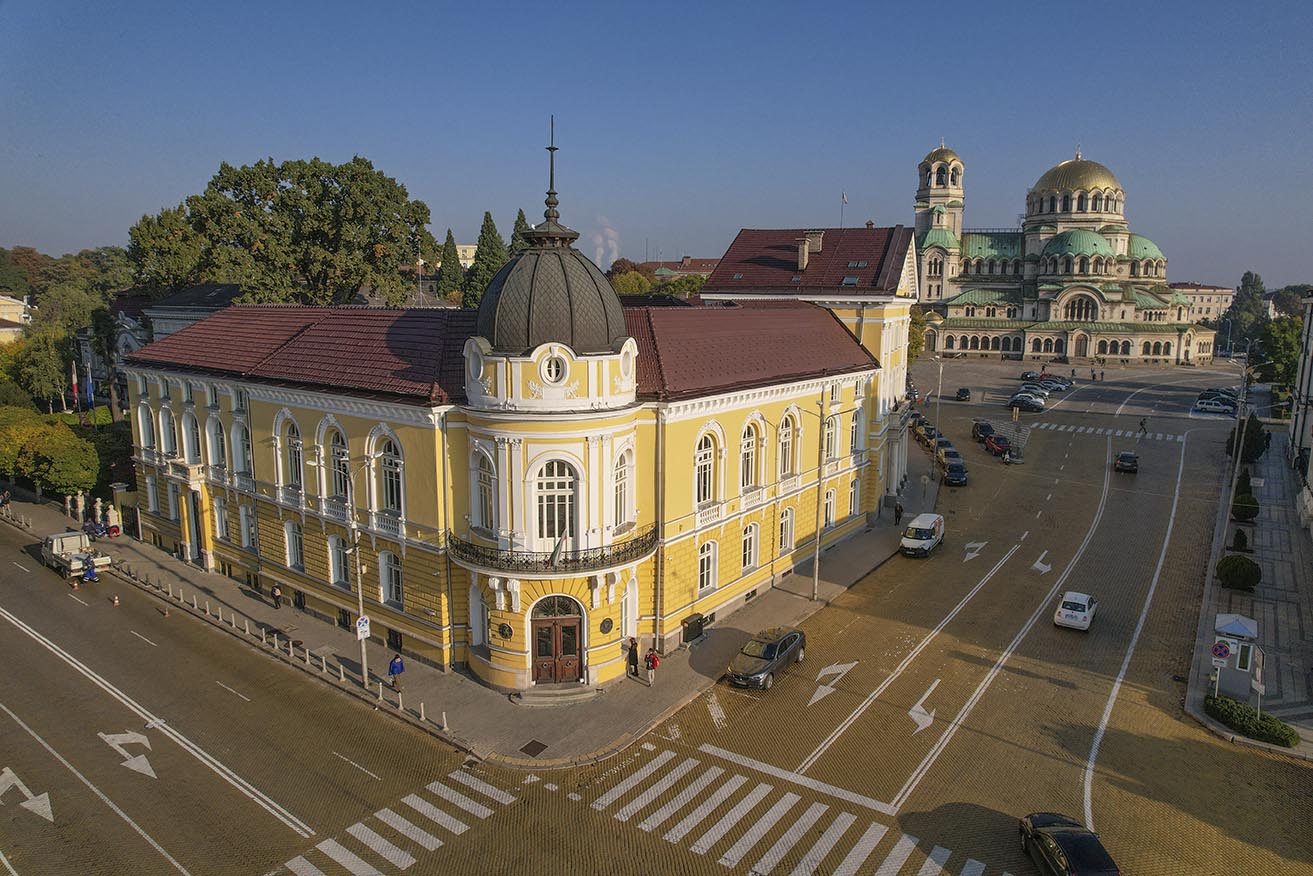
Panoramic view of the National Assembly Square

Our understanding of the Universe is at a turning point with the predictions of the standard model of cosmology (or concordance model), and the observations from different surveys showing tensions in several key areas. The disagreement is expressed in the value of cosmic expansion as well as in the growth of large-scale structure in the Universe. New cosmological surveys, many of which are European, may expose tension in additional areas of the concordance model. The question of cosmological tensions can be confronted in a number of ways. Firstly, survey data needs to be further analyzed for potential systematic uncertainties or biases. It would also be interesting to explore predictions from possible combined survey data, which is something survey collaborations cannot normally explore. Secondly, there have been numerous advances in approaches to data analysis and statistical approaches, some of which provide less dependence on cosmological models to make cosmological parameter estimates. Lastly, there are a plethora of new proposals from fundamental physics which range from novel neutrino physics to dark energy proposals (and others) which may contribute to a solution to the cosmological tensions problem. These represent the three research themes through which cosmological tensions will either be alleviated or resolved.

The main aim of CosmoVerse (cosmoversetensions.eu) is to establish a synergy between these research areas and foster a sustainable network based on interdisciplinary research in order to confront the growing challenges of tensions in cosmological survey data. CosmoVerse will take a harmonized approach involving all key communities.


CosmoVerseSchool@Sofia 2026 is the second school by the CosmoVerse COST Action and centers on the interface of observational measurements and data analysis of these data sets. Within CosmoVerse, this features the intersection of Working Groups 1 (Observational Cosmology and systematics) and 2 (Data Analysis in Cosmology) (see cosmoversetensions.eu/organisation/working-groups for more information). The School will cover lectures and training in analyzing observational data sets in the context of cosmological parameter estimates. This is connected to the CosmoVerse Data Challenge (https://cosmoversetensions.eu/for-scientists/collaborative-projects/data-challenge/)


Funding: The School has no registration fees for all participants. The CosmoVerse COST Action will provide funding (travel & subsistence) to a number of students in attendance. However, if alternative funding is available, we ask that students take this into consideration.


Local Organiser: Institute for Nuclear Research and Nuclear Energy (INRNE), Bulgarian Academy of Sciences

Venue: Institute of Mechanics of the Bulgarian Academy of Sciences (IMech-BAS), Sofia, Bulgaria


Dates: The School will take place 25 May - 29 May 2026


Lecturers:
Siyang Li (University of California, Berkeley, USA)
Yukei Murakami (Johns Hopkins University, USA)
Kayla Owens (University of Chicago, USA)
Louise Breuval (European Space Agency/STScI, Baltimore, USA)
Teresa Sicignano (Scuola Superiore Meridionale - INAF-OACN, Italy)


Important dates:

2025 November 1st: Registration and abstract submission opens
2026 February 1st: Registration and abstract submission deadline
2026 May 25th-29th: School days 
2026 May 27th: Conference Dinner
2026 May 28nd: Public Lecture


SOC
Siyang Li (University of California, Berkeley, USA)
Jackson Levi Said (University of Malta, MT)
Eleonora Di Valentino (Sheffield University, UK)
Noemi Frusciante (UNINA, IT)
Agnieszka Pollo (National Center for Nuclear Research, PL)
Marika Asgari (Newcastle University, UK)


LOC
Denitsa Staicova (INRNE, Bulgarian Academy of Sciences)
Lilia Anguelova (INRNE, Bulgarian Academy of Sciences)
Michail Stoilov (INRNE, Bulgarian Academy of Sciences)
Petar Danev (INRNE, Bulgarian Academy of Sciences)
Hristo Tonchev (INRNE, Bulgarian Academy of Sciences)


** WARNING: Regarding hotel bookings: conference organizers HAVE NEVER AUTHORISED ANY COMPANY to send any requests regarding accommodation or travel. We strongly advise you NOT TO reply to any emails or calls from such companies and we do not accept any responsibility for adverse consequences should you choose to do so.
Your personal data is safe with us but note that just your name and affiliation appearing at the conference web page is sometimes enough for a scammer to find your contact information at your institute's web page. **

Fifteenth International School on Quantum Electronics


Participants
    • 8:00 AM 1:00 PM
      Day 1 - Morning Session
      • 8:00 AM
        Registration 45m
      • 8:45 AM
        School Opening Talks 45m
        Speakers: 1. Eleonora Di Valentino - Vice-Chair of COST Action CA21136 (University of Sheffield, UK), 2. Neli Koseva - Scientific Secretary-General of BAS (Bulgarian Academy of Sciences), 3. Denitsa Staicova (INRNE, Bulgarian Academy of Sciences), 4. Lilia Anguelova (INRNE, Bulgarian Academy of Sciences), 5. Siyang Li (University of California, Berkeley, USA)
      • 9:30 AM
        The Hubble Tension & the distance ladder(s) 1h 30m
        Speaker: Dr Louise Breuval
      • 11:00 AM
        Coffee Break 30m
      • 11:30 AM
        Measuring astronomical distances with Cepheid variables 1h 30m
        Speaker: Teresa Sicignano (Scuola Superiore Meridionale - INAF OACN)
    • 1:00 PM 2:30 PM
      Lunch Break 1h 30m
    • 2:30 PM 6:00 PM
      Day 1 - Afternoon Session
    • 6:00 PM 8:00 PM
      Day 1 - Afternoon Session: Reception
    • 9:30 AM 1:00 PM
      Day 2 - Morning Session
    • 1:00 PM 2:30 PM
      Lunch 1h 30m
    • 2:30 PM 6:00 PM
      Day 2 - Afternoon Session
      • 2:30 PM
        An Overview of TRGB Data Sets for the Data Challenge 1h 30m
        Speaker: Kayla Owens
      • 4:00 PM
        Coffee Break 30m
      • 4:30 PM
        Measuring Distances to Type Ia Supernova Host Galaxies with the TRGB 1h 30m
        Speaker: Siyang Li
    • 9:30 AM 1:00 PM
      Day 3 - Morning Session
    • 1:00 PM 1:10 PM
      Group Photo 10m
    • 1:10 PM 2:30 PM
      Lunch 1h 20m
    • 2:30 PM 6:00 PM
      Day 3 - Afternoon Session
    • 7:00 PM 10:00 PM
      Conference Dinner 3h
    • 9:30 AM 1:00 PM
      Day 4 - Morning Session
    • 1:00 PM 2:30 PM
      Lunch Break 1h 30m
    • 2:30 PM 6:04 PM
      Day 4 - Afternoon Session
      • 3:10 PM
        (An)Isotropy in Pantheon+ and Type Ia supernova samples: intrinsic limits of directional tests 4m

        The use of methods that investigate the value of the Hubble constant H0 in different patches (60 or 90 size) across the sky to probe the statistical isotropy of the Universe using large SNe Ia databases has led to contradictory claims of either anisotropy or isotropy. The anisotropy directions vary amongst research works. The objective of this paper is to clarify the abovementioned claims and study the lack of basis for depicting directions of anisotropy with the present SNe Ia samples. We explain the type of limitation embedded in the SN Ia lightcurve method to determine the isotropy of H0 and the corresponding consequences. The widely used analysis through the Region Fitting and the Hemisphere Comparison methods is done here using the Pantheon+ database, simulating 2000 distinct directions in the sky within a Bayesian Markov Chain Monte Carlo approach. We also study a smaller SNe Ia database, the Carnegie Supernova Project sample, leading to a similar kind of result as that from the Pantheon+ sample. We investigate the validity of the directions found for anisotropy within these analyses. We have found that within the tests used here, the Region Fitting method and the Hemisphere Comparison method, one can not determine with robustness the direction of an anisotropy of H0 using the present SNe Ia large data samples. This is intrinsic to the way H0 is obtained with the SNe Ia lightcurve method. Achieving robust constraints will require a quite uniform sky coverage from larger SNe Ia samples with improved systematics.

        Speaker: Antonio Quintana Estellés (IFF CSIC)
      • 3:10 PM
        An AI-Assisted personalized literature explorer: Contextual Language model Assisted arXiv Retrieval (CLArXivR). 4m

        An AI-Assisted literature explorer: Contextual Language model Assisted arXiv Retrieval (CLArXivR). I will present the CLArXivR package, which assists researchers in selecting and prioritizing abstracts based on their publication history and a domain library defined by the researcher. The package automatically identifies the most similar papers, ranks them, and provides comparative summaries of the closest matches, enabling researchers to quickly assess relevance, connection and identify literature gaps. CLArXivR can also be used in combination with AI agents to automatically select abstracts related to specific topics, such as the Hubble tension, and to support rapid hypothesis generation and scientific exploration.

        Speaker: Umut Emek Demirbozan (Institut Fisica dáltes Energies)
      • 3:10 PM
        Beyond ΛCDM: Teleparallel Gravity 4m

        The ΛCDM model, based on General Relativity, has successfully explained a wide range of cosmological observations. However, in recent years, several cosmological tensions have emerged and at the same time, the nature of dark matter and dark energy - the latter introduced to explain the accelerated expansion of the Universe - remains unknown. These issues suggest that our current understanding of gravity and cosmology may be incomplete. In this talk, I will briefly present my doctoral research, which explores teleparallel gravity as an alternative formulation of gravity. In General Relativity, gravity is the result of the curvature of spacetime, while in the teleparallel framework, the curvature vanishes and some other geometric quantities (torsion or non-metricity) describe gravity. I will highlight how teleparallel models can reproduce the well-tested predictions of General Relativity while simultaneously offering new ways to explain the accelerated expansion of the Universe and address the cosmological tensions.

        Speaker: Vasiliki Karanasou (University of Tartu)
      • 3:10 PM
        Constraining DDE Models with AdS-to-dS and Similar Late-Time Transitions 4m

        With the release of DESI DR2, dynamical dark energy (DDE) models gained unprecedented attention as model candidates to release the current cosmological tensions. However, majority do not perform well in relaxing the H0 tension compared to some of the other novel theoretical and phenomenological models in the literature, such as the LsCDM model that can be explained by an AdS-to-dS transition in the late times. This work focuses on the data analysis of models that combine the features of DDE models with transition scenarios to potentially address, foremost, the H0 and other cosmological tensions.

        Speaker: Mine Gokcen (Istanbul Technical University)
      • 3:10 PM
        Cosmology with Gaia - catalogs of clusters, voids and local densities based on quasars 4m

        Understanding the formation and evolution of the cosmic web of galaxies is a fundamental goal of cosmology, using various tracers of the cosmic large-scale structure at an ever wider range of redshifts. Our principal aim is to advance the mapping of the cosmic web at high redshifts using observational and synthetic catalogues of quasars (QSOs), which offer a powerful probe of structure formation and the validity of the concordance cosmological model. In this analysis, we selected 708,483 QSOs at 0.8<z<2.2 from the Quaia data set, allowing a reconstruction of the matter density field using 24,372 deg^2 sky area with a well-understood selection function, and thus going beyond previous studies. Using the REVOLVER method, we created catalogues of voids and clusters based on the estimation of the local density at QSO positions with Voronoi tessellation. We tested the consistency of Quaia data and 50 mock catalogues, including various parameters of the voids and clusters in data subsets, and also measurements of the density profiles of these cosmic super-structures at 100 h^{-1}Mpc scales. We identified 12,842 voids and 41,111 clusters in the distribution of Quaia QSOs. The agreement between data and mocks is at a level of 5-10%, considering void and cluster radii, average inner density, and density profiles. In particular, we tested the role of survey mask proximity effects in the void and cluster detection, which albeit present, are consistent in simulations and observations. The largest voids and clusters reach R_{eff} \approx 250 h^{-1}Mpc and 150 h^{-1}Mpc, respectively, but without evidence for ultra-large cosmic structures exceeding the dimensions of the largest structures in the mocks. As an important deliverable, we share our density field estimation, void catalogues, and cluster catalogues with the public, allowing various additional cross-correlation probes at high-z.

        Speaker: Nestor Arsenov (Institute of Astronomy, Sofia; Konkoly Observatory, Budapest)
      • 3:10 PM
        Early gravity transitions and the Hubble tension 4m

        Modifications of gravity at early cosmological epochs are known to alleviate the Hubble tension better than late-time ones. The majority of such early-time Modified Gravity models affects the pre-recombination physics, and the Transitional Planck Mass (TPM) model makes no exception.
        In this lightening talk I will briefly discuss the core idea behind this model, its intrinsic predisposition to mitigate both the $H_0$ and $S_8$ tensions, and future perspectives.

        Speaker: Lorenzo Baldazzi (Istituto Nazionale di Fisica Nucleare)
      • 3:10 PM
        Exploring the stability of f(Q) cosmology near general relativity limit with different connections 4m

        I will explain the stability of cosmological background evolution near the general relativity regime across radiation, matter, dark energy, and geometric dark energy dominated eras. Our results show that for the standard connection set 1 the general relativity regime can be realized in two ways and both exhibit stable behavior throughout all evolutionary epochs. Conversely, for the alternative connection set 2 the trivial general relativity limit is stable, while the nontrivial option exhibits stability during the radiation era and marginal stability during the matter era, but for the dark energy and geometric dark energy eras our results are inconclusive. Furthermore, we point out that for a generic f(Q) the alternative connection sets 2 and 3 are prone to trigger a sudden singularity. This can happen even near the otherwise good looking general relativity regime. Hence the alternative configurations could be problematic already on the background level.

        Speaker: Laxmipriya Pati (University of Tartu)
      • 3:10 PM
        Generalized tension metrics for multiple cosmological datasets 4m

        We introduce a novel estimator to quantify statistical tensions among multiple cosmological datasets simultaneously. This estimator generalizes the Difference-in-Means statistic, QDM, to the multi-dataset regime. Our framework enables the detection of dominant tension directions in the shared parameter space. It further provides a geometric interpretation of the tension for the two- and three-dataset cases in two dimensions. According to this approach, the previously reported increase in tension between DESI and Planck from 1.9 $\sigma$ (DR1) to 2.3 $\sigma$(DR2) is reinterpreted as a more modest shift from 1.18 $\sigma_{\ eff}$ (DR1) to 1.45 $\sigma_{\ eff}$ (DR2). These new tools may also prove valuable across research fields where dataset discrepancies arise.

        Speaker: Matías Leizerovich
      • 3:10 PM
        Hubble Parameter Estimation with CORN 4m

        Measuring the expansion rate of the Universe is a central challenge in cosmology, particularly due to the persistent Hubble tension.

        The cosmic chronometer (CC) approach is a promising method for probing the expansion history of the Universe independently from the underlying cosmological model. However, CC measurements are still affected by several systematic uncertainties.

        In this brief talk, I will discuss how restricting the analysis to relic galaxies minimizes the systematics.

        Speaker: Nicola Principi Cavaterra (Narodowe Centrum Badań Jądrowych (NCBJ))
      • 3:10 PM
        Impact of Fibber Assignment in the study of clustering using the two and three point correlation functions 4m

        Impact of Fibber Assignment in the study of clustering using the two and three point correlation functions

        Speaker: Luis Miguel Hernandez
      • 3:10 PM
        Is the Universe Isotropic? -Maybe!! 4m

        The Cosmological Principle (CP) asserts that the universe is isotropic and homogeneous on large scales. It attributes the CMB thermal dipole to our local peculiar motion, hence giving rise to the term kinematic dipole. If this attribution is correct, then all-sky surveys of other cosmological probes should show a similar dipole in their distribution across the sky. More than forty years ago, researchers postulated the presence of a number-count dipole in the source distribution (dubbed the matter dipole) as a test of the CP. Over the years, a number of studies have calculated the matter dipole using cosmological surveys conducted at radio and infrared frequencies, and have reported a disagreement between the matter and kinematic dipoles. Recent results indicate that the disagreement between the two exceeds 5σ!

        In this talk, I will present the first determination of the matter dipole at optical frequencies. We use Bayesian statistics to calculate the matter dipole in the Quaia quasar sample. While the inferred direction of the matter dipole is in agreement with the kinematic dipole, its amplitude exceeds that of the latter. Our results motivate the need for further investigation into this discrepancy and lay the groundwork for future analyses at higher frequencies.

        DOI: doi.org/10.1093/mnras/stad3706

        Speaker: Vasudev Mittal (School of Physics, The University of Sydney)
      • 3:10 PM
        Lensing ratios in the Precision Cosmology Era 4m

        Increasingly precise observations are beginning to expose potential cracks in the standard cosmological model, from the Hubble constant tension to emerging hints of evolving dark energy. Resolving whether these point to new physics, and uncovering the nature of dark matter and dark energy, requires precise measurements of cosmic geometry and the growth of structure. The Dark Energy Survey (DES) was designed precisely to address these questions.

        In this talk, I will present an ongoing project about lensing ratios, an exciting geometric probe for weak-lensing cosmology. By comparing galaxy-galaxy lensing signals around the same lens sample but different source samples, the dependence on the lens mass distribution cancels, leaving a signal governed by angular diameter distances. This makes lensing ratios a clean probe of cosmic geometry and expansion history, while providing an internal validation of redshift and shear calibrations. I will show how this has already been realised in DES Y6, where lensing ratios have been used to validate photometric redshift and multiplicative shear calibrations.

        Stage-IV surveys such as Euclid, Rubin/LSST, Roman and Simons Observatory, will dramatically increase statistical power, making calibration systematics ever more critical while simultaneously unlocking the full potential of lensing ratios. I will close by showing how their geometric sensitivity on small angular scales positions lensing ratios as both a precision calibration tool and a cosmological probe in their own right.

        Speaker: Gisela Cristina Camacho Ciurana (ICE-CSIC)
      • 3:10 PM
        Lightning Talks Session 4m

        Participants are invited to present 3 minute lightning talk

      • 3:10 PM
        Probing Large-Scale Structure with angular density and redshift fluctuations. 4m

        The accelerated expansion of the Universe remains one of the central open problems in cosmology. While traditional probes such as the Cosmic Microwave Background, Type Ia Supernovae, and Baryon Acoustic Oscillations have enabled precision cosmology, persistent tensions between independent measurements highlight the need for complementary observables to validate existing results and address systematic effects.
        In this work, we explore the cosmological potential of combining angular density fluctuations and angular redshift fluctuations to probe large-scale structure and cosmic dynamics. We analyze their angular power spectra over a wide range of scales and show that angular redshift fluctuations carry particularly valuable information on small scales, where they directly trace the dynamics of cosmic voids. Cosmic voids provide a promising laboratory for these studies due to their reduced sensitivity to nonlinear effects and their enhanced response to modified gravity models.

        Speaker: Mar Pérez Sar (Instituto de Astrofísica de Canarias)
      • 3:10 PM
        Probing Three-Form Dark Energy with a Gaussian Potential 4m

        The late-time acceleration of the Universe's expansion is well established observationally, yet the nature of the dark energy component driving it remains an open question. In this talk, I will present a cosmological model in which dark energy can be described by a minimally coupled three-form field with a Gaussian self-interaction potential. Such a field naturally generates an effective negative pressure and, depending on the shape of the potential, can reproduce a range of interesting behaviours within a single theoretical framework, including regimes close to a cosmological constant and phantom evolution. I will present constraints on the model parameters derived from current background-level data, including CMB, BAO, type Ia supernovae, cosmic chronometers and gamma-ray bursts, and discuss what these results indicate about its viability as an alternative description of late-time accelerated expansion.

        Speaker: Javier Ortega
      • 3:10 PM
        Recalibration of the Cosmic Flows 4 Catalogue: A Study of the Systematics 4m

        The Cosmic Flows 4 (CF4) catalogue compiles ~56,000 extragalactic distance
        measurements from eight independent methods — Type Ia supernovae,
        Tully–Fisher, Fundamental Plane, surface brightness fluctuations, Type II
        supernovae, TRGB, Cepheids, and masers. A pairwise consistency analysis
        reveals significant inter-method tensions, particularly involving the
        Tully–Fisher relation and TRGB, which propagate directly into inferred values
        of H0. We present a Bayesian forward-modelling pipeline that simultaneously
        recalibrates all methods via per-method zero-point offsets Δμ and
        error-rescaling parameters α, anchored to the NGC 4258 megamaser distance.
        Crucially, we account for Malmquist and selection bias through a joint
        marginalisation over each galaxy's true distance modulus, weighted by the
        comoving volume prior r^k and the selection probability across all methods
        that observed it. This joint integral prevents double-counting of the bias
        when a galaxy is measured by both magnitude- and redshift-limited surveys. We
        explore three selection scenarios and find that the inferred H0 is sensitive
        to assumptions about the survey completeness: a fully self-consistent
        Malmquist correction under a uniform-in-volume prior (k=2) yields H0 = 69.8 ±
        2.3 km/s/Mpc, while a bias-free reference (k=−1) gives H0 = 72.0 ± 2.4
        km/s/Mpc. Trusting the CF4-precorrected flux-limited methods (SNIa, TF, FP,
        SBF) as already de-biased raises the k=2 result to 72.6 ± 2.3 km/s/Mpc,
        consistent with the k=−1 reference. The spread across scenarios quantifies the
        systematic uncertainty due to selection modelling in distance-ladder
        analyses.

        Speaker: Jose Antonio de Jesus Najera Quintana (University of Portsmouth, UK)
      • 3:10 PM
        Shedding some light on the Dark Sector with Galaxy–CMB Lensing Cross-correlation 4m

        Cosmological parameters represent fundamental quantities that offer insights into the structure, composition, and dynamics of the universe. Despite the remarkable progress of modern cosmology, significant challenges persist, with cosmological tensions emerging as a focal point. In this talk, I will present constraints on extensions of the standard cosmological model derived from DESI geometric probes and galaxy–CMB lensing cross-correlations, providing tests that are independent of CMB temperature anisotropy measurements.

        Speaker: Miguel Antonio Sabogal Garcia (Università di Trento)
      • 3:10 PM
        Sign-Switching Dark Energy: Smooth Transitions with Recent DESI DR2 Observations 4m

        Sign-switching dark energy provides a novel mechanism for modifying the late-time expansion history of the Universe without invoking additional fields or finely tuned initial conditions. In this work, we investigate a class of background–level cosmological models in which the dark energy contribution changes sign at a transition redshift z†, producing a sharp deviation from standard ΛCDM dynamics. We confront these models with a comprehensive set of cosmological observations, including compressed Planck 18 cosmic microwave background (CMB) measurements, DESI DR2 Baryonic Acoustic Oscillation (BAO) data and the Pantheon+ & SH0ES Type Ia supernova sample (SN). Using a full Markov Chain Monte Carlo (MCMC) analysis, we find that the sign-switching scenario significantly alleviates the Hubble tension while obtaining better results when statistically comparing with ΛCDM, as quantified by the Akaike and Bayesian information Criteria. Although the model is explored only at the background level, the improvement in the inferred Hubble constant demonstrates that sign-switching dark energy offers a promising and physically economical pathway toward resolving late-universe discrepancies.

        Speaker: Beñat Ibarra Uriondo (EHU, Basque Country University)
      • 3:10 PM
        The quest for primordial non-Gaussianity: Opportunities and Challenges 4m

        Primordial non-Gaussianity (PNG) is the smoking gun for non-canonical inflationary scenarios. While measurements from the CMB has hit the cosmic variance limit, the large-scale structure (LSS) holds great potential for improvement and the possibility for a verdict on our early universe. with the massive amount of data from up-and-coming surveys of the LSS, alongside higher-order statistics and new inference paradigms such as neural simulation-based inference, the future looks bright. However, these tools are still not perfect and require great attention to further develop the diagnostics, models, and summary statistics. In this lightning talk I will give an overview of the opportunities and challenges we are facing on our quest to hunt for PNG through the LSS.

        Speaker: Toka Alokda (Argelander-Institute for Astronomy, University of Bonn)
      • 3:10 PM
        Validation of BAO measurements in Fourier space and Cosmological Parameters inference with DES and DESI 4m

        The Dark Energy Spectroscopic Instrument (DESI) Data Release 2 (DR2) enables precision cosmological inference beyond the standard ΛCDM model, exploring extensions such as massive neutrinos and time-varying dark energy (w₀–wₐ). The analysis includes a comprehensive validation of BAO measurements through mock-based covariance estimation and robustness tests in both configuration and Fourier space. Complementary results from the final Dark Energy Survey (DES) BAO and supernova samples are combined to probe the cosmic expansion history and assess consistency across independent datasets, providing new insights into the possible origins of current tensions in cosmological parameters.

        Speaker: Nicola Deiosso (CIEMAT)
      • 3:14 PM
        Constraining high-z reionization with Cosmological Data 4m

        I discuss model-independent reconstructions of the reionization history using Gaussian processes. We utilize these reconstructions to place robust bounds on exotic energy injections and decaying particle models.

        Speaker: Hanyu Cheng
      • 4:00 PM
        Free Afternoon 2h
    • 6:00 PM 7:00 PM
      Day 4 - Afternoon Session: Public talk
      Conveners: Siyang Li, Denitsa Staicova
    • 9:30 AM 1:00 PM
      Day 5 - Afternoon Session
      • 9:30 AM
        Work on data challenge 1h 30m
      • 11:00 AM
        Coffee Break 30m
      • 11:30 AM
        Work on data challenge 1h 30m
    • 1:00 PM 2:30 PM
      Lunch 1h 30m
    • 2:30 PM 6:00 PM
      Day 5 - Afternoon Session
      • 2:30 PM
        Work on data challenge 1h 30m
      • 4:00 PM
        Coffee Break 30m
      • 4:30 PM
        Work on data challenge 1h 30m