New Windows on Fundamental Physics: from tabletop devices to large scale detectors

Europe/London
Jocelyn Bell Burnell Lecture Theatre (University of Manchester)

Jocelyn Bell Burnell Lecture Theatre

University of Manchester

Jamie McDonald (University of Manchester), Kieran Flanagan (The University of Manchester (GB)), Peter Millington (University of Manchester)
Description

We are delighted to welcome you to the University of Manchester for the following joint programme. 

New windows on Fundamental Physics: from tabletop devices to large scale detectors (20 - 23 Jan)

This will be preceded by a one day UK Astroparticle Phenomenology (UK-APP) meeting (19 Jan). The previous UK-APP meeting can be found at this link.

All talks will take place in the Jocelyn Bell Burnell Lecture Theatre in the Schuster Building - photo below. 

The main workshop will consist of invited and contributed talks, as well as a poster session including a prize for best poster. The one-day meeting will comprise mainly contributed talks. We strongly encourage contributions for both meetings and welcome submissions from underrepresented groups. The focus of the 4-day meeting will be on tabletop detectors and quantum technologies for fundamental physics (QTFP), including

  • Precision metrology & quantum sensing
  • Cold atoms and molecules
  • Quantum analogues
  • Atom interferometry
  • 5th force tests
  • Axion/WIMP dark matter & dark energy
  • Neutrinos
  • Gravitational wave detectors
  • High-frequency gravitational waves
  • Tabletop detectors 

Sustainability: Manchester places a strong emphasis on sustainability. In order to reduce wastage, we encourage participants to bring their own water bottles, and make use of water fountains on campus. 


Current invited speakers for the main workshop include:

  • Giovanni Barontini Birmingham
  • Oliver Buchmueller Imperial
  • Clare Burrage Nottingham 
  • Ed Daw Sheffield
  • Joe Formaggio MIT
  • Andrew Geraci Northwestern
  • Hartmut Grote Cardiff 
  • Takis Kontos ENS Paris
  • Tim Langen TU Wien
  • Krisztian Peters DESY
  • Sofia Qvarfort Stockholm
  • Ruben Saakyan University College London
  • Kristof Schmieden Mainz
  • Wouter Van De Pontseele Colorado School of Mines
  • Silke Weinfurtner Nottingham
  • DRD5 (Steven Worm - DESY)
  • More TBD


Local Organising Committee
Kieran Flanagan
Manchester
Lucien Heurtier King's College London
Jamie McDonald (chair) Manchester
Peter Millington Manchester
Matt Millns Manchester
Ted Smith Manchester

External Advisory Committee
Diego Blas IFAE Barcelona
David DeMille Chicago
Babette Döbrich Max Planck Institute for Physics 
Valerie Domcke CERN
Rachel Godun National Physical Laboratory
Ben Jones Texas at Arlington
Stefan Knirck Harvard
Axel Lindner DESY
Ruben Saakyan University College London


Accommodation and Venue

Attendees should make their own arrangements for their stay. The closest hotel is the Hyatt Regency which is located directly on campus a few minutes walk from the Schuster building where the workshop is taking place.  You can achieve a reduced conference rate at the Hyatt by following the instructions at this link and using the discount code listed there.  Other options are available throughout the city centre which is only 10 - 15 minutes walk from the workshop.  
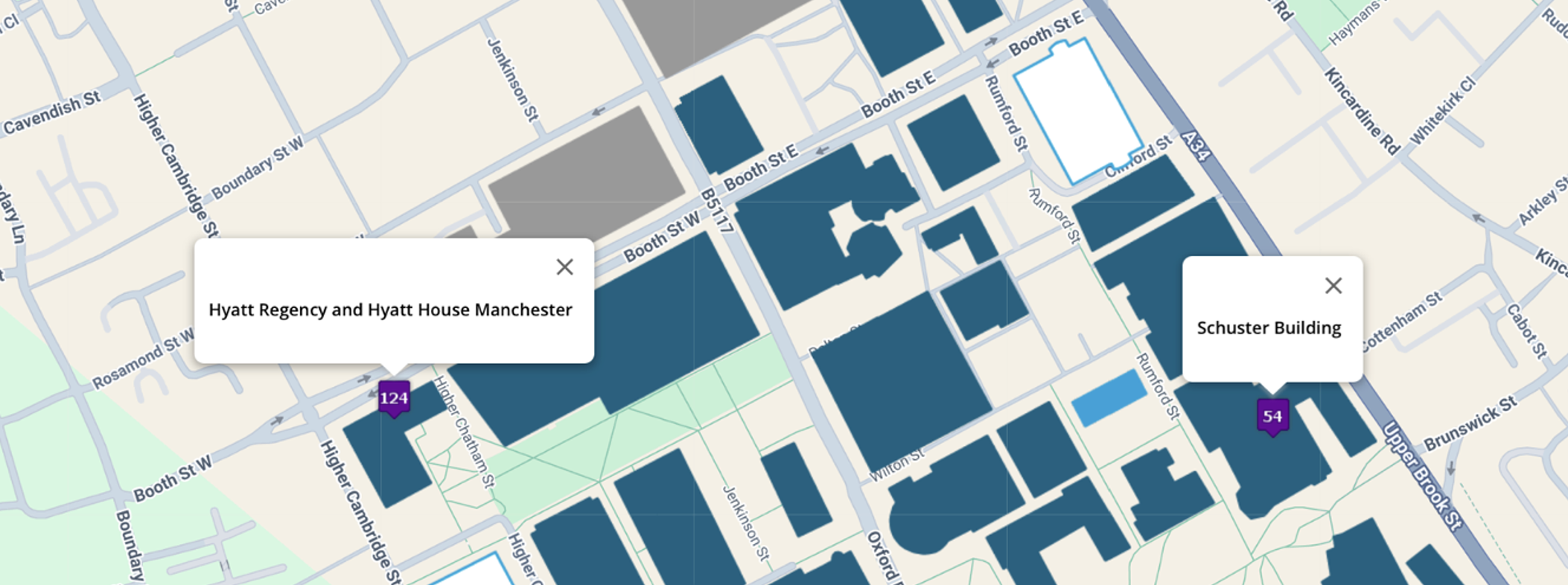
All talks will take place in the Jocelyn Bell Burnell Lecture Theatre in the Schuster building, the main entrance of which is shown in the picture below
AccessAble - Your Accessibility Guide


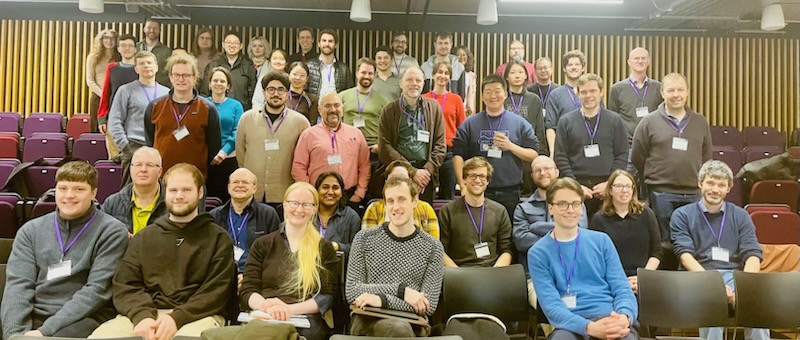
Group photo with participants from the main workshop. 
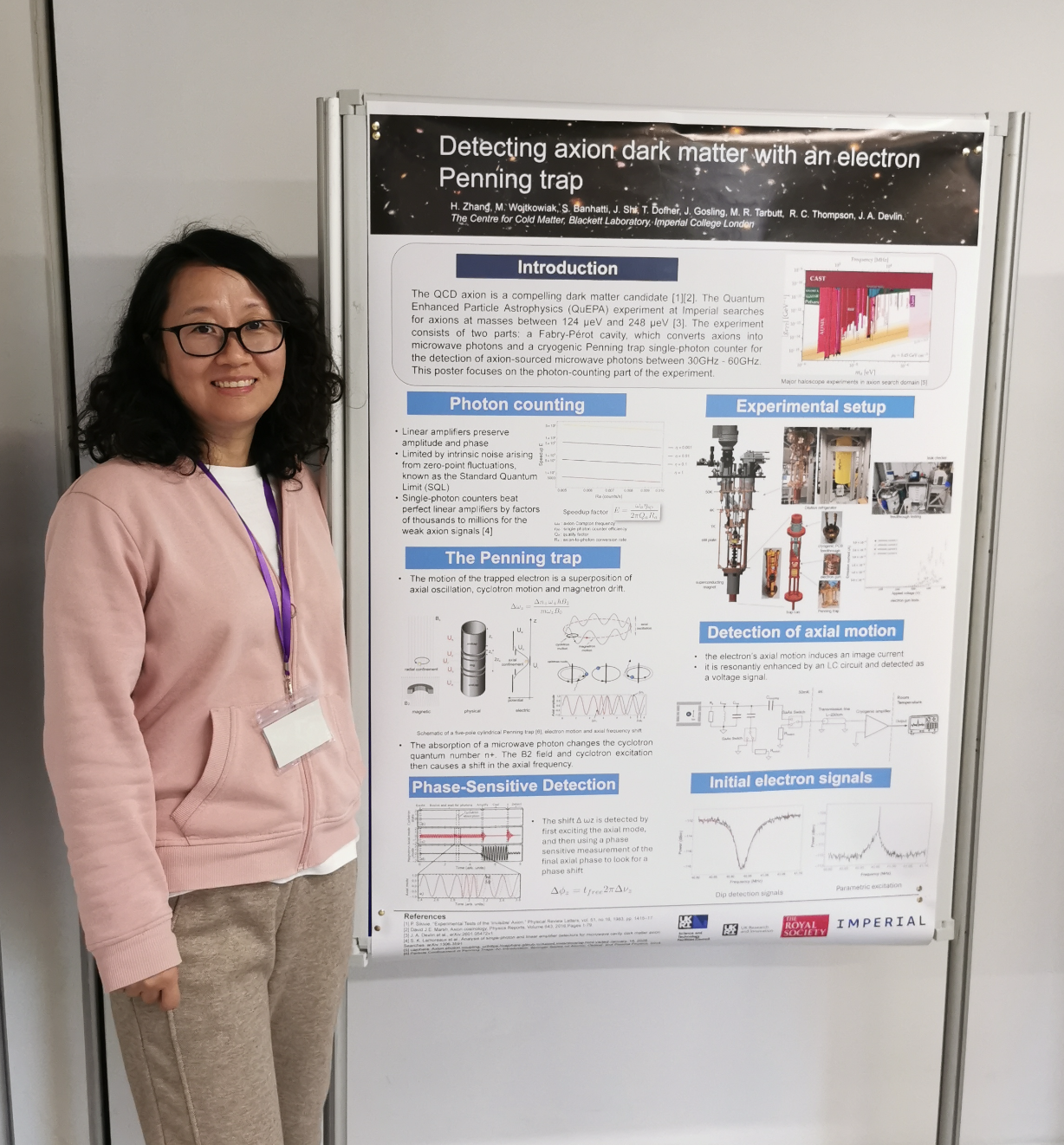
Poster prize winner, Kitty Zhang, from Imperial College London with her poster "detecting axion dark matter with an electron Penning trap".


Sponsorship
Science and Technologies Facilities Council (STFC)
UK Research and Innovation (UKRI)
Institute of Physics (IoP)
University of Manchester
European Research Council 


About us - MIDEQ - Migration for development and equalityInstitute of Physics Astroparticle Physics

High Energy Particle Physics Group newsletter December 2023University logo | University brand | StaffNet | The University of Manchester

European Research Council (ERC) grant – European Academy


Participants
    • 11:00
      Coffee and Arrival
    • 1
      Opening Remarks & Welcome
      Speaker: Lucien Heurtier & Jamie McDonald
    • One-DAY UK-APP Meeting Morning II
      Convener: Jamie McDonald (University of Manchester)
      • 2
        Searching for Ultralight Dark Matter with MOLeQuTE: a Massive Optically Levitated Quantum Tabletop Experiment

        Many well theoretically motivated models of ultralight dark matter are expected to give rise to feeble oscillatory forces on macroscopic objects. Optically trapped sensors have high force sensitivies but have remained relatively unexplored in this context. In this talk we propose a new, tunable, optically trapped sensor specifically designed to detect such forces. Our design features a high-mass (~mg) plate whose weight is supported by a vertical beam. We present the first systematic analysis and optimisation of quantum noises in optically trapped systems and show that our setup has the potential to operate at the standard quantum limit with current off-the-shelf technologies. We demonstrate that our sensor could offer unique access to large regions of uncharted parameter space of vector B-L and scalar dark matter, with projected sensitivities that could advance existing limits by several orders of magnitude over a broad range of frequencies.

        Speaker: Louis Hamaide (Johannes Gutenberg Universität Mainz)
      • 3
        Detection of Ultralight Dark Matter Bosenovae with Quantum Sensors

        In a broad class of theories, the accumulation of ultralight dark matter (ULDM) with particles of mass $10^{-22}~\textrm{eV} < m_{\phi} < 1~\textrm{eV}$ leads to the formation of long-lived bound states known as boson stars. When the ULDM exhibits self-interactions, prodigious bursts of energy carried by relativistic bosons are released from collapsing boson stars in bosenova explosions. We extensively explore the potential reach of terrestrial and space-based experiments for detecting transient signatures of emitted relativistic bursts of scalar particles, including ULDM coupled to photons, electrons, and gluons, capturing a wide range of motivated theories. Detection of a bosenova event may also give information about microphysics properties of $\phi$ that would otherwise be difficult with typical direct detection methods. Our analysis can be readily extended to different scenarios of relativistic scalar particle emission. I will also briefly discuss how boson stars composed of more than one species of ultralight boson can lead to additional experimental signatures.

        Speaker: Jason Arakawa (University of Delaware)
    • 12:30
      Lunch
    • UK-APP Afternoon 1
      Convener: Lucien Heurtier (King's College London)
      • 4
        Dark Matter Axion Search with the HAYSTAC and ALPHA Experiment

        Axions are well-motivated dark matter candidates originally proposed to resolve the strong CP problem in quantum chromodynamics. In this talk, I present recent results from the Haloscope At Yale Sensitive To Axion Cold Dark Matter (HAYSTAC) experiment, which searches for axion dark matter using a tunable microwave cavity coupled to a quantum squeezed state receiver. HAYSTAC has scanned axion masses between 16.96--19.46 $\mu$eV, finding no statistically significant signal and excluding axion--photon couplings down to $|g_\gamma| \ge (2.86)\times |g_{\gamma}^{\mathrm{KSVZ}}|$ at 90% confidence. This result achieves a scan rate enhancement of up to a factor of 2 compared with an equivalent quantum-limited search, demonstrating the efficacy of the squeezed state receiver over a substantial mass range. I will also discuss the Axion Longitudinal Plasma Haloscope (ALPHA) experiment, which employs metamaterial resonators to overcome volume limitations of traditional cavity haloscopes and enable axion searches at higher frequencies, and present the current status of ALPHA.

        Speaker: Xiran Bai (Yale University)
      • 5
        From lattice simulations to quantum analogues of false vacuum decay

        False vacuum decay (FVD) is at the heart of many open questions in cosmology and fundamental physics including, for example, eternal inflation, baryon asymmetry, and Higgs stability. Semiclassical lattice simulations have recently been proposed as a way of describing the phenomenon in real time. These numerical methods will be complemented by upcoming tabletop experiments based on cold-atom analogues, which are expected to probe the full non-perturbative dynamics of FVD in the near future. In this talk, I will present the first characterization of observables beyond the decay rate in such lattice simulations and outline prospects for experimental investigation. The field profile at nucleation time, in particular, contains crucial information on the nature of the observed decay channel and on the effective potential acting on long-wavelength modes. By quantifying renormalization effects, we aim to build a deeper understanding of the correspondence between lattice parameters and observable quantities. This work constitutes a step towards the long-term goal of gaining new insight into cosmological signatures of early-Universe phase transitions.

        Speaker: Emilie Hertig (University of Cambridge)
      • 6
        The RADES Experiment - Status and Future

        The Relic Axion Detector Exploratory Setup (RADES) collaboration works on the development of new techniques for axion searches. Axions are hypothetical pesudoscalar pseudoNambu-Goldstone bosons that appear as part of the solution to the the strong CP problem of QCD. At the same time they could also be the answer to one of the most puzzling questions on cosmology, the Dark Matter problem.
        In RADES we focus on haloscope detectors, a well-established technique that exploits the axion-photon conversion in strong magnetic fields and resonant cavities. Over the past years, we pioneered the development of novel microwave resonator arrays in order to reach a region of the parameter space very difficult to access for conventional haloscopes, and performed two consecutive data takings with high temperature superconducting (HTS) cavities at the SM18 magnet testing facility at CERN.
        Our current efforts are directed toward integrating quantum metrology technologies to significantly improve sensitivity. Specifically implementing superconducting transmon qubits as part of our readout system, these sensors would allow the detection of single microwave photons generated by axion conversion.
        In this talk I will present an overview of the RADES collaboration and briefly summarize our developments on the implementation of a quantum-limited axion search.

        Speaker: Tobias Ortmann (Max-Planck-Institut für Physik)
      • 7
        Matter Sourced Bubble Nucleation in the Asymmetron Scalar-Tensor Theory

        We investigate how matter density distributions affect thin-wall bubble formation in the asymmetron mechanism, a scalar–tensor theory with a universal coupling to matter and explicit symmetry-breaking, and analyse the stability of its metastable state. We show that the screening mechanism of the asymmetron inside dense objects induces a surface tension associated with the boundary of the screening object, leading to a richer class of bubble solutions than the standard Coleman–Callan bulk nucleation. These boundary surface tensions are used to modify the Nambu-Goto action for instantons, allowing for the computation of the corresponding Euclidean action for bubbles nucleating on flat planes, as well as on concave and convex cylindrical surfaces. We find that the smallest Euclidean action occurs for bubbles nucleating along the edge of a concave spherical surface. Comparing this edge nucleation channel with the bulk one, we determine the maximum curvature radius for which concave edge nucleation is preferred. Since the maximum radius of curvature is exponentially suppressed by the action of a bulk bubble, we find that within the regime of the instanton approximation, edge nucleation is always preferred. This is largely due to the weak couplings of the asymmetron. We apply these findings to determine the maximum curvature radius of a cosmic void and discuss how our results affect the seeding of $N$-body simulations of asymmetron domains, showing that domain wall nucleation preferentially occurs at the edges of cosmological voids. We also demonstrate that the presence of a homogeneous gas around the dense substrates reduces the maximum curvature radius, enabling bulk bubbles to form preferentially as the asymmetron undergoes a density-driven phase transition.

        Speaker: Usama Syed Aqeel (University of Nottingham)
    • 15:30
      Coffee
    • UK-APP One-Day Afternoon II
      Convener: Jamie McDonald (University of Manchester)
      • 8
        A high quality factor dielectric Fabry-Perot cavity for detecting dark matter axions

        The axion is a well-motivated dark matter candidate that was originally proposed to solve the Strong CP problem. The talk presents the development of a dielectric Fabry-Perot cavity haloscope within the Imperial College Quantum enhanced Particle Astrophysics (QuEPA) project. Our approach is optimised to search for axion dark matter in the 125–250 µeV mass range (30–60 GHz) via photon conversion. Our Fabry-Perot cavity design offers a high quality factor (Q) in its fundamental TEM mode and a large mode volume, while the all-dielectric construction means Q does not degrade in a strong magnetic field. These features significantly boost the detection sensitivity over cylindrical cavities in this mass range, in a simple and compact design. We have constructed and tested a 50 mm diameter prototype whose performance validates our chosen approach.

        Speaker: Jiacheng Shi
      • 9
        Atom Interferometry in Gravity: From Gravity Gradients to Gravitational Waves

        Atom interferometry utilizes matter-wave quantum interference. Different quantum states of an ultracold atom ensemble follow different free-fall trajectories through spacetime and experience the spatial and temporal variations of the gravitational potential. Variations in the gravitational field are encoded in the resulting matter-wave interference pattern. With the precise control of quantum sensors based on this interference we can detect minute changes in gravity at the nano-g level and potentially lower. Extreme sensitivity is both beneficial and detrimental; along with the increase in signal sensitivity comes an increase in noise. The smallest density fluctuations can limit physics signal searches and in some cases entirely dominate the quantum sensor measurements. Taking two atom interferometers separated by large free-space distances and operated through interactions with the same laser beam unlocks the ability to detect gravitational waves in the decihertz frequency range. In this talk I will present models for extracting gravitational signals from atom interferometers. Included in these sources of gravitational signals are terrestrial seismic and atmospheric density fluctuations and binary black hole mergers. I will also briefly discuss the limitations imposed by terrestrial signals on gravitational wave searches and further opportunities for testing gravity through quantum scale measurements.

        Speaker: Dr Jeremiah Mitchell
    • Arrival and Registration
    • Welcome and Opening Remarks

      Prof Sarah Sharples VP&D + Opening Remarks

    • Tuesday Morning I
      Convener: Jamie McDonald (University of Manchester)
      • 11
        Quantum Technologies for Neutrino Mass
        Speaker: Ruben Saakyan
      • 12
        Configurable optical lattices: Quantum simulation and sensing for fundamental physics

        Arrays of atoms in optical lattices offer a powerful platform to perform experimental simulation of complex quantum systems. The range of accessible physics can be extended further by augmenting the system with individually-controllable optical tweezers.I will describe a new experimental platform based on ultracold strontium in a hybrid optical lattice/tweezer potential, and will outline some key physics goals including simulation of curved spacetime. I will also discuss the promising role of potential feedback pathways between new ultracold quantum sensors and studies of many-body physics.

        Speaker: TIffany Harte
    • 11:00
      Coffee
    • Tuesday Morning II
      Convener: Peter Millington (University of Manchester)
      • 13
      • 14
        Probing the ground state of gravitational entanglement: Incompleteness of quantum foundations without holography in the background space-time

        We present a science case for the QUEST experiment at Cardiff University as a probe of the ground state of gravitational entanglement. The foundations of quantum mechanics have been tested with exceptional levels of rigor, mathematically and experimentally. However, the theoretical framework in which the mathematical formalism is constructed presumes a classical, definite space-time as its background. As the causal structure of space-time is dynamically coupled to mass-energy in general relativity, a complete study of quantum foundations necessitates a probe of entanglement in the background space-time itself, arising from couplings to quantum superpositions of mass-energy. It is widely assumed that detecting such gravitational entanglement will involve large coherent states of quantum matter for measurable superpositions of geometry. This talk will make the case that in holographic models of quantum gravity, even the quantum states of the vacuum may result in measurably large irreducible correlations in the background space-time. Unlike in the standard theory where vacuum fluctuations lead to incoherent Planck scale jitters, a dimensional reduction in the total degrees of freedom contained in a finite causal volume of space-time may lead to a large degree of coherence on the scale of the causal boundaries, allowing the gravitational memory effect to accumulate the fluctuations like a Planck random walk. We present the latest updates in our research program to empirically probe such correlations of quantum space-time, connecting signatures in the CMB arising from primordial space-times to experimental data from state-of-the-art laser interferometers enhanced with novel quantum metrology under commissioning at Cardiff.

        Speaker: Ohkyung Kwon (University of Chicago and Cardiff University)
    • 12:30
      Lunch
    • Tuesday Afternoon I
      Convener: Lucien Heurtier (King's College London)
      • 15
        QI (Quantum-enhanced Interferometry for new physics)
        Speaker: Hartmut Grote
      • 16
        Dark energy and modified gravity with levitated sensors

        Testing modified gravity is essential for probing physics beyond general relativity and for constraining light scalar fields motivated by dark energy. In this talk, I will outline theory calculations which show how levitated cavity optomechanical systems operated in high vacuum can function as sensitive quantum probes of short-range deviations from Newtonian gravity. Focusing on Yukawa-type and chameleon-like interactions, we derive fundamental sensitivity bounds while accounting for the finite geometry of both the levitated optomechanical sensor and the source mass. We demonstrate that geometric screening plays a central role when the force range is comparable to the system size, and that realistic optomechanical platforms can yield improvements on constraints on fifth-force parameters.

        Speaker: Sofia Qvarfort
    • 15:00
      Coffee
    • Wed Morning I
      Convener: Tiffany Harte
      • 17
        QSNET - A network of clocks for measuring the stability of fundamental constants
        Speaker: Giovanni Barontini
      • 18
        Multimessenger Astronomy Beyond the Standard Model: New Window from Quantum Sensors
        Speaker: Dr Jason Arakawa (University of Delaware)
      • 19
        Probing Rare Interactions from LZ to Snowball Chambers

        The LUX-ZEPLIN (LZ) experiment uses a dual-phase xenon time-projection chamber designed to search for rare interactions between dark matter and ordinary matter. In this talk, I present LZ’s latest results using an expanded exposure and improved background modeling, yielding the most stringent constraints to date on spin-independent WIMP–nucleon and spin-dependent WIMP–neutron scattering down to WIMP masses of 5 GeV/c². I also discuss LZ’s sensitivity to low-energy processes, including the detection of solar neutrinos via coherent elastic neutrino–nucleus scattering, demonstrating the experiment’s ability to probe signals approaching the neutrino fog.

        I then introduce the Snowball Chamber, a novel detector concept based on supercooled liquids, where localized energy depositions trigger rapid, visible crystallization. I present early experimental results and outline future directions, highlighting Snowball chambers as a complementary approach to rare-event detection and a new platform for studying radiation-induced phase transitions.

        Speaker: Prof. Cecilia Levy (University at Albany, SUNY)
    • 11:00
      Coffee
    • Wed Morning II
      Convener: Ruben Saakyan (University of London (GB))
      • 20
        QSHS - Quantum Sensors for Hidden Sectors
        Speaker: Ed Daw
      • 21
        Quantum Enhanced Sensing of Ultra-Light Dark Matter

        The nature of dark matter (DM) remains one of the most pressing open questions in fundamental physics. Among the viable candidates, ultra-light bosonic dark matter such as axions and dark photons can manifest as coherent, wave-like fields that naturally couple to photons. In this talk, I present quantum-enhanced approaches to detect such signals by exploiting tools from quantum information science. We show how single-photon counters and non-classical states, such as Schrödinger cat states, can surpass the standard quantum limit and significantly improve scan rates. Furthermore, by harnessing quantum coherence across entangled sensor networks, incoherent backgrounds can be eliminated, leading to a quadratic signal enhancement scaling as N^2. Finally, I discuss a quantum metrological framework in which Dicke states saturate the Heisenberg limit for dark matter sensing. These developments highlight the synergy between quantum technologies and fundamental physics, and point toward new opportunities for probing the quantum nature of dark matter.

        Speaker: Bin Xu (KIAS)
    • 12:30
      Lunch
    • Wed Afternoon I
      Convener: Kieran Flanagan (The University of Manchester (GB))
      • 22
        Dark Energy
        Speaker: Clare Burrage
      • 23
        A new search for dark matter axions using quantum technologies.

        The toolkit of quantum technologies developed in atomic, molecular and optical physics are ideally suited to enhance the search for dark matter axions with masses above ~40 µeV. I will present an overview of a new experimental effort under construction at Imperial College, developing technologies to detect DFSZ axions with masses above 120 µeV. We plan to use a large mode area Fabry-Perot cavity to efficiently convert axions into microwave photons. Compared to other geometries, the Fabry-Perot cavity can present a large mode volume and high-quality factor and can be easily tuned. Once converted into microwaves, the radiation will be detected using an electron in a Penning trap as a single photon counter. Individual microwave absorption events will change the cyclotron state of the electron, causing measurable shifts in the trapped particle’s oscillation frequencies. This versatile device will also open other possible detection routes for alternative dark matter candidates and cosmological phenomena.

        Speaker: Jack Devlin
      • 24
        NuBits and QuBits with Single Molecule Fluorescence

        Determining the nature of the neutrino mass is an extremely difficult technological problem that appears likely to require unconventional solutions. To this end, our group has been developing single-molecule fluorescence imaging based sensors to tag the individual Ba2+ ions produced in the decay of xenon-136 through integrated photonic chips with organic sensing monolayers. Such structures can not only help to illuminate the nature of the neutrino, but may also serve as substrates for quantum memory, if and only if a robust connection can be provided between nuclear spin degrees of freedom and molecular fluorescence. This interdisciplinary challenge requires coordinated advances in molecular engineering, device fabrication and ODMR-enhanced optical microscopy. I will discuss the applications of these techniques in both the contexts of both neutrino physics and quantum memory.

        Speaker: Ben Jones
    • 15:30
      Coffee
    • Thursday Morning I
      Convener: Peter Millington (University of Manchester)
      • 25
        Superradiant Neutrino Sources

        Many analogies exist between neutrino physics and optics because the neutrino is a nearly massless particle whose feeble environmental interactions permit coherent quantum effects. However, it is only relatively recently that we have begun to explore the potential of quantum phenomena in neutrino physics, with neutrino oscillations and coherent elastic neutrino-nucleus scattering as prominent examples. Superradiance — which emerges from collective spontaneous emission in optically pumped gases — may also have a parallel counterpart in neutrino physics.In my talk, I will discuss some of these analogies and introduce a new — and highly speculative — concept of superradiant neutrino emission from a radioactive Bose-Einstein condensate, which could form the basis for a superradiant neutrino laser.

        Speaker: Joseph Formaggio
      • 26
        Laser Cooling of Molecules for Precision Tests of Fundamental Symmetries

        Molecules are emerging as powerful platforms for precision measurement science, offering unique sensitivity for high-resolution spectroscopy and tests of fundamental symmetries. These experiments probe energy scales and interactions that complement searches at high-energy collider facilities, opening new avenues for discovering physics beyond the Standard Model in previously unexplored regimes.

        However, although established techniques exist for controlling molecular vibrational and rotational degrees of freedom, laser cooling remains challenging for heavy species with complex hyperfine structure arising from multiple nuclear spins. These species are especially relevant in searches for nuclear parity (P) and time-reversal (T) violation.

        In this talk, I will introduce novel laser-cooling strategies designed to address these challenges. I will present experimental demonstrations of these techniques applied to several isotopologues of barium monofluoride and discuss their scalability and prospects for cooling other molecular species - including radioactive ones - relevant to precision tests of fundamental symmetries.

        Speaker: Tim Langen
      • 27
        Axion Experiments at Manchester
        Speaker: Jamie McDonald (University of Manchester)
    • 11:00
      Coffee
    • Thursday Morning II
      Convener: Tim Langen
      • 28
        Superconducting Circuits, Neutrinos & an Old Gold Mine
        Speaker: Wouter Van De Pontseele
      • 29
        QSimFP – Quantum Simulators for Fundamental Physics
        Speaker: Silke Weinfurtner
    • 12:30
      Lunch & Poster Session
    • Thursday Afternoon I
      Convener: Jamie McDonald (University of Manchester)
      • 30
        Probing the gravity-quantum interface with interferometers and nanoparticles

        Proposed theories of harmonizing gravity and quantum mechanics at low energies suggest novel features such as fluctuations in the spacetime metric and collapse of massive quantum superpositions. How can these features be probed experimentally?

        We have recently shown how high-precision tabletop laser interferometers can distinguish different classes of spacetime fluctuations as characterized by their correlation functions. Focussing on functions that decay either exponentially or polynomially with spacetime separation can provide evidence for or against classes of novel theories uniting gravity with quantum mechanics.

        Understanding the interface of quantum mechanics and gravity also requires testing the superposition principle for increasingly massive objects. I will present a proposal for such a test using levitated charged nanoparticles. This tabletop experiment can probe such collapse, particularly from cosmological origins, more robustly than X-ray emission studies from facilities such as XENONntT.

        Speaker: Animesh Datta (University of Warwick)
      • 31
        DRD5
        Speaker: Steven Worm
      • 32
        Levitated Optomechanical Sensors
        Speaker: Andrew Geraci
      • 33
        Towards ultra-low backgrounds for high-efficiency transition edge sensors in optical and infrared axion searches

        Cryogenic transition edge sensors (TESs) are single photon detectors featuring excellent energy resolution below 10% and high quantum efficiency at optical and near-infrared wavelengths. If black-body backgrounds can be suppressed to sufficiently low levels, such detectors would be ideally suited for experiments searching for photon-axion conversion at these wavelengths such as light-shining-through-a-wall (LSW) experiments, axion interferometers, or axion haloscopes. Here, we report on the determination of the system detection efficiency of the TES considered for a potential future run of the Any Light Particle Search II (ALPS II) LSW experiment. With our latest experimental setup, we are able to achieve a system detection efficiency of 86% and milli Hertz background rates. Furthermore, we report on a novel cold optical filter bench that could enables ultra-low backgrounds (below 10^-7 Hz) while maintaining good detection efficiency. The filter bench can be auto-aligned within the cryostat and first results indicate a signal transmission of >~ 60%.

        Speaker: Manuel Meyer
    • 16:00
      Coffee
    • Friday Morning I
      Convener: Silke Weinfurtner (The University of Nottingham)
      • 34
        Quantum Sensing and Axions
        Speaker: Takis Kontos
      • 35
        QuestDMC
        Speaker: Elizabeth Leason
      • 36
        High-frequency gravitational wave signals in electromagnetic resonators

        Exploring the vast spectrum of high-frequency gravitational waves (HFGWs) will require a variety of experimental strategies. Among the most promising detectors are electromagnetic resonators like microwave cavities and lumped-element circuits placed in large electromagnetic fields. Such detectors will always respond electromagnetically (Gertsenshtein effect) and deform mechanically at the same time. Both effects on their own depend on the choice of coordinates and are often analysed in special frequency limits, which has led to contradictions and errors in the past.
        In our work, we present a set of coupling coefficients which characterise the mechanical and electromagnetic response of resonant HFGW detectors in a coordinate invariant and frequency independent way, and which are furthermore straightforward to obtain numerically. We apply this framework by updating the HFGW sensitivity predictions for existing axion haloscopes and future up-conversion experiments like MAGO.

        Speaker: Tom Krokotsch (Universität Hamburg)
    • 11:00
      Coffee
    • Friday Morning II
      Convener: Jamie McDonald (University of Manchester)
    • 12:30
      Lunch & Departure