--------------------------------------------------------------------
Warning: The organisers have not asked any agency or travel company to arrange for accommodation, so please ignore any emails regarding hotel bookings for the conference. Please be aware of this and consider them spam.
----------------------
Deadline for payments: June 7
Schedule now online!
-----------------------
New information in sections "Travel to Coimbra", Where to Eat" and "Social Program"!
--------------------------------------
Superfluidity is a striking phenomenon observed in many quantum fluids, which can flow without viscosity when cooled to low temperatures. Recent experimental advances allow us to study and visualise the complex flows of these systems in the presence of vorticity, and track the dynamics of quantum vortices far from equilibrium, both for bosonic and fermionic superfluids. Experiments with helium-4 and helium-3 allow the analysis of quantum turbulence on different scales, while cold atomic gases allow exquisite studies of single vortex dynamics in a variety of regimes, spanning the entire crossover from molecular Bose-Einstein condensates (BEC) to Bardeen-Cooper-Schrieffer (BCS) superfluids. Moreover, a growing body of theoretical and observational evidence suggests that nucleons in neutron stars are paired and form a fermionic superfluid, the dynamics of which is thought to be at the origin of the observed radio pulsar glitches.
The next years will bring a wealth of data on neutron star dynamics, from new radio observatories such as the Square Kilometer Array (SKA), but especially from gravitational wave observations with next-generation detectors, like the planned European Einstein Telescope (ET). Direct laboratory analogues of superfluid neutron stars are now being studied with superfluids on rotating platforms, but this connection is neither systematically explored nor disseminated among the relevant scientific communities.
The COST Action SCALES (https://camk.pl/SCALES/index.html) will bring together novel laboratory experiments, emerging massive parallel simulations, and neutron star experts to kickstart this new avenue of superfluidity research and pave the way for new discoveries across different scales.
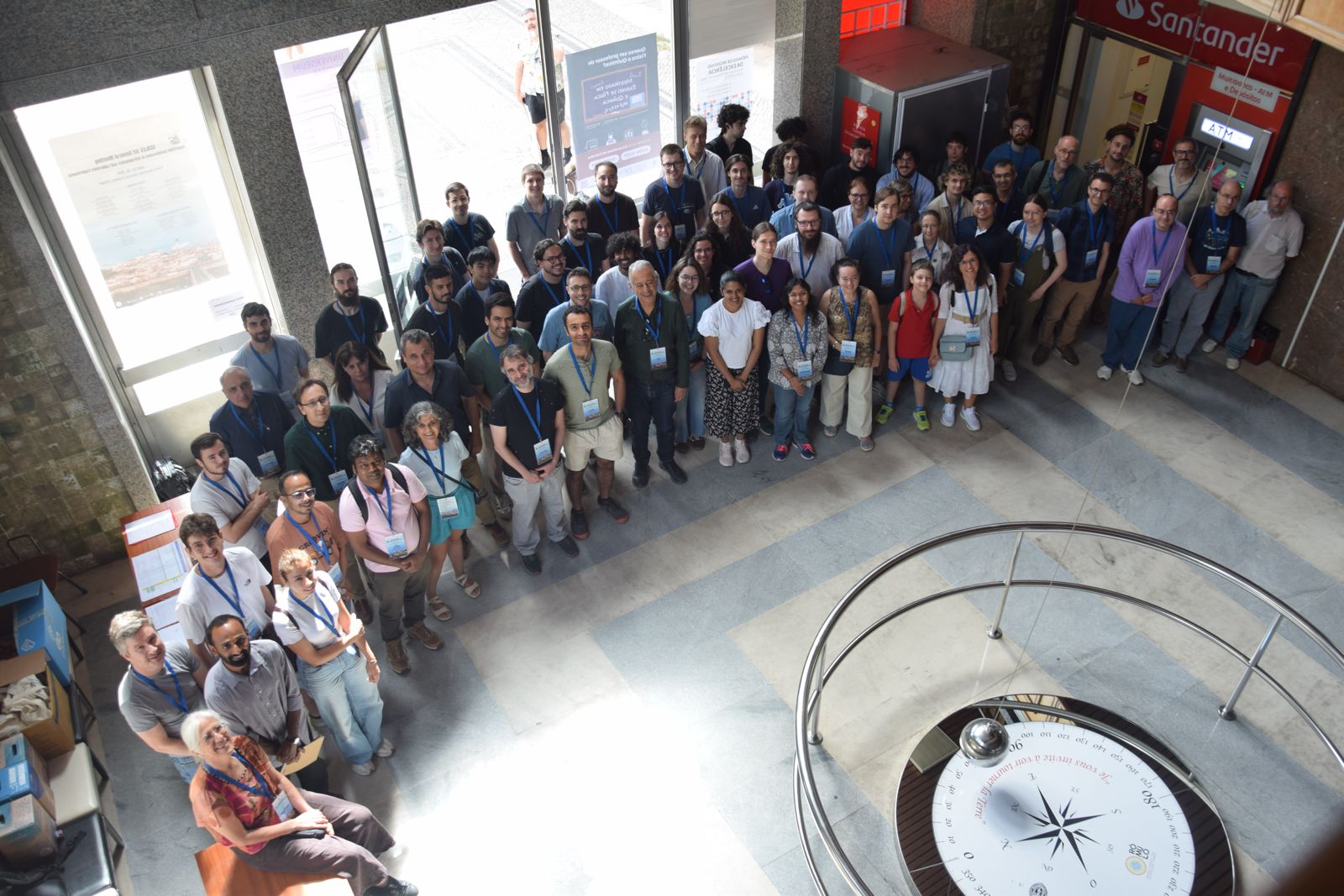
The first Action wide meeting will include plenary sessions describing the physical problems at the basis of each working group (WG), and the objectives of the different WGs will be present (specifically open problems in Cold Atoms, Helium and Neutron Star superfluidity), as well as submitted abstracts. Submission by young researchers is encouraged, as well as multi-disciplinary talks that create convergence between WGs. The choice of participants to be reimbursed by the Action will be made against a set of MC approved criteria, that include COST policy criteria, and additional items (regarding relevance to action objectives).
INVITED SPEAKERS:
-Andrei Igoshev, Newcastle University, UK
-Arus Harutyunyan, Byurakan Astrophysical Observatory, Armenia
-Bugra Tuzemen, Institute of Physics of the Polish Academy of Sciences, Poland
-Clara Dehman, University of Alicante, Spain
-Dario Ballarini, CNR Nanotech, Italy
-Elena Poli, University of Trento, Italy
-Eric Dong, University of Melbourne, Australia
-Gary Liu, Royal Holloway University of London, UK
-Klejdja Xhani, Politecnico di Torino, Italy
-Mihailo Cubrovic, Institute of Physics Belgrade, Serbia
-Nils Andersson, University of Southampton, UK
-Rena Zieve, University of California, Davis, USA
-Riku Rantanen, Aalto University, Finland
-Saso Grozdanov, University of Ljubljana, Slovenia
-Thomas Gasenzer, University of Heidelberg, Germany
-Tuhin Malik, University of Coimbra, Portugal
SCIENTIFIC ORGANIZING COMMITTEE:
-Bryn Haskell
-Vanessa Graber
-Daniel Pecak
-Giulia del Pace
-Emil Varga
-Luca Galantucci
-Nicolas Chamel
-Danai Antonopoulou
-Melissa Mendes
-Andrea Richaud
-Marco Antonelli
-Helena Pais
-Hugo Terças
LOCAL ORGANIZING COMMITTEE:
-Helena Pais (UC)
-Hugo Terças (ISEL)
-Constança Providência (UC)
-Tuhin Malik (UC)
-Tiago Custódio (UC)
-Milena Albino (UC)
-Rafael Cardoso (UC)
-Isabel Melo (Secretariat - ADDF)
IMPORTANT INFORMATION /DATES:
-March 11: Registration opens
-March 11: Abstract submission opens
-May 15: Abstract submission closes
-May 15: Deadline to request financial support
-May 30: Notification of abstract acceptance
-May 30: Notification of financial support
-June 1: Registration closes
-June 5: Program released
-June 7: Deadline for payments
_______________________________________________________
SCALES Code of Conduct:
. Respect & inclusivity: foster a safe, welcoming, and inclusive
environment across all identities and career stages.
• Constructive communication: critique ideas, not people; encourage
open dialogue, active listening, and equal participation.
• Scientific integrity: ensure proper credit, avoid plagiarism or data
falsification, and use shared resources responsibly.
• Responsibility & professionalism: act ethically, respect
confidentiality, and handle conflicts with civility.
• Zero tolerance for misconduct: no harassment, discrimination, abuse
of resources, or scientific malpractice.
• Points of Contact available: designated WG representatives and the
EDI Coordinator handle concerns confidentially and fairly.
• Point of Contacts present at this event: …
________________________________________________________________