 Prof Matthew Bailes
Professor Matthew Bailes is the Director of the Australian Research Council Centre of Excellence for Gravitational Wave Discovery (OzGrav). He is a world leader in the discovery and timing of millisecond pulsars and has made pivotal contributions to the discovery of the Fast Radio Bursts – enigmatic millisecond-duration bursts of radio waves that strike the Earth many thousands of times per day and are of unknown origin. In 2023 this was recognised when he was awarded the Shaw Prize in Astronomy.
 Professor Lyn Beazley, AO
Professor Beazley is a distinguished Australian neuroscientist, educator, and science advocate who served as the Chief Scientist of Western Australia from 2006 to 2013. She is an Officer of the Order of Australia. She championed gender diversity and science in the classroom through programs such as Microscopes in Schools. She funded the Lyn Beazley Academy, providing tailored pathways and project-based learning for neurodivergent and autistic adolescents. Prof. Beazley is also well known for promoting science and technology and played a key role in bringing the internationally successful FameLab science communication competition to Australia.
Prof. David Blair, AO (University of Western Australia)
Prof. Blair is a gravitational wave physicist who has spent more than 4 decades developing methods for the detection of gravitational waves. He is renowned for pioneering a number of precision measurement techniques used for ultra-sensitive displacement measurements, exceptionally low noise clocks and oscillators, and gravitational wave research. Among his many awards, he was the recipient of the WA Scientist of the Year award in 2007, the Premier Science Award in 2022, and the Officer of the Order of Australia (AO) in 2026.
 Prof. Yanbei Chen (Caltech, USA)
Prof. Chen is a prominent theoretical physicist. His research primarily centres on gravitational wave physics, quantum optics, macro-quantum mechanics, and testing the limits of Einstein's general theory of relativity. He is widely recognised for his theoretical contributions to the Laser Interferometer Gravitational-wave Observatory (LIGO).
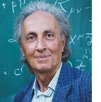 Prof. Thibault Damour (IHES, France)
Professor Damour is one of the world’s leading theoretical physicists and Emeritus Professor at the Institut des Hautes Études Scientifiques (IHÉS), France. His research has made foundational contributions to gravitation, general relativity, cosmology, black hole physics, gravitational waves, and the interface between gravity and quantum theory. He has authored more than 300 scientific publications and received numerous international distinctions, including the Einstein Medal, the Gruber Cosmology Prize, the Galileo Galilei medal, and the Special Breakthrough Prize in Fundamental Physics for the detection of gravitational waves. He is an Officier de l'Ordre National de la Légion d'Honneur, France.
 Prof. Paul , AO (Arizona State University, USA)
Professor Davies is a theoretical physicist, cosmologist, astrobiologist and best-selling author. His research has been mostly in quantum gravity, with applications to the early universe and black holes, and on the nature of time. He is Regents’ Professor of Physics and Director of the Beyond Center for Fundamental Concepts in Science at Arizona State University. His most recent is Quantum 2.0 is on foundational questions in quantum mechanics and quantum information theory. Among his many awards, he received the Templeton Prize in 1995, the Faraday Prize from The Royal Society, and is a Member of the Order of Australia.
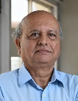 Prof. Sanjeev Dhurandhar (IUCAA, Pune, India)
Professor Dhurandhar is an Emeritus Professor at the Inter-University Center for Astronomy and Astrophysics (IUCAA) in Pune, India. He is one of the pioneers of Gravitational Wave (GW) astronomy in India and has worked extensively on applying advanced mathematical and statistical techniques in developing algorithms for GW searches and detector characterization since the late 1980s. His contributions include the introduction of a differential geometric approach to GW data analysis, and the stationary phase approximation to compute the Fourier transform of the chirp.
 Dr Cathy Foley AO PSM
Dr Foley was Australia’s Chief Scientist from January 2021 until December 2024. Dr Foley’s scientific excellence and influential leadership has been recognised with numerous awards and fellowships Dr Foley made significant contributions to the understanding of nitride semiconductors and superconducting electronics. Dr Foley is committed to supporting the development of the Australian quantum industry and helping Australia realise the transformative potential of emerging technologies and meet the climate challenge. She is an inspiration to women in STEM and focused strongly on equity and diversity in the science sector.
 Prof. Gabriela González (Louisiana State University, US)
Professor González has had a significant impact on the field of gravitational wave physics through her many important technical and scientific contributions. She was a founding member of the LIGO Scientific Collaboration (LSC), and served as the spokesperson for the LSC from 2011 to 2017. In addition to her research projects, Gabriela González also engages in considerable work in public outreach and reducing gender inequalities.
 Dr. Slawomir Gras (MIT, US)
Dr. Gras is a Research Scientist at the MIT Kavli Institute for Astrophysics and Space Research and the LIGO Laboratory. He specialises in experimental gravity, focusing on gravitational wave detection, opto-acoustic interactions, and the design of advanced interferometry instruments.
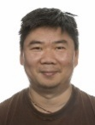 Professor Ik Siong Heng (Glasgow University, UK)
Professor Heng is a leading expert in gravitational-wave astronomy, data analysis, and numerical modelling. He is the Principal Investigator for the Gravitational Wave Universe Tomorrow (GrEAT) Network. He is a fellow of the Royal Society.
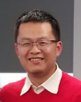 Prof. Yiqiu Ma (Huazhong University of Science and Technology, China)
Professor Ma’s work focuses primarily on the intersection of general relativity, quantum mechanics, and high-precision measurement.

A/Prof. Haixing Miao (Tsinghua University, China)
Professor Miao is a prominent physicist and Associate Professor at Tsinghua University, specialising in quantum measurement theory, optomechanics, and gravitational-wave detection. He is widely recognized for his theoretical contributions to enhancing the sensitivity of laser interferometers, such as those used by the LIGO.
 Peter Rossdeutscher, AM
Peter Rossdeuscher is an accomplished executive with over 2 decades of expertise in Australia’s innovation ecosystem. He is the Chair of Quantum Australia and Chair of Industry Innovation and Science Australia. He is a member of the Order of Australia. Peter is an Adjunct Professor at UWA and Sydney University.
 Prof. Susan Scott (Australia National University)
Professor Scott is a Distinguished Professor at ANU. She is an expert in general relativity, black holes, space-time singularities, and cosmology. She was the recipient of 2020 Prime Minister's Prize for Science and is the first Australian to win the prestigious Blaise Pascal Medal in Physics in 2022.
 Prof. Kentaro Somiya (Institute of Science Tokyo, Japan)
Professor Somiya is a professor at the Institute of Science Tokyo. He is an expert in gravitational wave detection, quantum noise analysis, and advanced laser interferometers. He has been heavily involved with Japan's underground cryogenic gravitational-wave detector, KAGRA. He is the leader of the Australia–Japan Collaboration (ASPIRE) program.
 Prof. Michael Tobar (University of Western Australia)
Professor Tobar is the Director of the Quantum Technologies and Dark Matter Research Lab (QDM Lab) at UWA, which is part of the nationwide Australian Research Council Centres of Excellence: Engineered Quantum Systems and Dark Matter Particle Physics. His broad research interests encompass the disciplines of frequency metrology, precision and quantum measurements, low temperature, condensed matter, and quantum physics.
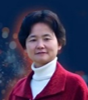 Professor Jingbo Wang (University of Western Australia)
Professor Wang is the Founder and current Director of the Research Centre for Quantum Information, Simulation and Algorithm (QUISA). She is the WA node lead of the Australian Centre for Quantum Growth, co-founding director of the Australian Quantum Software Network Limited, director of the UWA-Pawsey Educational Quantum Computing Centre, and a member of the College of Experts for the Australian Research Council.
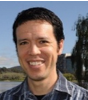 Prof Robert Ward (Australian National University)
Professor Ward is Director of the ANU Centre for Gravitational Astrophysics. He is an expert in quantum precision measurement and gravitational wave detection.
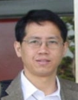 Prof. Zebing Zhou (Huazhong University of Science and Technology)
Professor Zhou is Head of National Gravitation Laboratory at HUST, one of the most critical units in space-based gravitational wave. He is deeply involved in major Chinese space and gravitational wave projects like TianQin.
 Prof. Xingjiang Zhu (Beijing Normal University, China)
Professor Zhu is an astrophysicist specialising in gravitational-wave astronomy, pulsar timing arrays, and the properties of compact stellar remnants.