 Tabea Arndt
Cooling and operating stationary and rotating superconducting arrangements: concepts of the past, special requirements, and recent developments
Abstract:
Historically and even today for selected applications, superconducting coils have been cooled by liquid helium pool cooling. The technical viability and business case in magnets and power applications has been widely influenced by a) the operating conditions and b) the available cooling devices. HTS have simplified cryogenic measures and considerably extended the devices' suitable power range. For stationary and rotating applications, specific requirements pose additional challenges for cooling concepts. However, current trends in magnets and rotating machines may enable new concepts. This presentation will give an overview of the historical basis, special aspects, the changes, and new prospects.
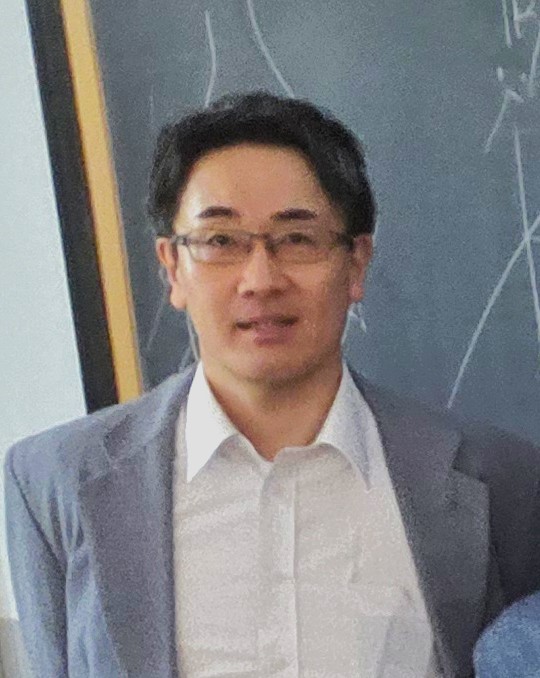 Taketsune Nakamura
Current Status and Prospects of Liquid-Hydrogen-Cooled High-Temperature Superconducting Rotating Machines
Abstract:
Liquid hydrogen serves as an excellent medium for transporting hydrogen, a clean energy source for the next generation. Also, its atmospheric boiling point (20 K) is well-suited to the operating environment of high-temperature superconducting equipment; thus, a synergistic effect between the liquid hydrogen—acting as both an energy source and a coolant—and the superconducting equipment enables the realization of highly efficient systems. This presentation provides an overview of liquid-hydrogen-cooled high-temperature superconducting rotating machines, covering their fundamental concepts, applications such as in aircraft and liquid hydrogen pumps, and future prospects.
 Mariusz Wozniak
Protection of HTS CC Magnets: Strategies, Challenges, and the Role of Numerical Modelling
Abstract:
High-temperature superconducting (HTS) coated conductor (CC) magnets have the potential to reach high fields for accelerators, fusion devices, and user magnets, but protecting them against quench-induced damage remains a central obstacle to their deployment. Compared with low-temperature superconductors (LTS), HTS combine slow normal-zone propagation and high minimum quench energy. Passive and active normal zone propagation that serve LTS magnets well are largely ineffective for HTS. Whereas for LTS limiting quench voltage and temperature during quench are important, for HTS CC also superconductor-level stresses due to the risk of delamination and, for no-insulation (NI) coils, the redistribution of current, energy, and force density bring additional challenges.
This talk provides an overview of strategies for protecting HTS magnets. The stored magnetic energy can be distributed (propagated) within the magnet or removed (extracted) from it by active or passive means through the conductor, coupled coils, structures, or power source. NI coils receive attention: current redistribution lowers the current density in the quenched region but has the potential to dramatically increase thermo-mechanical stress in other places of the magnet, and this is often hard to predict and design against. Energy extraction, quench heaters, coupling-loss-induced quench (CLIQ), the recent Energy Shift with Coupling (ESC), and the intrinsic current sharing of NI and metal-insulation windings are compared.
A recurring theme for HTS protection is that the quench analysis demands coupled magneto-thermal-mechanical modelling and constrains conductor and magnet design from the outset. The talk highlights where numerical modelling is decisive and current STEAM framework software capabilities, as well as the need for HTS-specific additional capabilities. Various tools will be presented with their differences highlighted. The impact and relevance of quench detection and protection for the cooling and cryogenics of HTS magnets will also be discussed.
 Markus Mueller
Abstract:
The energy and transport sectors have ambitious targets for decarbonization up to 2050. In energy the EU has a target of 111GW of wind by 2030 and 300GW by 2050. The aviation sector set targets in 2001 of reducing CO2 emissions by 75% and NOx emissions by 90% by 2050 (Flight Path 2050). Within shipping the EU aims to cut the greenhouse gas intensity of energy used by ships 80% in 2050 relative to a 2020 baseline. Electrification is key to achieve these targets, and more specifically the use of electrical generators and motors. In all 3 sectors highlighted the common requirement is lightweight and efficient electrical machines, even though their load profiles are very different. It is very challenging to scale up conventional permanent magnet generators for multi-MW wind systems whilst maintaining low mass, or achieving the high power density (W/kg) required for transport, typically 20kW/kg. High temperature superconductors conduct current orders of magnitude greater than copper leading to higher airgap magnetic fields, but their benefits have not been fully exploited in previous developments because of the use of conventional electrical machine structures. The SuperMachine concept provides a disruptive alternative in which the electrical machine structure is aligned to fully exploit the benefits of HTS materials, and enables a high degree of modularity. A modular structure benefits the manufacture, assembly and cooling for large multi-MW direct drive generators for wind and marine propulsion systems. SuperMachine is also applicable to high-speed aerospace applications in which scalability and power density is achieved through stacking modules in the axial direction, rather than increasing the diameter. In this presentation, I will present the SuperMachine concept, experimental results for validation, options for cooling in a modular machine and design case studies for wind, aerospace and marine.
 Herman ten Kate
Advances in High-Temperature Superconductors and their Application: Promises, Problems and Prospects
Abstract:
For over four decades, we have specialised in high-temperature superconductor (HTS) technology. The current-carrying capacity, manufacturability and practical performance of the conductors has increased significantly.
A variety of materials were considered for use as practical conductors. However, the current focus of R&D and industrial efforts is primarily, although not exclusively, on ReBCO tape conductors for the fabrication of cables and coils. These include high-field magnet facilities, magnets for fusion devices, power transmission, electric motors, magnetic levitation and medical technologies.
While current tape technology may be adequate for low-energy stationary devices, more development is necessary for larger-scale high-energy devices and varying field magnets, which require cables and large coils. It is essential that this technology evolves to ensure stable and reliable operation, initially in demonstrator models and subsequently in commercial devices.
There are still several challenges to be addressed, including manufacturing costs, material brittleness, electrical and mechanical anisotropy, AC loss, quench protection, and cooling requirements at 20 - 40 K level.
The promises, problems and prospects of HTS technology in terms of achieving a more efficient and sustainable future are addressed.