APCTP Workshop: Field Theory and Geometry in Fractional Quantum Hall and Flat Band Systems

Asia/Seoul
Asia Pacific Center for Theoretical Physics (APCTP)

Asia Pacific Center for Theoretical Physics (APCTP)

512 Hogil Kim Memorial Building POSTECH, 77 Cheongam-ro, Nam-gu, Pohang-si, Gyeongsangbuk-do, 37673, Korea
Description

The workshop "Field Theory and Geometry in Fractional Quantum Hall and Flat Band Systems" will bring together researchers from the condensed matter and high-energy physics communities to explore new connections between strongly correlated quantum systems and modern field-theoretical approaches. Topics to be covered include the fractional quantum Hall effect (FQHE), with particular emphasis on the Girvin-MacDonald-Platzman (GMP) algebra and associated geometric collective modes, as well as recent progress on flat band systems, such as Moiré materials and Chern insulators, which provide lattice analogues of the FQHE and the GMP algebra. The program will also address the role of non-Lorentzian geometry field theories, such as non-relativistic and Carrollian frameworks, in describing these types of systems.


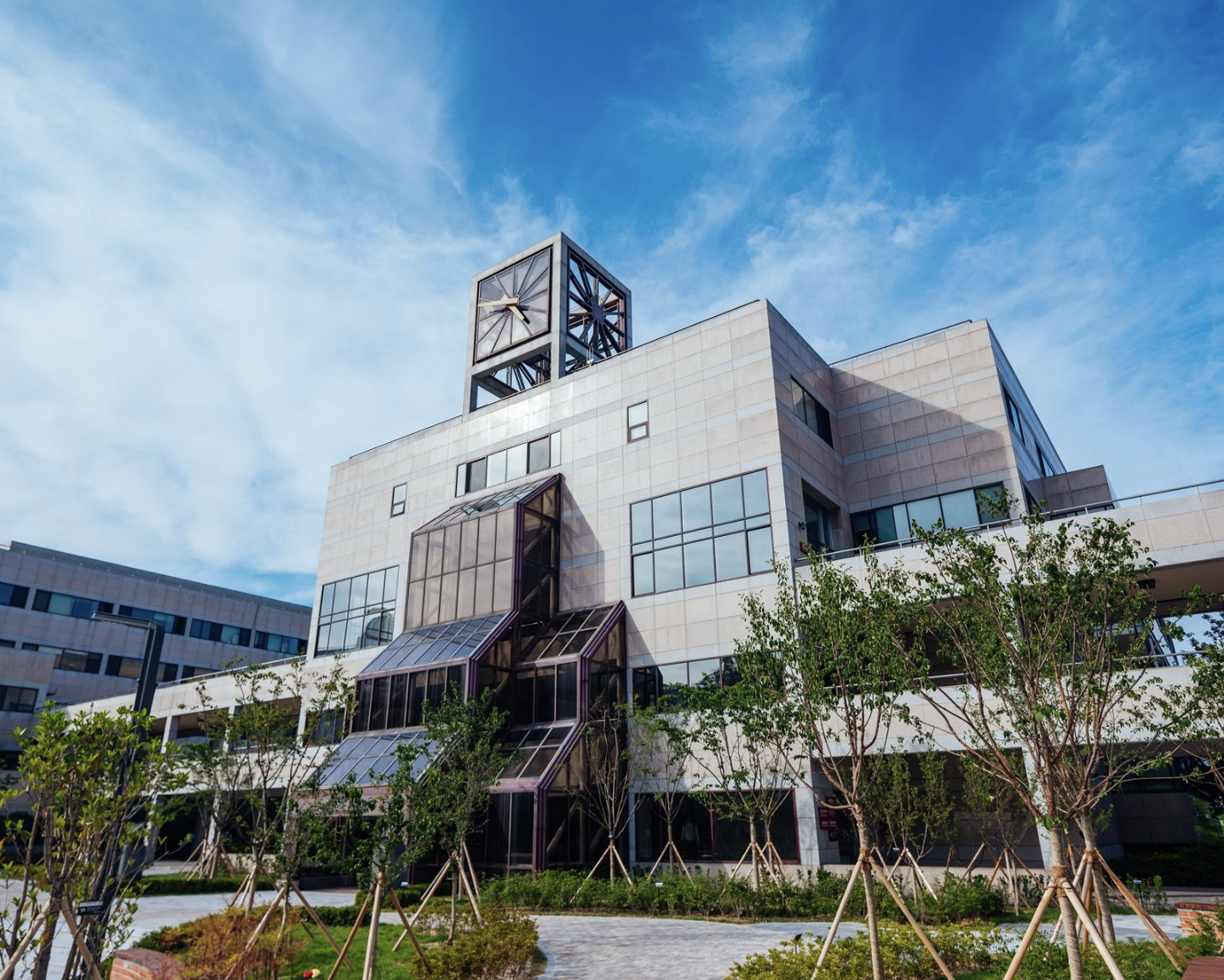
The workshop will be held at the Asia Pacific Center for Theoretical Physics (APCTP) headquarters in Pohang, South Korea.
 

Invited speakers:

  • Alexei Andreanov (IBS Daejeon)
  • Rudranil Basu (BITS-Pilani)
  • Raul Perea Causin (Stockholm University)
  • Francisco Correa (University of Santiago)
  • Yi-Hsien Du (MIT)*
  • Benoit Estienne (Sorbonne University)
  • Aleksander Głódkowski (Wrocław University of Science and Technology)
  • Jung-Hoon Han (Sungkyunkwan University)
  • Boom-Hoon Lee (CQUeST, Sogang University)
  • Lea Mele (University of Mons)
  • Saikat Mondal (IIT Kanpur)
  • Moon Jip Park (Hanyang Univerisuty)
  • Matthew Roberts (University of Iceland)
  • Sang-Jin Sin (Hanyang University)
  • Dam Thanh Son (University of Chicago)*
  • Jie Wang (Peking University)
  • Bo Yang (NTU Singapore)
  • Wang Yuzhu (NTU Singapore)


(*): online


Organizers:

Eric Bergshoeff (e.a.bergshoeff@rug.nl)

Ki-Seok Kim (tkfkd@postech.ac.kr)

Giandomenico Palumbo (giandomenico.palumbo@gmail.com)

Patricio Salgado-Rebolledo (salgado.rebolledo@apctp.org)
 

    • 16:00 17:00
      Registration 1h
    • 17:00 18:00
      Welcome and Discussions 1h
    • 18:00 19:00
      Dinner 1h
    • 09:00 09:30
      Registration 30m
    • 09:30 09:40
      Opening 10m
    • 09:40 10:40
      Probing quantum Hall systems through entanglement entropy and charge fluctuations 1h

      Understanding how quantum information is distributed in many-body systems can reveal hidden structures and universal properties. In quantum Hall phases, the Li-Haldane conjecture provides a powerful guide: it proposes a bulk-edge correspondence for entanglement, asserting that the entanglement (or modular) Hamiltonian lies in the same universality class as the effective 1D Hamiltonian that would govern the gapless edge modes if the fluid were physically confined to the subregion of interest. In this talk, I will explore how entanglement and charge fluctuations are distributed across symmetry sectors in both integer and fractional quantum Hall states. The integer quantum Hall effect offers an ideal testing ground. Free-fermion methods allow exact calculations, making it possible to verify the Li-Haldane conjecture explicitly and to track how the shape and geometry of the subregion imprint themselves on entanglement properties. For fractional quantum Hall states, one can instead employ high-precision matrix product state simulations. The resulting symmetry-resolved entanglement spectra can be directly compared to the conjecture’s predictions, showing striking agreement and revealing how distinct neutral and charged velocities shape the structure of finite-size effects. Together, these results provide one of the most stringent tests of the Li-Haldane conjecture to date and highlight its remarkable explanatory power in organizing and interpreting symmetry-resolved entanglement across quantum Hall phases.

      Speaker: Benoit Estienne
    • 10:40 11:30
      Microscopic theory of geometric excitations in strongly-correlated topological Chern bands 50m

      We introduce a microscopic paradigm for geometric excitations called the graviton modes in Landau levels, and extend such studies to fractional Chern insulator (FCI) phases in moiré Chern bands. Strikingly, we identify an emergent guiding-center rotational symmetry in the FCI ground states and graviton modes, yet this symmetry is completely absent in the excitation continuum, leading to drastically shorter graviton lifetimes than in Landau levels. We develop a microscopic model to explain this phenomenon. Furthermore, we propose experimental tuning strategies for the detection of graviton modes in moiré materials as a new platform for probing geometric excitations in 2D quantum materials. We will also talk about the generalization of geometric excitations to higher spins.

      Speaker: Yuzhu Wang
    • 11:30 12:00
      Coffee Break 30m
    • 12:00 13:00
      Emergent conformal Hilbert spaces and anyon dynamics in partially filled Chern bands 1h

      The fractional quantum Hall (FQH) effect realized in Landau levels is a family of strongly correlated topological quantum fluids in two dimensional space, with exotic low-lying collective excitations that are anyonic and even non-Abelian. Here we propose a unified framework in understanding the integer and fractional quantum Hall systems via Hilbert spaces with emergent conformal symmetry, and show how it can be extended to more general Chern bands with no external magnetic field. The hierarchical structure of the conformal Hilbert spaces (CHS) allows us to reveal internal structures of anyons, which are “elementary particles” of the CHS, as well as the dynamical properties of geometric excitations crucial for the incompressibility gap of the topological phases. We discuss the fundamental similarities and differences between Landau levels and generic Chern bands via new analytic tools derived from the CHS, and the experimental relevance of the “high energy physics” in 2D topological systems.

      Speaker: Bo Yang
    • 13:00 14:30
      Lunch 1h 30m
    • 14:30 15:30
      Flat band and Kondo Physics in holographic mean field theory 1h

      After introducing the hologhraphic mean field theory, I will talk about its application with flat band and Kondo physics in a strongly correlated material.

      Speaker: Sang-Jin Sin
    • 15:30 16:30
      The Soliton Nature of the Super-Klein Tunneling Effect, Confinement, and Zero-Energy States in 2D Dirac Systems 1h

      This talk presents a unified view of soliton-induced transparency and supersymmetric confinement in two-dimensional Dirac systems. I first show how the super-Klein tunneling (SKT) effect arises from a correspondence between the Davey–Stewartson II (DS II) integrable system and quasi-exactly solvable Dirac Hamiltonians generated by DS II breather solutions. I then review supersymmetric methods for designing electrostatic potentials that display perfect transmission, localized states, and zero-energy modes. Exactly solvable Lorentzian wells that mimic quantum-dot confinement and radial ring potentials illustrate how supersymmetry organizes degeneracies and exotic current-carrying zero modes. Overall, the framework links integrability, supersymmetry, and perfect transmission in 2D Dirac materials.

      Speaker: Francisco Correa
    • 16:30 18:30
      Coffee Break and Discussions 2h
    • 18:30 20:00
      Dinner 1h 30m
    • 10:00 11:00
      Bloch electron on Moire superlattice: from superconductivity to non-coplanar spin systems 1h

      Moiré superlattices in van der Waals heterostructures provide an exceptionally versatile platform in which electronic, orbital, and spin degrees of freedom can be engineered at the mesoscopic scale. By twisting or lattice-mismatching atomically thin layers, one can create flat or quasi-flat bands with strongly enhanced interaction effects, driving a rich assortment of correlated phases ranging from unconventional superconductivity and correlated insulators to topological states. In this talk, I will first discuss how moiré band engineering controls superconductivity, for example, through bandwidth tuning, valley and spin degeneracies, and quantum geometry of the Bloch wavefunctions. I will then turn to moiré platforms that stabilize non-coplanar spin textures, including chiral magnets and skyrmion orders emerging from frustrated exchange coupling encoded in the moiré pattern. In such systems, Berry curvature and scalar spin chirality can induce large anomalous and topological Hall responses, and potentially intertwine with superconductivity in the same moiré environment.

      Speaker: Moon Jip Park
    • 11:00 12:00
      Quantum Geometry for Fractional Chern Insulators and Exact Sum Rules 1h

      Geometry is a fundamental mathematical concept that also plays a crucial role in characterizing the local properties of quantum states, including both pure and mixed states. Pure state geometry, often referred to as wavefunction geometry, is known to be important in many areas of zero-temperature condensed matter physics, such as the anomalous Hall effect and electron localization. Mixed state geometry, or density matrix geometry, is essential in quantum information science, with applications in quantum metrology and entanglement witnessing. In this talk, I will begin by reviewing quantum geometry, encompassing both pure and mixed stats, and clarify the relationship between them. I will then discuss how wavefunction geometry is useful for characterizing fractional Chern insulators, with applications in moiré materials. Finally, I will show how density matrix geometry leads to families of exact sum rules.

      Speaker: Jie Wang
    • 12:00 13:30
      Lunch 1h 30m
    • 13:30 14:30
      Ultra-Local Flat Bands, Carroll Symmetry, and Higher-Order Topology in 1D and 2D Fermion Models 1h

      I will discuss a unified approach to constructing exactly flat bands in 1D and 2D lattice models using algebraic ultra-locality conditions equivalent to emergent Carroll symmetry. In 1D, this leads to compact localised states, commuting Hamiltonian densities, strictly local correlations, and subsystem-size independent entanglement entropy. Carroll-preserving interactions produce solvable quantum phases and Hilbert-space fragmentation. Extending these ideas to 2D yields a minimal four-band model that realises a higher-order topological insulator with protected corner states, along with characteristic entanglement and magnetic-flux responses. The talk highlights how Carroll symmetry provides an organising principle for designing flat-band systems with rich dynamical and topological structure.

      Speaker: Rudranil Basu
    • 14:30 15:00
      Coffee Break 30m
    • 15:00 15:50
      Carroll at Phase Separation 50m

      Recent years have witnessed growing interest in physical theories that go beyond the standard paradigm of Lorentz invariance, where Lorentz or Poincaré symmetry no longer governs the dynamics. This emerging direction, broadly referred to as non-Lorentzian physics, has proven to be a fertile ground for new insights across diverse areas such as condensed matter systems, hydrodynamics, and quantum gravity. Among these structures, Carrollian symmetry has garnered significant attention, which was first obtained from the Poincaré group through a contraction by taking the limit speed of light going to zero. Carrollian symmetry naturally emerges on null hypersurfaces, such as the event horizon of black holes and the null boundaries of asymptotically flat spacetimes. A particularly striking example arises in the context of the Luttinger liquid, which categorises an extensive range of many-body phases in one and quasi-one-dimensional systems. While relativistic conformal field theory (CFT) techniques successfully describe phases like the Luttinger liquid, they break down near phase separation (PS). In this talk, I will show that this breakdown can be realised as a signal of an emergent Carrollian conformal symmetry. Using analytic arguments based on Carrollian Ward identities, I will demonstrate that as the Luttinger velocity vanishes and the Luttinger parameter diverges, the system transitions from a relativistic CFT description to a Carrollian CFT. This predicts a qualitative change in the density–density structure factor, including a shift in the low-momentum scaling and a divergent compressibility at PS. I will present numerical evidence to confirm these predictions.

      Speaker: Saikat Mondal
    • 15:50 16:40
      Carroll fermions 50m

      Motivated by recent applications of Carroll symmetry, various Carroll-invariant field theories have been constructed and studied. Two distinct Carrollian theories, commonly referred to as magnetic and electric, can be obtained. In this talk, I will present the Carroll limits of relativistic spin-1/2 Dirac fermions in arbitrary spacetime dimensions. I will explain the subtlety that arise with fermions due to the first order nature of their Lagrangians, and how one can nevertheless obtain two different Carrollian limits. I will also briefly discuss possible generalisations to higher-spin Carroll fermionic fields.

      Speaker: Lea Mele
    • 16:40 18:30
      Coffee Break and Discussions 1h 50m
    • 18:30 20:00
      Dinner 1h 30m
    • 09:30 10:20
      Unconventional fractional Chern insulators in moiré systems 50m

      I will review the recent progress on moiré fractional Chern insulators (FCIs), focusing on the recent predictions of non-Abelian phases, the experimental and theoretical work on Hall crystals, and the limitations of ideal quantum geometry as an indicator of FCIs. In this context, I will discuss the possibility of stabilizing Laughlin states in trivial bands, the potential emergence of parafermions in moiré systems, and the conditions favoring Hall crystals in ideal Chern bands. Finally, I will provide an overview of excitons (bound electron-hole pairs) in moiré semiconductors and demonstrate that they can form highly stable bosonic FCIs.

      Speaker: Raul Perea-Causin
    • 10:20 11:10
      Effective field theory for superfluid vortex crystals 50m

      Rotating Bose-Einstein condensates of trapped cold atoms form quantum vortex crystals. In this talk, I will present a bottom-up derivation of the effective field theory governing the low-energy excitations of such vortex crystals in two spatial dimensions. By embedding the system in Newton-Cartan geometry and analyzing the isometries of the resulting background, I identify the nonrelativistic symmetry group that generalizes the Bargmann group in the presence of an effective magnetic field. Using the coset construction, I then construct the most general theory consistent with the associated symmetry-breaking pattern. Finally, I clarify the role of redundant Goldstone fields and discuss the structure of the resulting low-energy theory in the hydrodynamic limit.

      Speaker: Aleksander Glodkowski
    • 11:10 11:30
      Coffee Break 20m
    • 11:30 19:00
      Lunch + Trip to Gyeongju 7h 30m
    • 19:00 20:00
      Dinner 1h
    • 10:00 11:00
      Black Holes in Holography 1h

      We review various black holes in AdS space with the holographic point of view in mind. The topic to be included is the geometric realization of the phase transitions, the Maxwell construction, diverse phases in nonlinear charge interactions, etc. We also consider the ensemble dependence of the phases through the charged black holes, whose corresponding meaning in terms of the boundary field theory is not yet clear

      Speaker: Bum-Hoon Lee
    • 11:00 12:00
      Magnetic defects and counting degrees of freedom 1h

      Conformal field theories are wonderful universal objects that can be used to describe the deep infrared of strongly coupled systems, However, CFTs describe systems preserving all translations, rotations and boosts. If we consider systems with extended defects, in the deep infrared we find a more complicated system known as a defect CFT. These host an even richer structure than standard CFTs and are often quantified with new universal numbers, including new critical exponents and anomaly coefficients. In this talk we will review a specific class of "magnetic defects" made by considering an infinitely long and thin solenoid. We measure new universal quantities and discuss the nuances of monotonicity in defect CFTs. Due to the complicated nature of the systems in question, we often resort to tools from high energy theory, such as supersymmetry.

      Speaker: Matthew Roberts
    • 12:00 13:30
      Lunch 1h 30m
    • 13:30 14:30
      GMP algebra and fractonic dynamics of CP(N-1) skyrmions 1h

      Skyrmions were proposed in 1961 by Tony Skyrme as a mathematical description of hadrons. Observation of the O(3) version of the skyrmion in two dimensions in a variety of magnetic materials since 2010 sparked keen interests in its structure, dynamics, and potential device applications. I give a brief review of the history of the theoretical and experimental progress in magnetic skyrmions over the past 15 years. In recent years, magnetization dynamics for higher-spin systems with dipolar, quadrupolar, and general multipolar order came into focus. In keeping with the progress, I present the generalization of the existing CP(1) theory of skyrmion dynamics to arbitrary CP(N-1) skyrmions. It is shown that the Girvin-MacDonald-Platzmann (GMP) algebra of the CP(N-1) topological density is generally obeyed without reference to the specific Hamiltonian. The continuity equation for the topological density has a fractonic nature, which allows for the total charge and dipole conservation and explains the immobility of an isolated CP(N-1) skyrmion. The dipole conservation is loosened upon the introduction of Gilbert damping, which in turn allows the skyrmion-antiskyrmion creation/annihilation process.

      Speaker: Jung-Hoon Han
    • 14:30 15:30
      Flat bands: construction, properties and effects of perturbations 1h

      Flat bands are dispersionless energy bands in tight-binding networks.
      The quenched kinetic energy (due to the absence of dispersion), makes them promising hosts for unconventional and exotic phases of matter in presence of perturbations, like disorder or interactions.
      I will start with a overview of flat bands, and then discuss how flatbands can be constructed in various tight-binding settings, what are their properties and how their properties change in presence of perturbations, like disorder or interactions.
      I will discuss in particular, the emergence of non-perturbative metal-insulator transitions and ergodicity breaking:
      many-body localisation and many-body flatband localisation (with connections to percolation transitions), as well as weak ergodicity breaking.

      Speaker: Alexei Andreanov
    • 15:30 18:30
      Coffee Break and Discussions 3h
    • 18:30 20:00
      Dinner 1h 30m
    • 10:00 11:00
      Chiral Graviton Theory of Fractional Quantum Hall States 1h

      Online talk - I will present a nonlinear, gauge-invariant effective field theory for the chiral graviton—the spin-2 neutral collective mode seen in polarized Raman scattering experiments on fractional quantum Hall states. The theory is constructed by gauging area-preserving diffeomorphisms with a unimodular spatial metric and introducing a Stueckelberg mass term that opens a tunable gap while preserving gauge redundancy. With a geometric Maxwell sector plus Wen-Zee and gravitational Chern-Simons terms, the theory yields a gapped chiral spin-2 excitation and realizes an isotropic-nematic quantum critical point where the mode softens. I will also outline extensions to fractional Chern insulators and non-Abelian fractional quantum Hall states that capture spin-2 and spin-3/2 neutral modes.

      Speaker: Yi-Hsien Du
    • 11:00 12:00
      Tkachenko mode in rotating superfluid and noncommutative field theory 1h

      Online talk - A superfluid rotates by creating a lattice of quantized vortices. The Tkachenko mode is an elastic wave propagating on the vortex lattice with two unusual properties: quadratic dispersion relation and absence of longitudinal polarization. We construct an effective field theory description of the Tkachenko mode using the formalism of noncommutative field theory. Using this theory we derive the decay rate of the Tkachenko mode.

      Speaker: Dam Thanh Son
    • 12:00 13:30
      Lunch 1h 30m
    • 13:30 18:30
      Discussions 5h
    • 18:30 20:00
      Dinner 1h 30m