Choose timezone
Your profile timezone:
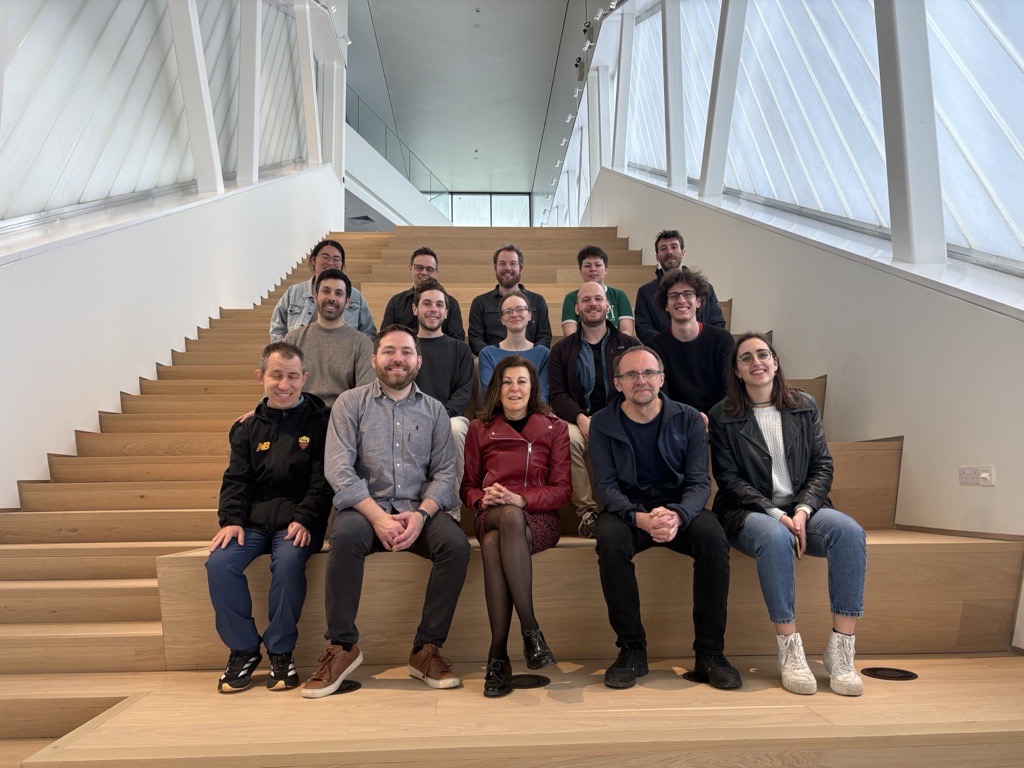
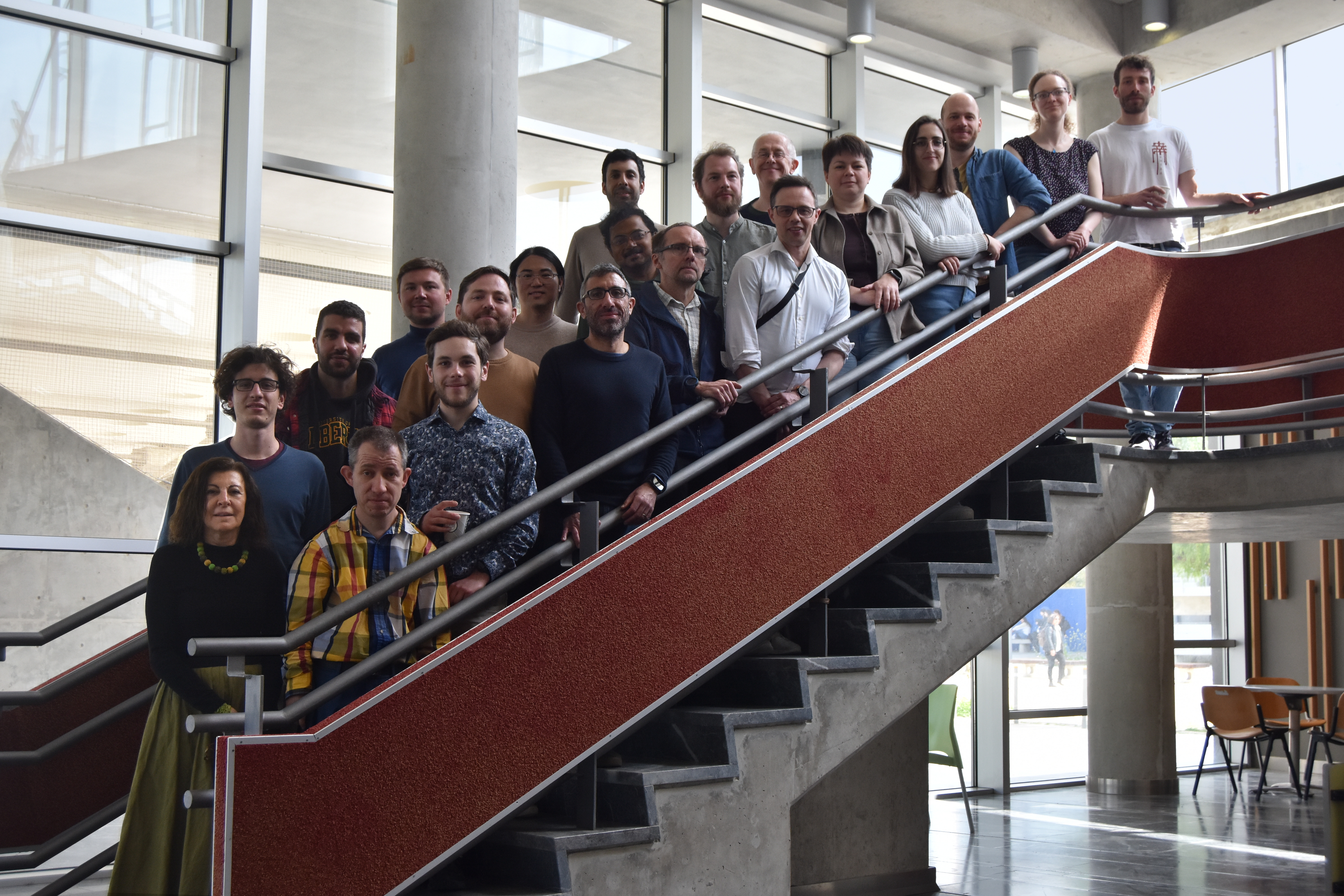
Topics of discussion will include:
Organizing Committee:
Workshop Speakers:
This workshop is supported by the project Baryon8 and IMAGE-N co-financed by the European Regional Development Fund and the Republic of Cyprus through the Research and Innovation Foundation within the framework of the Cohesion Policy Programme “THALIA 2021-2027”.


This workshop is also supported by AQTIVATE, which received funding from the European Union’s research and innovation programme under the Marie Skłodowska-Curie Doctoral Networks action and Grant Agreement No 101072344.


3 talks
25/03 is a holiday in Cyprus, so we can enjoy a quiet campus and visit some of its outstanding buildings.
3 talks
We present the first lattice QCD determination of the Λ → N vector and axial-vector form factors, which are essential inputs for studying the semileptonic decay $\Lambda\rightarrow p \ell \overline{\nu}_\ell$. This channel provides a clean, theoretically controlled avenue for extracting the CKM matrix element |$V_{us}$| from the baryon sector. Our analysis uses a gauge ensemble with physical light, strange, and charm quark masses and yields the most precise determination to date of the full set of transition form factors—including second-class contributions—as well as the associated couplings, radii, and the ratio of muon-toelectron decay rates, an observable sensitive to possible non-standard scalar and tensor interactions. We compare our non-perturbative results with next-to-next-to-leading order expansions in the small parameter δ = $(m_Λ − m_N )/m_Λ$ ≈ 0.16. We find that the common phenomenological approximation of neglecting the $q^2$-dependence of the form factors leads to a ∼ 4% deviation in the decay rate. This underscores the critical importance of precise, fully non-perturbative form factor inputs for achieving the sub-percent precision targets of upcoming experimental programs.
With the large datasets from $e^+e^-$ annihilation at the $J/\psi$ resonance collected at the BESIII experiment, multi-dimensional analyses leveraging polarization and entanglement can provide new insights into the hadronic structure of semileptonic decays. New studies at BESIII allow one to measure the form factor ratios of the (anti)hyperons in the decays $J/\psi\to\Lambda\bar{\Lambda}$ and $\Xi^-\bar{\Xi}^+$. Together with lattice QCD calculations, the value of the $V_{us}$ matrix element is extracted. Finally, the BESIII data sample collected at higher energy enables the measurement of semileptonic decays of $\Lambda_c^+$ and the extraction of the $V_{cs}$ matrix element value.
Semileptonic hyperon decays provide a powerful and largely unexplored laboratory to test the Standard Model in the strange sector. In particular, they offer complementary sensitivity to lepton flavour universality (LFU) and to the CKM matrix element |$V_{us}$|, with different hadronic and operator sensitivities from the kaon sector. While the electron modes are known with relatively good precision, the corresponding muonic branching fractions are still poorly measured in several channels, leaving LFU tests in strange baryons essentially open.
In this talk, I will present the LHCb programme on hyperon semileptonic decays, focusing on the channels $\Lambda \to p \ell^- \bar{\nu}_\ell$ and $\Xi^- \to \Lambda \ell^- \bar{\nu}_\ell$. I will discuss the experimental strategy developed at LHCb to reconstruct decays with a neutrino in the final state, including kinematics-driven selections, background suppression, and multidimensional fit techniques. I will also highlight recent progress from Run 2 and the prospects for Run 3, where the all-software trigger and larger strange-hadron samples enable a significant improvement in precision.
These measurements open the way to the first single-experiment LFU tests in hyperon decays, to studies of semileptonic form factors, and to an independent baryon-based determination of |$V_{us}$|, with direct implications for the Cabibbo-angle anomaly and first-row CKM unitarity tests.
3 talks
It is discussed why decays of the Omega baryon can be an interesting test bed for the interplay of high-statistics experiments, lattice QCD, effective field theory and other QCD based methods. In particular, the semileptonic decays of the Omega baryon are related by flavor symmetry and crossing to the production of Delta baryons in neutrino-matter interactions [1,2] and to the Delta-Delta-pion coupling constant where not even the sign is known [3]. Non-leptonic two-body decays show an unexpectedly large violation of the Delta I = 1/2 rule. This violation can be studied in much more detail by differential data on non-leptonic three-body decays [2]. The absence of a specific non-leptonic decay within(!) the decuplet sector might point to the emergence of soft dynamical scales that do not vanish in the chiral limit (see also the talk of Nora Salone at this workshop). It is suggested how effective field theories could be extended and why this requires crucial input not only from experiment but also from lattice QCD and/or other QCD based methods.
[1] M. Holmberg and S. Leupold, Low-energy axial-vector transitions from decuplet to octet baryons, Phys. Rev. D 100, no.11, 114001 (2019)
[2] C.J.G. Mommers and S. Leupold, Estimates for rare three-body decays of the Omega baryon using chiral symmetry and the Delta I = 1/2 rule, Phys. Rev. D 106, no.9, 093001 (2022)
[3] M. Bertilsson and S. Leupold, Goldberger-Treiman relation and Wu-type experiment in the decuplet sector, Phys. Rev. D 109, no.3, 034028 (2024)
3 talks
In this talk, I review recent lattice-QCD results on meson-baryon spectroscopy. In particular, I present new results from the Baryon Scattering Collaboration for the $\Delta(1232)$ and $\Lambda(1405)$, obtained on an ensemble with $M_\pi \simeq 200$ MeV. For the $\Lambda(1405)$ channel, we find evidence for a two-pole structure. I also present a Bayesian analysis of the $\Lambda(1405)$ system that provides a more robust quantification of parametrization uncertainty and further supports the two-pole interpretation.
We present progress in a lattice QCD study of the electromagnetic and axial $N\to\Delta(1232)$
resonance transition form factors. Our long-term aim is to apply the Lellouch-L\"uscher
formalism to extract infinite-volume $N\to N\pi$ form factors from finite-volume
matrix elements. We previously computed the required $N\pi$ scattering amplitudes on an ensemble
with $N_f=2+1$ clover fermions at $m_\pi \approx 255$ MeV and $L\approx2.8\,\rm{fm}$,
and obtained the $\Delta$ resonance parameters $m_\Delta= 1378(11)\,\rm{MeV}$ and
$g_{\Delta-N\pi} = 23.8(2.8)$. We have now additionally computed the three-point functions
for six source-sink separations ranging from $t_{\rm sep}=0.7 - 1.2\,\rm{fm}$. Here, we present
a first look at the three-point functions data by extracting the $N\to\Delta$ transition form
factors using the single-hadron approach.
We present recent results of the Baryon Scattering (BaSc) collaboration concerning two-baryon spectroscopy from Lattice QCD on CLS ensembles. We focus on two systems: nucleon-nucleon scattering in both isospin states, $I = 0$ (deuteron) and $I = 1$ (dineutron); and strangeness $S = -2$ hyperon-hyperon scattering in the H-dibaryon channel. The latter is a coupled-channel system of $\Lambda\Lambda$, $N\Xi$, and $\Sigma\Sigma$ scattering. For both the $NN$ and H-dibaryon cases, we present preliminary results that extend prior studies at large pion masses towards lower ones, approaching the physical point. A particular focus is on the various left-hand cuts arising from one-particle exchanges.
3 talks
A first-principles computation of the inclusive semileptonic decay
rates of heavy mesons from Lattice QCD has a great phenomenological
relevance since the comparisons of the theoretical results with the
corresponding experimental data allows for stringent Standard Model
tests in the sector of Flavour physics. In this talk we present the
first fully non-perturbative computation of the $D_s \to X \ell \nu$
decay rate and of the associated leptonic moments, carried out on
state-of-the-art ETMC ensembles at the physical point with four lattice
spacings and three volumes. The extraction of the relevant smeared
spectral densities from Euclidean four-point correlation functions has
been performed with controlled statistical and systematic uncertainties
by using the Hansen-Lupo-Tantalo method. Additionally, we present
preliminary results of our ongoing calculation of the inclusive
semileptonic $B$ meson decay rates.
I will present the status and outlook of determinations of K → ππ decays from lattice QCD with focus on the efforts by the RBC and UKQCD collaborations.
We perform a global analysis of negative-strangeness meson–baryon scattering using lattice QCD
and experimental data within the Chiral Unitary Approach. The lattice data are analyzed via the
Lüscher formalism, including coupled channels. Systematic uncertainties from data limitations, ambiguities, and framework dependence are quantified using statistical tools. We present pole positions
for isoscalar resonances with full uncertainty estimates and provide predictions for isovector states,
which remain less constrained.
3 talks
An enormous number of strange baryons, historically termed hyperons, are produced at the LHC. The lifetimes of ground state hyperons are two orders of magnitude larger than those of beauty and charm hadrons, which the LHCb detector was specifically built to reconstruct. I will highlight advantages and limitations in the reconstruction of hyperons at LHCb, and showcase the physics prospects of decays involving hyperons, with a focus on spectroscopy and its applications to searches for CP violation.
Nonleptonic hyperon transitions are studied in a relativistic framework of chiral perturbation theory ($\chi$PT). Previously, one-loop corrections to parity-violating and -conserving partial-wave amplitudes S and P have been computed in a nonrelativistic approach, focusing on the leading chiral logarithms [1]. This study concluded that a satisfying agreement with data and reasonable convergence is reachable for the S-waves, but not for the P-waves. In light of significant updates of asymmetry parameters on the experimental side (see [2] and references therein), we attempt a (re)calculation of one-loop corrections in relativistic $\chi$PT in the EOMS renormalization scheme [3, 4]. Following the suggestion of [5], the unknown low-energy constants are estimated using explicit resonances corresponding to the chiral order of the one-loop corrections. We present our results for the combined fit to S- and P-wave amplitudes, as well as the relative importance of the considered contributions, such as the role of resonances and decuplet baryons as intermediate states. To summarize, our goal is to provide an updated theoretical description of weak nonleptonic hyperon decays in
$\chi$PT up to one-loop corrections, based on the most recent data and theoretical framework.
References
[1] E. Jenkins, Nucl. Phys. B 375 (1992), 561-581.
[2] Phys. Rev. D 105 (2022) 11, 116022.
[3] Phys. Rev. D 68 (2003), 056005.
[4] Front. Phys. 8 (2013), 328–348.
[5] Phys. Rev. D 59 (1999), 094025.
3 talks
Perspectives for measurements of semileptonic and electromagnetic (Dalitz) decays of hyperons in proton-proton collisions at FAIR with the CBM detector will be given. The main motivation for these measurements is extraction of transition form-factors of the octet and decouplet ground states and improvements in precision of branching ratio determination. Combination of these two measurements should be particularly valuable for extraction of vector transition form factors that are connected by current vector conservation. Short summary of experimental results obtained so far at FAIR with the HADES detector for Dalitz decays of Delta, N* and Sigma0 resonances will also be given to illustrate experimental techniques used to identify Dalitz transitions and to compare them to the simulated CBM performance.
The magnetic and electric dipole moments (MDM and EDM) of charm baryons have yet to be measured. These fundamental properties are sensitive probes of non-perturbative QCD dynamics and potential signatures of physics beyond the Standard Model. LHCb’s upgraded trigger presents new opportunities for physics analysis in charmed baryon decays. This report presents a pre-study of the promising charmed-baryon channels, including a dedicated reconstruction framework for charmed baryons with long-lived particles.
3 talks
In this talk I will give an overview of the phenomenology of neutron beta decays and the associated Standard Model precision tests in terms of the neutron axial charge $g_A$ and light-quark CKM element $V_{ud}$. Increased precision in current and planned experiments calls for improved theoretical predictions carefully taking into account the non-perturbative effects from QCD. With a precision goal at the sub-percent level also radiative corrections are needed. These can be determined with lattice QCD, effective field theory and dispersion theory. Here I will briefly review what is currently known, and what still needs to be calculated for future precision tests from neutron beta decays.
3 talks