Choose timezone
Your profile timezone:
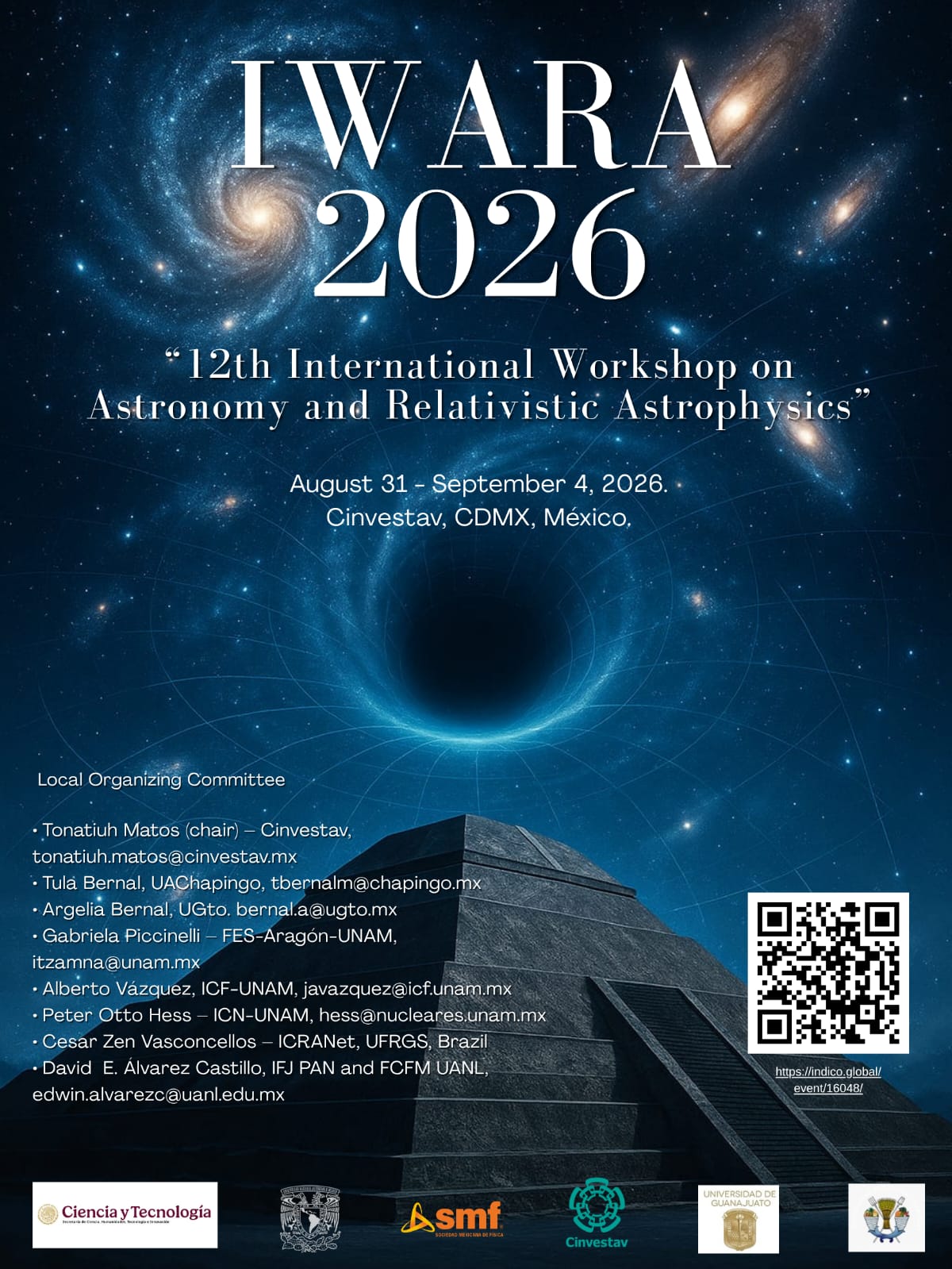
The event will be exclusively in person.
Our understanding of the origin of the Universe, of its evolution and the physical laws that govern its behavior, as well as on the different states of matter that makes up its evolutionary stage, reached in recent years levels never before imagined. This is due mainly to the new and recent discoveries in astronomy and relativistic astrophysics as well as to experiments on particle and nuclear physics that made the traditional boundaries of knowledge on physics to be overcome. As a result we have presently a new understanding about the Universe in its two extreme domains, the very large and the very small: the recognition of the deep connections that exist between quarks and the cosmos.
The intimate relationship between quarks and cosmos has motivated the organization of the series of international events known by the acronym IWARA – International Workshop on Astronomy and Relativistic Astrophysics.
The event is the 12th in a series of meetings gathering scientists working on astroparticle physics, cosmology, gravitation, nuclear physics, and related fields. As in previous years, the IWARA 2026 meeting sessions will consist of exclusively in person invited and contributed talks, poster sessions, and will cover recent developments in the following topics:
The event will be organized by Universidad Nacional Autónoma de México (UNAM).
During the IWARA2026 event, the Sandoval Vallarta Prize will be awarded to the top five student contributions of the poster session.
Some important dates.
June 30: Last day to register an abstract
July 31: Last day to pay the reduced registration fee
August 31: Last day to pay the registration fee
Workshop: August 31 to September 4
The Thirteen Towers of Chankillo (fourth century B.C.E., coastal Peru) form a calibrated solar observatory whose visual span of 47◦ exactly matches the Sun’s annual declination range. This correspondence is not a coincidence of natural topography but the result of deliberate architectural design: the towers are positioned along a gently curving ridge at a fixed distance of approximately 235 m from two formal observing points, creating a “topological horizon” that compensates for the site’s latitude and the Sun’s oblique trajectory. While a companion paper explores the potential uses of this instrument for tracking long-period celestial cycles, the present article addresses a prior and more fundamental question: how did the builders arrive at this design, and what does the answer imply about the relationship between landscape, sky, and human cognition in the Early Horizon Andes? We develop three non-exclusive explanatory pathways. The first is empirical: the solar arc was measured over multiple generations and encoded in stone without knowledge of its astronomical cause. The second is cosmological: the Andean concept of pacha—a unified space-time continuum—may have motivated the materialization of perceived celestial order in the landscape. The third is geometric: the builders may have understood, through trial and error or through an intuitive grasp of projective geometry, how to compensate for the∼43.4◦ flat-horizon arc at their latitude by using the ridge height and the observer’s distance to stretch the visual angle to the required 47◦. None of these pathways is definitively established, but together they illuminate the depth of the enigma posed by Chankillo’s design and invite a broader reflection on the cognitive and cultural capacities of pre-Inca societies.
In this talk, I will present some recent results regarding the study of boson stars and Dirac stars—self-gravitating systems in general relativity formed by massive complex fields, whether scalar, vector, or spinorial. In particular, I will consider spherically symmetric stationary solutions and their stability properties under perturbations.
Euclid is European Space Agency’s space telescope dedicated to cosmology, through two main probes: weak lensing and galaxy clustering. It was launched in July 2023 and is now in its third year of survey. It is performing a large photometric and spectroscopic survey of galaxies over 14000 sq. deg. of the Extragalactic sky (Wide Survey), as well as a Deep Survey of three areas of the sky (53 sq. deg., 2 mag. deeper than the Wide Survey), and Auxiliary Fields for calibration purposes. The design of the survey and data-processing are performed by the Euclid Consortium, while science operations are performed by the Science Operations Centre at ESA-ESAC. In this presentation, I will focus on the Euclid mission and its on-going survey, as well as present early scientific results and future prospects.
Abstract: In this talk, I will discuss an interesting model that can be detected directly through gamma-ray emission, producing a signal that can be detected in future experiments. Additionally, we discuss a model that produces an accelerating phase without the necessity of a dark energy component, only breaking the symmetry of homogeneity.
We present the implications of incorporating noncommutativity into f(R) gravity. In particular, we explore the proposed framework in a flat FRLW background. We introduced a deformation in a 2n-dimensional phase space.
The nature of dark energy (DE) challenges our comprehension of the cosmos, appearing as the source responsible for the Universe’s accelerating expansion. This work considers the Einstein Cosmological Constant (ΛE) as a manifestation of DE, interpreted through the lens of Reparametrization Invariant Scaling Symmetry (RISS). Within this paradigm, ΛE emerges as a “kinetic energy” term, derived from relative temporal motion, setting it apart from the conventional kinetic energy based on spatial relative motion.
Central to this exploration is the scale factor λ(t) representing a reparametrization capable of rendering ΛE dynamically within the extended equations of Einstein’s General Relativity(EGR) as Λ=ΛE*λ^2. Through meticulous derivations, the governing equations of λ(t) and its interplay with ΛE are articulated. Imposing reparametrization symmetry on the equations of motion reveals a new avenue for addressing the missing mass problem evident at galactic and extragalactic scales. Here, improper/non-affine (non co-moving) temporal parameterizations introduce fictitious forces, whose presence is reconciled through the symmetry framework.
This symmetry-based approach naturally yields the MOND-like relationship, g^2 ∼ (a0gN), where g denotes gravitational acceleration, a0 represents the fundamental MOND acceleration, and gN is the Newtonian acceleration. The theoretical predictions for ΛE and a0 demonstrate remarkable alignment with their observed magnitudes, lending credence to this interpretation. This synthesis underscores a potential unifying principle in our understanding of dark energy and dark matter phenomena.
With three years of data, DESI is providing an increasingly precise view of the late-time Universe. In this talk, I will review what we have learned from DESI so far, from BAO to the latest full-shape results, and discuss the cosmological picture emerging from these measurements. I will then look ahead to the next steps: extracting more information from large-scale structure, going beyond standard two-point analyses, and discussing what we may learn from the next stages of DESI.
We present a multi-scale analysis of ultralight Bose-Condensate Dark Matter (BECDM). In a first scenario we study the case of the BECDM alone, and start with the construction of non-spherical BECDM halos using multimode expansions, demonstrating that a core-envelope structure effectively recovers the rotation curves of LSB galaxies, the quantum effects of a halo are discussed from the core to the granular region, and show that these virialized structures induce chaotic trajectories on test particles. In a second scenario we solve the Schrödinger-Poisson-Euler (SPE) system to study the gravitational coupling between the BECDM and baryonic gas, as a starter we show that Fermion-Boson Stars (FBS) emerge as robust attractor solutions for structure formation of galactic core size, at galactic scale we study the correlation between the BECDM granular dynamics and an ideal gas in order to determine whether BECDM has observable fingerprints on luminous matter. The coupling of BECDM and black holes leads us to find also attractor solutions, formed by the interaction between the black hole and an initial dark matter fluctuation, where the former acts as a seed for a galactic core. Finally, we present results on vortices, and show that vortex lines of BECDM imprint persistent ring-like morphological signatures on a coupled gas which survives nonlinear evolution. We finally show how vortices form from binary mergers.
The string tensions can be dynamical in the modified measure formalism and appear as an additional dynamical degrees of freedom . These tensions may not be universal, instead, each string generates its own tension. We then consider a new bulk field that can couple to the strings, the tension scalar which changes locally the tension along the world sheet. In the case with two string tensions there is a braneworld solution which gives rise to an induced de Sitter space in the brane, avoiding swampland constraints of the standard string theory. Strings with different tension to ours can appear also as Dark Matter and since they share the same space and compactifications as visible matter, they should lead to Dark copies of the standard model,
Abstract: Scalar field dark matter could provide a unified framework to describe galactic halos. In this talk, we present two complementary approaches based on self-gravitating scalar field solutions. First, we study ℓ-boson stars as dark matter halos and infer their parameters using observed rotation curves. Second, motivated by the presence of supermassive black holes at the centers of galaxies, we analyze how scalar field dark matter halos are modified by the inclusion of a central black hole. We construct gravitational atoms from solutions of the Einstein–Klein–Gordon equations, describing scalar field configurations that extend from the black hole vicinity to the outer halo region. We find that the presence of a black hole produces only a mild density enhancement near the horizon, in contrast with the sharp spikes expected for cold dark matter. Together, these results show how scalar field models can describe galactic dark matter halos across a broad range of scales.
A strongly self-interacting component of asymmetric dark matter (DM) particles can form compact dark stars (DSs). These objects have a broad spectrum of masses and radii, with distinct evolution histories from both neutron stars and black holes (BHs). We argue that these differences allow a population of DSs to contribute significantly to the astrophysical merger rate in unique and discernible ways. Specifically, their merger rate could dominate at low redshifts over other sources, while their mass function may populate windows outside known astrophysical processes. We investigate the structure and formation of DSs within a dissipative model, and calculate the enhancement of their merger cross-section due to tidal deformation effects. From this, we derive the cosmological DS merger rate and discuss the DM parameter space available for observation. These findings open a new window to probe DM substructure and particle interactions through present and future gravitational wave (GW) observatories.
IC 443 is a middle-aged SNR whose age, however, is estimated with high uncertainty to be from 3 to 30 10 3 years. IC 443 shows signs of interaction of SNR shells with surrounding molecular clouds and may also be overlapping with the older SNR G189+3.3. IC 443 has been intensively studied through multiwavelength observations in radio, X-rays, and MeV-TeV energy ranges, which aimed to reveal the explosion footprints and interactions with the surrounding medium. The IC 443 remnant exhibits a complex double-shell structure viewed in both optical wavelengths and non-thermal radio emission. While in the X-rays, IC 443 is characterized mostly by thermal emission, and there is no evidence of limb-brightened shells. The extended gamma-ray emission of 100 MeV–1 TeV within the radio shells was detected with the Fermi-LAT. The SHALON telescopes discovered extended emission from IC 443 at the energy range 800 GeV – 20 TeV, with the main contribution to the very-high-energy γ-ray fluxes given by the regions correlated with the East and North-East parts of the shell. The contribution of the East part of the IC 443 shell detected at TeV energies may correlate with the source of emission detected at 1 – 30 TeV by LHAASO, as well as the characteristics of the overall extended emission are consistent with those detected by HAWC and LHAASO experiments. The shape of the MeV to 100 TeV spectrum of gamma-rays from the complex structures of IC 443 is evidence of hadronic CR acceleration in the shocks of the investigated supernova remnant.
We start by examining the relations between the Kruskal representation and stereographic projection. Motivated by novel results in spherically-symmetric metrics, we explore the analogue of conformal-Minkowski mappings. To this end, we introduce 'Diamond Coordinates,' a compactified representation that naturally delineates local causal diamonds. By analyzing the worldlines of observers within finite interaction regions, we demonstrate how this framework explicitly captures the divergence of the Unruh temperature at the causal horizon. We conclude by mentioning another interesting recent development for these spacetimes, particularly the Schwarzschild black hole: the Golden representation, where the Golden Ratio appears to be ubiquitous.
We investigate a dark sector coupled to the Standard Model (SM) through a kinetically mixed dark photon
associated with a new
gauge symmetry. Kinetic mixing, parametrized by
, induces an effective coupling to the electromagnetic current, while the dark photon interacts with a stable dark matter (DM) particle
through a dark gauge coupling
, defining a four-dimensional parameter space
. Our analysis is based on the parton--hadron--string dynamics (PHSD) transport approach, extended to include dark photon production and decay into dileptons (
). In PHSD, dark photons are produced in high-energy collisions through Dalitz decays of light mesons (
), Delta-resonances (
), direct vector meson decays (
), kaon decays (
), and
annihilation. Building on previous PHSD benchmarks against dilepton data, we extract upper limits on
in both the visible regime (
), where
dominates, and the invisible regime (
), where
is kinematically open and suppresses the dilepton branching fraction. Cosmological and astrophysical constraints are incorporated in two
complementary ways. First, we compute the velocity-dependent self-interaction cross section
for Yukawa-mediated SIDM and confront it with bounds from dwarf galaxies, galaxy groups, and clusters. Second, we determine thermal relic target curves by computing the relic abundance and requiring
, consistent with \textit{Planck} measurements of the cosmic microwave background. Combining PHSD limits on
with relic density and self-interaction requirements, we exclude regions of the
plane for each DM realization (Dirac fermion, Majorana fermion, or complex scalar) and identify benchmark scenarios in which heavy-ion, cosmological, and astrophysical constraints are simultaneously satisfied.
This work presents a formal mathematical and arithmetic framework for the construction of the ancient 260-day Mesoamerican ritual calendar. We demonstrate that the fundamental calendar relation (365×52=260×73) is a direct representation of Kepler's third law of orbital motion in synodic coordinates. Using a generalized definition of a short calendar count derived from symmetrical archaeoastronomical alignments about a solstice, we evaluate approximate solar year counts. Our model shows that an approximate 364-day year uniquely gives rise to the 260-day calendar (introducing the fundamental number 13) and a 360-day calendar (introducing the fundamental number 18), which naturally produces the 5 special nemontemi days. The resulting Type-A and Type-B alignments explain the historical use of specific "monad" fractions in the layout of major ceremonial centers like Teotihuacan and Tenochtitlan.
We present constraints on axion quintessence dark energy using the latest cosmological observations. Focusing on the physical parameters of the model, we find a preferred axion mass of log10(ma/eV)≃−32.6\log_{10}(m_a/{\rm eV}) \simeq -32.6log10(ma/eV)≃−32.6 and a decay constant of log10(fa/MPl)≃0.1\log_{10}(f_a/M_{\rm Pl}) \simeq 0.1log10(fa/MPl)≃0.1. We perform a Bayesian model comparison with the standard cosmological constant scenario and show that axion quintessence provides a competitive description of current data. Motivated by recent observational hints favoring dynamical dark energy, we discuss the implications of these results for the nature of cosmic acceleration and for ultralight axion physics. Finally, we outline the prospects for testing this scenario with forthcoming cosmological surveys and high-precision measurements.
Recent results from the DESI collaboration suggest a preference for an evolving dark energy (DE) component rather than a cosmological constant, motivating the exploration of alternative models for the background expansion. These data also reveal tension in the inferred matter density parameter -- lower in DESI and higher in Planck -- as well as a neutrino mass posterior that approaches the lower bounds permitted by oscillation experiments. In this work, we propose and test a conformal holographic DE (CHDE) model in which the DE density depends on a power law of the conformal time, characterized by an exponent (n). This formulation introduces a single additional parameter relative to LambdaCDM and reduces to it in the limit n = 0. We confront the CHDE model with BAO, CMB, and supernova datasets, following the same combinations used by DESI, and perform parameter inference under both flat and non-flat cosmologies. Our analyses show that LambdaCDM is not favored as the best-fit model when using CMB data alone or in joint analyses including BAO and SNla, and it is disfavored at the 4.4 sigma level for non-flat model and 4.5 sigma for the flat model. We obtain consistent values of n= -0.28 to -0.32 with uncertainties less than +-0.1 across multiple data combinations. Similar to LambdaCDM, the CHDE model predicts a lower matter density when employing DESI data instead of Planck data. This, in turn, influences the neutrino mass constraints, yielding values close to the minimal allowed range. Despite these dataset-dependent tensions, both the flat and curved CHDE models remain compatible with neutrino mass constraints from terrestrial experiments and yield posterior distributions that peaks at positive values. This behavior avoids the issue encountered in the LambdaCDM model, where the posterior peaks at negative mass values.
Observations have confirmed that satellite galaxies of the Milky Way, as well as those of Andromeda and Centaurus A, exhibit a non-homogeneous distribution known as the Vast Polar Structure (VPOS), where satellites show orbits aligned perpendicular to the host galaxy's plane. Conventional Cold Dark Matter (CDM) models face significant challenges in explaining this anisotropic distribution across multiple galaxies. In this work, we propose that the quantum nature of the Scalar Field Dark Matter (SFDM) model offers a natural explanation for the VPOS. By incorporating finite temperature corrections for a complex, self-interacting scalar field at early cosmological epochs, we demonstrate that the SFDM halo behaves as a macroscopic gravitational atom. We show that the system's quantum character allows for the formation of ground and excited states, specifically, p-states that resemble lobes along the north-south direction, which can explain the observed VPOS. By fitting these multistate SFDM solutions to rotation curves for the Milky Way, Andromeda, Centaurus A, and additional galaxies, we find that this model effectively accounts for the anisotropic distribution of satellite galaxies, suggesting that this structure may be a general characteristic of galaxies in the Universe.
Galactic magnetic fields with strengths of order microgauss and coherence lengths of kiloparsecs have been observed in galaxies. These fields tend to follow the interarm regions of spiral galaxies, but their origin remains an open question.
In this work, we investigate the possibility that the large-scale magnetic fields observed in galaxies arise naturally from a complex Scalar Field Dark Matter (SFDM) halo charged under a local $U(1)$ symmetry. The scalar field is minimally coupled to a gauge field $B_\mu$, with a charge $q\sim 10^{-45}e$. Treating the gauge field as a perturbation, we study the evolution of density perturbations in an expanding Universe. We show that the presence of the gauge field does not significantly modify the distribution of the multistate SFDM halo.
We derive analytical expressions for the temporal and spatial components of the gauge field in terms of Bessel functions and use them to calculate the corresponding electric and magnetic fields. We find that the model can naturally generate magnetic fields with strengths of order microgauss, with their magnitude determined by the free parameters of the model. Interestingly, the strength of the resulting galactic magnetic fields increases towards the past.
The Fermi Bubbles are two approximately symmetric, lobe-shaped gamma-ray-emitting structures extending above and below the Galactic disk of the Milky Way, roughly along its rotation axis, to distances of about 9 kpc. Despite their discovery in 2010, their origin and formation history remain unclear. Leading proposed scenarios include outflows driven by past AGN activity and supernova feedback. In this study, we examine the potential role of millicharged multistate scalar-field dark matter in the propagation of large-scale magnetic modes and its possible implications for the transport and confinement of high-energy charged particles within the Fermi Bubble region. The charged scalar background modifies the propagation of magnetic modes within the characteristic bipolar structure of the multistate dark-matter halo. We investigate whether these modifications can lead to anisotropic propagation or localization of magnetic modes and thereby contribute to some of the characteristic features of the Fermi Bubbles, such as their bipolar morphology and sharp edges.
We will discuss the possibility that dark matter is composed of particles lighter than about 10 eV,
in which case, the dark matter galaxy halo is best thought of as a set of waves. The astrophysical
consequences, and the experimental implications for axion detection, will be discussed.
We discuss a new dissipative fluid theory on an arbitrary (flat or curved) spacetime background. This theory is obtained from kinetic theory by applying a new version of the relativistic Chapman-Enskog method to derive the constitutive relations to first order in the Knudsen parameter. The novelty of our approach consists in applying a suitable projection method to solve the linearized Boltzmann equation and to use the so-called trace-fixed particle frame, which determines the state variables
,
,
(particle density, temperature parameter and four-velocity) by fixing the trace of the stress-energy tensor in addition to the particle current density. As we show, this leads naturally to a dissipative fluid theory which, in contrast to the traditional first-order theories (Eckart and Landau), is hyperbolic, causal, and stable at global equilibrium configurations.
We develop a formalism for generating solutions of conformal gravity theories. It is based on the result that the only static and spherically symmetric vacuum solutions of conformal general relativity are conformal to the Schwarzschild-de Sitter solution. The relevance of the formalism for the understanding of conformal symmetry, along with its physical and geometrical consequences, is discussed in light of two complementary points of view on conformal transformations, understood as either passive or active transformations in an abstract space of fields. We show that there are specific conformal Schwarzschild (vacuum) solutions representing wormhole geometries. The solutions are applied to describe the rotation curves of galaxies.
Galaxy clusters are the largest gravitationally-bounded systems in the Universe. In these objects, the dark matter (DM) represents almost 85% of their content, while ~5% are galaxies and the rest corresponds to hot gas filling the Intra Cluster Medium (ICM). If the DM is a heavy particle like the Weakly Interactive Massive Particles (WIMPs), galaxy clusters are exceptional targets to constraint DM particle properties by searching for diffuse gamma-ray emission obtained as final stable products of annihilation or decay to heavy quarks and leptons. In this work, we investigate an additional component to the diffuse emission in galaxy clusters, that results from the propagation of electrons and positrons originated from DM annihilation or decay. Indeed, for nearby clusters, we expect to have a significant boost in the expected emission from this e-e+ channel in the GeV-TeV energy regime. As an example, we simulate a Perseus-like cluster using CRpropa to obtain the expected emission at Earth, and compare to the sensitivity of both Fermi- LAT and LHAASO.
Extragalactic background light (EBL), formed by the light radiated and re-radiated by stars, galaxies, and active galactic nuclei throughout the evolution of the Universe, brings the imprint of the history of the rate of formation of emitting astrophysical objects and the universe expansion. It makes EBL one of the fundamental quantities in cosmology. Optical depth for high-energy emission from the distant active galactic nuclei provides a constraint for the EBL density that is clear from the foreground galactic and other emissions, and, therefore, for the cosmological parameters. Implications of the unique hard high-energy spectrum active galaxy 4C +55.17 at high redshift for determining the EBL density, and also as an instrument for resolving the Hubble tension, are illustrated. Derived parameters may be applied to further models of the formation of stars and galaxies, and the expansion of the Universe.
Understanding the extreme conditions inside neutron stars represents a
major challenge for Astrophysics. Here I present our investigation on
the behaviour of curvature invariants for a large ensemble
of neutron stars built with equations of state (EOSs) that satisfy
constraints from nuclear theory and perturbative QCD, as well as
measurements of neutron-star masses, radii, and gravitational waves from
binary neutron-star mergers. Surprisingly, our analysis reveals that
stars with negative Ricci scalar
are rather common, and
about
of our EOSs produce one or more stars with Ricci
curvature that is negative somewhere inside the star. Furthermore, this
negative curvature is found mostly but not exclusively at the highest
densities and pressures, and predominantly for stiff EOSs. Furthermore,
using a well-known relation between the Ricci scalar and the trace
anomaly,
, our analysis also allows us to determine the general
conditions under which the conformal symmetry of matter is broken and
restored in neutron stars. Finally, we determine a number of correlations
among the different scalar invariants and map the ranges of their allowed
values inside neutron stars.
Universidad Autonoma de Zacatecas, Mexico
It is well known that the relativistic equations have acausal
solutions, which have generally been ignored. This is particularly
true for higher spins. We consider spin 1/2 and spin 1 in this talk.
We analyze corresponding propagators which may indicate if a theory is
local or non-local. Negative-energy and tachyonic solutions are also
considered. The conclusions are paradoxical in both spins.
The pseudo-complex version of the Friedmann–Lemaître–Robertson–Walker model (pcFLRW) is presented within the framework of pseudo-complex General Relativity (pcGR). In this approach, dark energy emerges as a geometric consequence of the pseudo-complex structure, leading to a specific functional form for the Hubble parameter H(z) characterized by a single geometric parameter beta. This parameter governs the effective dark-energy equation of state via p_Lambda = -beta times epsilon_Lambda and is directly linked to the present-day time derivative of the Hubble parameter through H-dot_0 = (3/2) times (beta minus 1) times H_0 squared. Using recent DESI BAO data, we constrain beta = 1.0426 plus or minus 0.0144, which yields a positive H-dot_0 approximately equal to (0.94 plus or minus 0.32) times 10 to the minus 17 (km/s^2)/Mpc. This contrasts with the Lambda-CDM prediction, where H-dot_0 is negative (H-dot_0 approximately equal to -0.45 times H_0 squared for standard parameters), indicating that in pcGR the expansion rate is increasing with time while in Lambda-CDM it decreases. The best-fit value also implies a deceleration parameter q = -0.9361 plus or minus 0.0216. Using the exact Sandage–Loeb relation, the predicted redshift drift over 20 years for a source at z = 4 is Delta v approximately equal to -11.1 cm per second, in close agreement with the Lambda-CDM prediction but arising from a distinct geometric origin. Thus, the non-vanishing and positive H-dot_0 in pcGR provides a clear and testable target for future high-precision spectroscopic observations.
The NSF–DOE Vera C. Rubin Observatory began its ten-year Legacy Survey of Space and Time (LSST) in mid-2026, marking the start of an unprecedented survey of the southern sky. In this talk I present an overview of the observatory's current status from my perspective as part of the Mexican participation in the project, providing context for the broader community. I then turn to the scientific questions that motivate my own interest in this new dataset: the discovery and characterization of strong gravitational lens systems. LSST is expected to increase the known population of strong lenses by more than an order of magnitude, opening new opportunities for cosmological studies. I will also discuss the powerful synergies with DESI and outline the opportunities this presents for the Latin American astronomical and cosmological community.
Resumen: Ten years after the historic first detection of gravitational waves, I will explore how this new window into the Universe has transformed our understanding of the Universe. I will review the remarkable progress of the global LIGO Virgo and KAGRA network over the past decade, highlighting some of its most important breakthrough results. I will discuss the newly released GWTC-5 catalog, which brings the number of gravitational-wave signals to nearly 400 and provides an unprecedented view of the populations of black holes and neutron stars. I will highlight the implications for astrophysics, cosmology and fundamental physics of these observations, and conclude with the prospects for future discoveries with next-generation gravitational-wave detectors: Einstein Telescope, Cosmic Explorer and LISA.
Fitting cosmic observations with General Relativity and the Cosmological Principle requires assuming the existence of a dark sector that dominates gravitational dynamics and whose fundamental properties are still unknown. This fact has motivated the search for alternative gravity theories, which so far has given mixed results. In particular, 4th-order theories are mathematically intractable and are plagued by inconsistencies. To address this problem, we derived a second-order theory, “Schouten-Codazzi” (SC) gravity, that resembles GR and does not violate Lovelock’s theorem. Keeping the same energy momentum tensor as in GR, the geometric sector of SC is constructed as the sum of the Schouten curvature tensor and a second order tensor that must comply with the two following properties: (1) it is defined through diffeomorphisms applied to a generic tensor constructed from the invariant eigenvalues and eigenvectors of the Ricci tensor and (2) the diffeomorphisms must satisfy the Codazzi differential constraint. Applying SC gravity to standard FLRW cosmology leads naturally to the cosmological constant and adds free parameters that allow for a possible geometric interpretation for the dark sector. At the same time, the extra parameters remain consistent with solar system data and black hole horizons described by the Schwarzschild-like SC solution. The potential for a geometric interpretation for dark matter also arises from the application of SC gravity to static fluid solutions. Although SC gravity is still under development and further testing is necessary, it seems so far to be an appropriate candidate for an alternative theory.
We present a fully relativistic treatment of cosmological peculiar velocities within General Relativity, moving beyond the standard Newtonian approximation commonly employed in large-scale structure studies. Peculiar velocity fields are derived from analytic solutions of Einstein’s equations sourced by non-perfect fluids and interpreted through frame transformations with respect to a cosmological background identified with the CMB rest frame. In this framework, non-trivial velocity fields arise naturally from relativistic effects.
As a toy model, we further analyze localized inhomogeneous regions embedded in a ΛCDM background, providing a self-consistent relativistic description of cold dark matter flows in cosmic structures. This approach enables a direct connection between relativistic inhomogeneities, CMB-frame velocities, and local expansion rates. Our results show qualitative agreement with observed peculiar velocity magnitudes and indicate that relativistic modeling of inhomogeneous structures may have non-negligible implications for large-scale bulk flows and inferred values of the Hubble expansion, offering a new perspective on current observational tensions.
This talk presents new exact rotating wormhole solutions in Einstein–Maxwell–Dilaton (and Phantom) gravity. Their geometric structure, causal properties, traversability, tidal forces, electromagnetic fields, and the role of Wormhole Cosmic Censorship are discussed, providing physically viable wormhole configurations.
A natural explanation of the Galactic Magnetic Fields from multi-state Scalar Field Dark Matter
The 500 m Precision Floor in Neutron Star Radius Measurements
abstract. Multi-messenger observations of neutron stars aim to constrain the dense-matter equation of state via mass-radius measurements. We demonstrate that, for a canonical 1.4 M star, current crust-modeling uncertainties impose a persistent∼500 m precision floor in radius predictions. This threshold is comparable to—and in some cases exceeds—the radius differences predicted for quark-hadron transitions, hyperonic cores, dark matter admixture, and modified gravity. Consequently, in the one-dimensional mass-radius plane, these scenarios remain effectively degenerate. Breaking this degeneracy requires either reducing crustal uncertainties to σR ≪500 m—a challenge for current missions—or shifting toward multi-observable tomography. The 500 m precision floor thus reframes the inverse problem, motivating a move beyond radius measurements alone.
We present the Hybrid Relativistic-Newtonian Approximation (HRNA), a novel and computationally efficient framework designed to simulate the dynamics of self-gravitating systems orbiting within a fixed, curved background spacetime. The HRNA operates at the intersection of two physical regimes: the global motion follows exact general relativistic geodesics in a black hole metric, while the internal self-gravity interaction is resolved using localized Newtonian dynamics.
We formalize the asymptotic consistency of this framework by executing rigorous validation benchmarks under constant relativistic boosts in Minkowski spacetime. Furthermore, we apply the HRNA framework to simulate the tidal separation of binary star systems interacting with a Schwarzschild supermassive black hole. By comparing our results directly against traditional Post-Newtonian (PN) approximations, we demonstrate that the HRNA naturally captures strong-field relativistic effects without the computational complexity or high-order expansion breakdowns typical of PN methods.
These deep-encounter regimes carry profound astrophysical significance, as they drive tidal disruption events and represent a unified mechanism that simultaneously ejects hypervelocity stars out of the galaxy and captures their partners into tightly bound orbits, forming populations like the S-star cluster surrounding Sagittarius A*.
Abstract: In this work we present hybrid stars with a superconducting quark matter core covered by a hyperonic nuclear matter. The deconfined phase is modelled within a chirally symmetric density functional approach and follows a first order phase transition via a Maxwell construction from a hyperonic DD2 equation of state. While the hadronic phase is fixed, the range of properties of the quark matter phase as well as the position of quark onset is the result of the variation of three physical parameters of the microscopic quark Lagrangian, the vector and diquark couplings as well as the non-perturbative gluon mass. The latter represents the scale at which quark interactions cease and quark matter becomes asymptotically conformal. An earlier proposed fit formula for the quark equation is generalized to the case of arbitrary nonperturbative gluon mass and is used to produce a large set of hybrid equations of state applied for Bayesian analysis of the observational data on neutron stars supplemented by the experimental data on the vector meson mass. The analysis allows us not only to obtain the most probable values of the quark Lagrangian, but also suggest a constraint on the nonperturbative gluon mass.
Several correlations have been proposed as possible pseudo-redshift estimators. Among the most widely used are the Amati correlation, which relates the peak energy (Epeak) of the spectrum — when modeled by a Band function — to the isotropic energy; the Yonetoku correlation, which relates luminosity to the peak energy of the most intense episode of the burst; and the Guiriec correlation, which uses an Epeak–luminosity relation derived from a time-resolved spectral analysis within a multi-component scenario for the GRB prompt emission spectra. In this work, we present pseudo-redshift estimates obtained using these three correlations for a sample of bright bursts with reported redshifts, allowing for comparison. The results suggest that combining these methods could help constrain the inferred pseudo-redshift values.
Understanding strongly interacting matter under extreme conditions is
a common theme across relativistic astrophysics, early-Universe
cosmology, and high-energy nuclear physics. Relativistic heavy-ion
collisions offer a terrestrial laboratory for probing the quark–gluon
plasma through its collective flow. In this talk, I will present a
maximum-likelihood-estimation (MLE) framework that extracts flow
harmonics and event-plane angles directly from final-state azimuthal
distributions. The method estimates multiple flow parameters
simultaneously and provides a statistically controlled treatment of
finite-multiplicity effects. Applications to event-by-event
hydrodynamic simulations and CMS Open Data yield integrated and
differential flows consistent with conventional cumulant and
event-plane methods. We further apply MLE to flow factorization,
event-plane correlations, and mixed and higher-order harmonics,
including observables difficult to access with standard multiparticle
correlators. These results demonstrate how modern statistical
inference can sharpen our understanding of fluctuations and the
properties of strongly interacting relativistic matter.
The observation of the gravitational-wave signal GW170817 from a binary neutron-star merger marked the beginning of a new era in astrophysics. Such events offer unique opportunities to probe the properties of matter under conditions so extreme that they cannot be reproduced in terrestrial laboratories. During the inspiral phase, neutron stars undergo slight deformations induced by the tidal field of their companion. These deformations are quantified by the so‑called tidal deformabilities. With the advent of third‑generation detectors, tidal deformabilities are expected to be measured with far greater precision, motivating the development of more accurate tidal models that incorporate richer microphysics.
Most existing calculations of tidal deformabilities rely on a cold, barotropic, perfect‑fluid description of neutron‑star matter. In this talk, I will discuss how to go beyond this approximation by including both superfluidity and finite‑temperature effects. Neutrons in the core and in the inner crust are indeed expected to be superfluid, while protons are superconducting in the core. Additionally, neutron‑star matter is likely to heat up during the late inspiral because of tidal friction. Although these two aspects may appear physically distinct, they can be naturally incorporated within a unified multifluid hydrodynamic formalism. Using this framework, I will show how superfluidity and finite temperature impacts the tidal deformabilities of neutron stars.
I present a relativistic modified gravity theory based on a scalar function of the torsion tensor. In the weak-field limit, the field equations naturally reduce to the deep-MOND regime without introducing dark matter. This framework simultaneously reproduces the observed deflection of light across individual galaxies and clusters, and yields an exact derivation of the baryonic Tully-Fisher relation. These results suggest that torsional degrees of freedom offer a viable, covariant completion of MOND that passes critical gravitational lensing tests.
Magnetars are natural laboratories to study matter under very strong magnetic fields at high densities. These extreme fields can modify the microscopic structure of matter by incorporating the idea of the Landau levels, which immediately the equations of state possibly triggering a phase transitions at the stellar cores. However, a full understanding of the interaction between magnetic fields and matter remains a challenge in modern astrophysics. In this work, we study phase transitions in magnetars with density-dependent magnetic fields in beta equilibrium and electrically neutral by incorporating the effects of magnetic field interaction on hadronic and quark matter. The quark phase is described using the magnetized MIT bag model while the hadronic phase is obtained from simple models for magnetized nuclear matter. Novel modifications are introduced by the Landau levels on particle number, chemical potentials, and thermodynamic quantities. By solving the Tolman-Oppenheimer-Volkoff equations, we pass to probe the stellar structure under several extreme density-dependent profiles of the magnetic field intensity and quantify if together with the phase transition strength induce sizeable modifications which can be compared with multimessenger astronomical data.
Cyg X-3 is the famous galactic High-Mass X-ray binary system formed by a black hole that orbits a massive Wolf-Rayet star. Huge radio-flares are accompanied by the ejection of powerful jets like those seen in active galactic nuclei, making Cyg X-3 a microquasar-type object. Moreover, the activity of these jets is correlated with X-ray states. The X-ray and infrared emission from Cyg X-3 are modulated with a short period of 4.8-h which is supposed to be related to the emission scattering by the wind from the Wolf–Rayet companion star during the orbital motion of the compact object. Cyg X-3has long been considered to be a source of high and very high γ-ray, which would be evidence of the acceleration of the cosmic rays up to 10 17 eV. Gamma-ray emission in the energy range 800 GeV up to 100 TeV from Cyg X-3 was discovered by the SHALON telescope in 1995. The detected flux of gamma-rays up to 100 TeV is modulated with the orbital period of Cyg X-3 binary. During more than 20-year-long studies of Cyg X-3 at energies 800 GeV - 100 TeV by SHALON, the variable γ-ray emission corresponding to the different states for this object was detected. The correlation of TeV γ-ray flux increases with the flaring activity of Cyg
Relativistic fluid theories derived from kinetic theory provide a consistent framework for describing transport processes in out-of-equilibrium systems. In this context, first-order perturbative solutions of the relativistic Boltzmann equation lead to constitutive equations that couple dissipative fluxes to both spatial and temporal derivatives of the state variables, as well as to the electromagnetic field. Moreover, kinetic theory provides explicit expressions for the corresponding transport coefficients and allows the verification of the second law of thermodynamics within the regime of validity of the approximation.
In this talk, the single-component gas general constitutive equations obtained from the microscopic theory are examined in order to clearly separate the effects of frame and representation first-order transformations in the presence of a weak electromagnetic field. Building upon this formulation, we then consider relativistic binary mixtures in a regime where direct and cross-collisions contribute at the same order. In this setting, cross effects naturally arise, and advances towards assessing their relevance for transport phenomena will be discussed. We further verify that Onsager's reciprocal relations and the second law of thermodynamics hold in a particular frame and show how these properties can be expressed in a frame-invariant manner, ensuring their validity independently of the hydrodynamic frame.dot_0 in
Abstract: In this talk, we perform a dynamical systems study of purely kinetic k-essence. Although the single-field models considered here have been studied in the past, a comprehensive study of the phase-space dynamics, incorporating stability conditions to ensure theoretical consistency, is lacking. Our results confirm rigorously and clearly that these models i) cannot explain in a unified way the dark matter and dark energy components of the cosmic fluid, and ii) are not adequate to explain the observed abundance of cosmic structure because of the inexistence of a saddle critical point mimicking a like dark matter period.
Based exclusively on the action and the derived equations of motion, we confirm these results analytically by showing that purely kinetic k-essence is incompatible with the prototype of dark-sector unification, namely the ΛCDM model, independent of the k-essence Lagrangian (this includes single-field and multi-field models). Our results place purely kinetic k-essence models in a difficult situation as viable candidates for the unification of dark matter and dark energy.
Classical Newtonian gravitational collapse is often envisioned as a spherical, homologous contraction that happens locally, all at once, and in isolation. However, this is an extremely unrealistic picture. Here I review the main features of realistic collapse: 1. Spherical collapse is non-homologous. This implies that the collapse does not occur at once, but rather develops a continuous accretion flow from low to high densities. 2. The collapse consists of a pre-singularity (prestellar) stage and a post-singularity (protostellar) one, each characterized by different density profiles and accretion regimes. 3. The prestellar stage occurs from the outside-in on scales smaller than the initial Jeans length. 4. At early times or large radii, the radial profile of the accretion rate depends on that of the density. The $r^{-2}$ radial density profile is an attractor, and corresponds to a radius-independent accretion rate. Shallower density profiles imply an inwards-decreasing accretion rate, and therefore an increasing gas mass. We refer to this process as "gravitational choking". 5. Non-spherical collapse amplifies anisotropies, and therefore generates a directional accretion flow, which produces a hierarchy of roundish, flattened and filamentary structures. Thus, filamentary accretion can be a signature of large-scale, gravity-driven accretion flow. 6. In the presence of initial turbulent density fluctuations, high-mass fluctuations of typical amplitude initiate their collapse earlier, but take longer times to conclude it than low-mass ones, so that the latter culminate their collapse first. This implies that, at early times, the small-scale regions in multi-center collapse flows appear super-virial, and later appear virialized.
We present a stochastic forward framework for modeling the dispersion measure (DM) of Fast Radio Bursts. The intergalactic DM is formulated as a line-of-sight integral through a structured cosmic web, with fluctuations arising from stochastic encounters with halos and filaments. This naturally induces a full probability distribution P(DM∣z), capturing both the mean signal and the cosmic variance induced by structure formation. The model is designed to reproduce the statistical properties of hydrodynamical simulations while remaining efficient for cosmological inference.
We present constraints axion-like particles (ALPs) derived from 7.5 years of very-high-energy gamma-ray observations of the radio galaxy M87 with the High Altitude Water Cherenkov (HAWC) Observatory. ALPs are well-motivated dark matter candidates that can oscillate into photons in the presence of external magnetic fields — a phenomenon known as photon–ALP conversion — potentially producing characteristic spectral distortions in the gamma-ray spectra of extragalactic sources. Embedded within the strongly magnetized environment of the Virgo Cluster at a redshift of $z = 0.0044$, M87 provides an excellent laboratory for probing photon–ALP mixing at multi-TeV energies. We analyze the gamma-ray spectrum of M87 using a binned Poisson likelihood-ratio framework and compute photon survival probabilities with the gammaALPs software package, incorporating the stochastic nature of the magnetic field through an ensemble of 75 independent linear polarization realizations for each ALP candidate. Finding no statistically significant evidence for photon–ALP conversion, we derive $95\%$ confidence level exclusion regions in the ALP mass–coupling parameter space. Our results constrain photon–ALP couplings above $5\times10^{-12}$ GeV$^{-1}$ for ALP masses in the approximate range $10^{-8}-10^{-6}$ eV. These limits are consistent with, and complementary to, existing constraints obtained by other gamma-ray observatories.
Axion-like particles (ALPs) represent well-motivated candidates for dark matter. However, searching for ALPs using very-high-energy (VHE) gamma-ray observations requires a multidisciplinary approach that is seldom addressed comprehensively in a single reference. In this work, we present a practical guide for researchers entering the field, outlining the essential steps to develop a robust analysis pipeline. We describe the core components of the modeling process, including the characterization of astrophysical magnetic fields, electron densities, and the numerical simulation of photon–ALP mixing using the gammaALPs code. We also discuss practical aspects of data handling, comparing the use of publicly available spectral data with full analyses based on collaboration-level raw data. Finally, we provide an overview of the standard statistical methods used to derive physical constraints on ALP parameters. This work aims to offer a clear and accessible starting point for navigating the different stages of ALP phenomenology, from source modeling to the derivation of experimental limits.
This work was supported by UNAM-PAPIIT IG100726 and SECIHTI LNC-2023-117
Their X-ray spectra are characterized by a prominent soft excess below 2 keV, typically interpreted as warm Comptonization from the inner accretion disk atmosphere or relativistic reflection. In the harder 0.7-10 keV band, NLS1s exhibit steeper power-law photon indices (Gamma > 2.5) than traditional broad-line AGN. Because of their lower central masses, they show rapid, high-amplitude X-ray flux variability on timescales of minutes to hours. High-resolution observations frequently reveal relativistically broadened Fe K_alpha emission lines, pointing to an accretion disk extending down to the innermost stable circular orbit. Fast-timing analyses systematically uncover X-ray reverberation lags, where soft reflection photons lag behind primary continuum fluctuations by tens to hundreds of seconds. High accretion rates also drive powerful ultra-fast outflows (UFOs) with velocities reaching a significant fraction of the speed of light. Spectral modeling of these features often implies super-solar metal abundances in the central region, pointing to intensive starburst activity. Additionally, variable, partially covering warm absorbers frequently cause complex spectral dipping and obscuration events along the line of sight. Overall, NLS1s serve as crucial local laboratories for studying young, rapidly growing supermassive black holes during early AGN evolutionary phases.