Choose timezone
Your profile timezone:
Conference fee: Free!
Hosted by Faculty of Science, Kobe University.
2025/10/1 WEB page open, abstract submission starts
2025/12/22 abstract submission deadline (extended)
2026/1/23 registration deadline
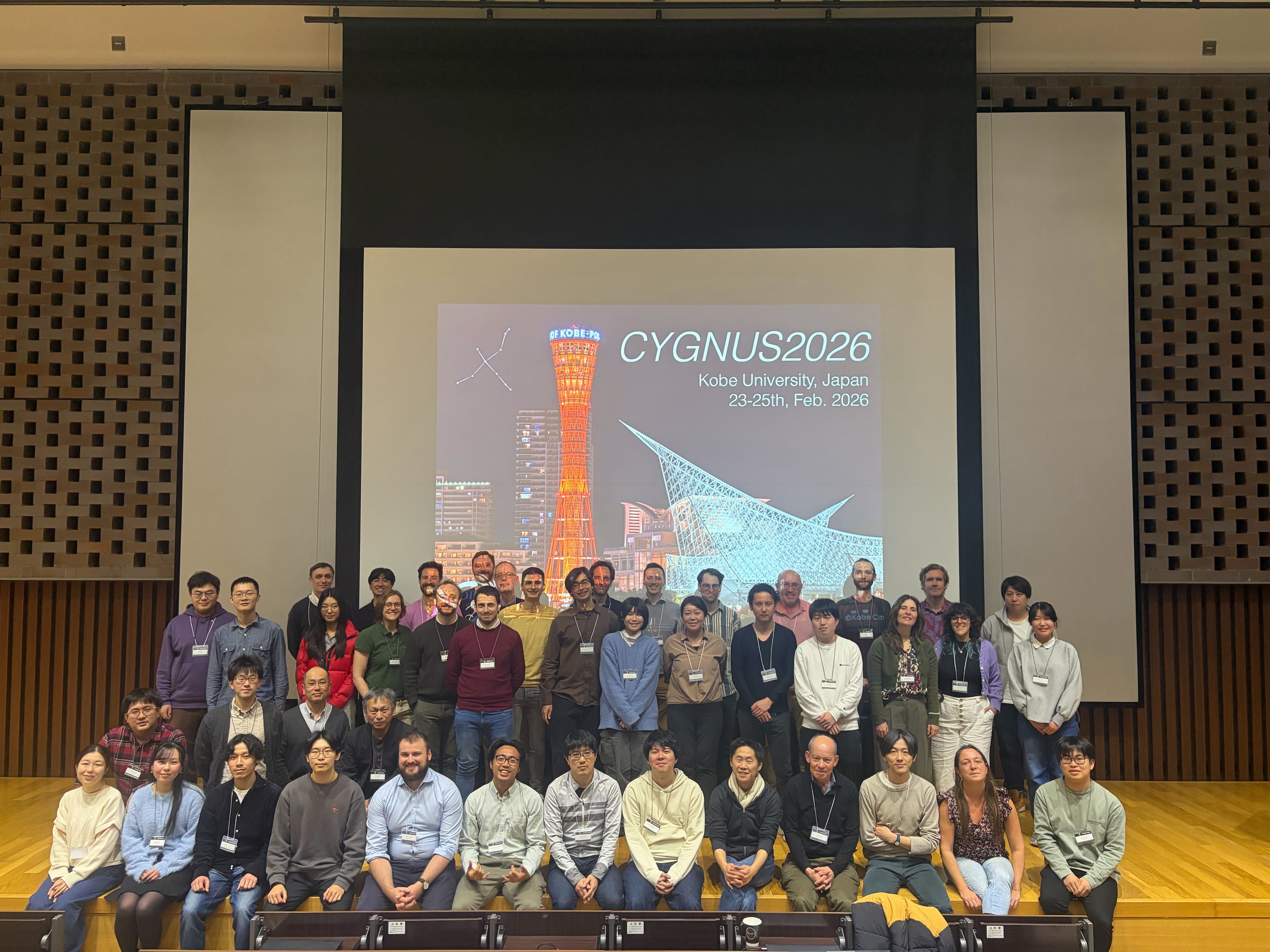
2026/2/23-25 workshop
Note: If your receive any emails offering you hotels or accommodation for the event, e.g. from "Global Travel Experts" please ignore it - this is a well-known scam targeting registrants to Indico events.
The aim of CYGNUS 2025 is to bring together experimentalists and theorists interested in developing detectors with the capability of detecting the directions of recoiling particles, especially for low-energy applications. The scientific scope of the workshop is broad and will cover applications from across particle physics, astroparticle physics, and nuclear physics. Some of the specific topics that will be captured by the workshop include:
Directional detection of dark matter
Directional neutrino detection
Directional neutron detection
R&Ds and applications of Gas TPCs, MPGDs, and their readout electronics
Novel directional detection technologies
Recoil simulation tools
Detection of rare nuclear decays
The programme will consist of three days of keynote and contributed talks. All days will be scheduled into plenary (rather than parallel) sessions, and time will be devoted to allow for extended discussions. Abstract submission is open now.
announcement
https://docs.google.com/presentation/d/1Gk54J3LXprj1tCy1OER2k10z7UnYbkw6/edit?usp=drive_link&ouid=101870233509102364042&rtpof=true&sd=true
We are going to present the CYGNO experiment whose goal is the development of a high precision optical readout gaseous TPC for directional Dark Matter search and solar neutrino spectroscopy, to be hosted at Laboratori Nazionali del Gran Sasso (LNGS). CYGNO (a CYGNus TPC with Optical readout) fits into the wider context of the CYGNUS proto-collaboration, for the development of a Galactic Nuclear Recoil Observatory at the ton scale with directional sensitivity. CYGNO peculiar features are the use of sCMOS cameras and PMTs coupled to GEM amplification of a helium-based gas mixture at atmospheric pressure, in order to achieve 3D tracking with head tail capability and background rejection down to O(1) keV energy. The 50 L prototype LIME, located in the underground laboratories at LNGS, has been taking valuable data in a realistic environment for rare event searches for two years. At the same time, the collaboration is starting the construction of a detector demonstrator of 0.4 m3 with the goal of demonstrating the scalability of the technology and physics reach. We will discuss the status of the CYGNO experiment focusing on the most relevant results attained with LIME prototype. Furthermore, we will describe the design and status of the CYGNO-04 detector, highlighting the improvements with respect to previous prototypes.
As dark matter experiments grow in size and more of the parameter space available to WIMPs is investigated and excluded, it is necessary to plan ahead to circumvent the looming neutrino fog, a goal further motivated by the recent claims of 8B hints seen across the much larger Xenon-based dark matter experiments. For an experiment which is only capable of reconstructing the recoil's energy, solar neutrino signals constitute a near-irreducible background. While the primary goal for CYGNUS lies in reconstructing the characteristic directional signature of signals incoming from the dark matter halo to disentangle them from those incoming from the Sun. However, the excellent background rejection that comes with directional sensitivity means that these experiments would be able to target solar neutrinos as a signal, rather than just as a background. In this talk, I will present CYGNUS's reach for different dark matter and neutrino signals, highlighting its capabilities for neutrino reconstruction across different detector volumes, and demonstrating that compelling neutrino physics can be achieved with stepping-stone detectors while building toward the full dark matter program.
Particle detectors with sensitivity to the directions of low‑energy nuclear recoils open access to previously unprobed physics. Directional detection of coherent elastic neutrino–nucleus scattering (CEvNS) would enable searches for potential beyond‑the‑Standard‑Model (BSM) effects in this interaction and provide a critical capability for exploring regions of dark‑matter parameter space obscured by solar‑neutrino backgrounds. At present, the only detectors capable of time‑resolved directional recoil imaging are gaseous time‑projection chambers (TPCs). Such detectors require large active volumes and highly granular, large‑area readout planes, leading to substantial channel counts and associated cost. We report on the status of a 40‑L gaseous TPC employing Micromegas amplification and charge readout via orthogonal X/Y strips. The detector is designed to demonstrate a path toward cost‑effective scaling of directional detection to much larger target volumes. We also outline near‑term plans for operating this detector at the Oak Ridge Spallation Neutron Source.
NEWAGE is a world leading direct dark matter search experiment with directional analysis. The experiment has been conducted in the Kamioka underground observatory. We use a 30 × 30 × 41 cm^3 scale gaseous Time Projection Chamber (TPC) with micro-Pixel Chamber (μ-PIC) which have two-dimentional strip-type readout electrodes with a pitch or 400 μm. In order to improve the sensitivity, BG rejection campaign has currently been taken place. We will present the status of the NEWAGE experiment, especially about the BG study and our future plans.
NEWAGE is a direction-sensitive WIMP search experiment using a three-dimensional tracking gaseous time projection chamber. We have developed C/N-1.0, a next-generation detector with a volume of approximately 1 m³, for use in the forthcoming underground dark matter search. Prior to its underground deployment, we conducted surface-laboratory operation tests to evaluate its performance. In this presentation, we report the results of these performance evaluations.
In this talk, we will review the current status and report about technical R&D of NEWSdm project using the super-fine grain nuclear emulsion.
CYGNO is an international collaboration working on the development of a directional detector whose main goal is the direct detection of rare events, such as Dark Matter (DM) in the mass range below a few tens of GeV/c2 , by means of a gaseous detector. It consists in a Time Projection Chamber (TPC) filled with a He:CF4 gas mixture at atmospheric pressure (900 to 1000 mbar) equipped with an amplification stage composed of a triple Gas Electron Multiplier (GEM) structure. Given the scintillating properties of the gas, the readout is optical, based on sCMOS cameras and photomultiplier tubes which allow to image the three-dimensional energy deposition of electron and nuclear recoils down to few keV of energy, through the sensor combination. In low energy rare event searches, the detection of the smallest energy deposition possible is of the utmost importance to improve directional capabilities and DM sensitivity. Besides, while the optical readout can cover wide readout areas with a limited number of sensors, the solid angle coverage strongly suppresses the number of photons they can collect. As a result, extremely large avalanche gains are required from the amplification stage which is limited by the onset of space-charge saturation effects. We will discuss the model of this phenomenon worked out thanks to the studies performed with a CYGNO prototype. Furthermore, we will show the results of different experimental techniques employed to mitigate and correct this phenomenon, while keeping high effective gain. The experimental techniques include the use of a GEM after a V-Bond treatment and alternatively the introduction of a strong electric field, above 10 kV/cm, below the last GEM to distort the electric field and increase the light yield. Achieving large gains in rare event searches detectors optically readout is an extremely relevant problem wherein advancements and new developments could pave the way for the realization of large-scale experiments.
Negative ion drift is an attractive option for minimising diffusion in large micropatterned gaseous Time Projection Chambers. The use of select electronegative gases to create negative ions introduces technical challenges, most notably, a reduction in gain when compared to conventional gas mixtures. In this talk, I will report on measurements that demonstrate negative ion generation via dissociative electron attachment using the conventional molecular fill gas CF4, in an optically read-out TPC. We have measured negative ion attachment lengths of <1 mm and comparable gain to electrons, with individual negative ion avalanches resolvable with time via the fast PMT readout.
Optical time projection chambers (OTPCs) with GEM amplification are well suited for applications requiring fine spatial granularity for particle track reconstruction. OTPCs reconstruct tracks by measuring the scintillation light produced in the electron avalanche. When simulating tracks in an OTPC, it is often implicitly assumed that scintillation light serves as an accurate proxy of the secondary electrons emerging from the bottom of the GEM(s). That is, tracks and all their properties (energy, dE/dx, etc.) derived using light faithfully reproduce those using charge. Comparisons between simulations and measurement, however, have shown that observed nuclear recoils are systematically brighter and broader than predicted using this assumption. We hypothesize that scintillation light produced inside a GEM hole during the avalanche propagates through the GEM substrate and exits neighboring holes. In this talk, we detail lab measurements made for a variety of GEMs that confirm this hypothesis. Applying our measurements of the optical effects in glass GEMs to simulated tracks using charge, we show that nuclear recoil track widths increase by up to ~33%. We also present simulations that may be used to inform improved detector design for reducing track broadening in GEM-based OTPCs.
In my talk I will present the possibility to set new constraints on axion-like particles using LIME or CYGNO04. I first studied the three production channels of axions in the Sun: photon coalescence, the Primakoff process, and plasmon decay, and reconstructed the resulting axion flux at Earth. then I focus on the population of axions that remain gravitationally trapped around the Sun, which can accumulate over geological timescales and therefore provides the dominant contribution to the axion decay rate on Earth. From this, I computed the axion number density in the solar vicinity and the corresponding event rate at Earth. Applying these results to a generic ALP model, I found that, assuming a sensitivity of one event per day per cubic meter in the 1–10 keV energy range, one can set a new bound in the ALP parameter space, excluding a region that is currently constrained only by indirect arguments. Then I apply the same arguments to the Kaluza–Klein axion model, comparing our results with those obtained by the NEWS-G experiment. Finally, I will present a demonstrative data analysis performed with the CYGNO collaboration to explore the feasibility of this measurement.
The spherical proportional counter is a gaseous detector which is utilised for direct dark matter searches by the NEWS-G collaboration. The use of light gaseous targets, including He, CH4, Ne, etc., combined with a low energy threshold, enable access to the mass range from 0.05 to 10 GeV. The detector’s simple design also facilitates radio-pure detector construction. Thanks to the radial electric field in the detector and the multi-anode read-out, ACHINOS, both radial and angular position information is available and open the possibility of position and track reconstruction, giving the detector TPC-like capabilities, which will be discussed. The collaboration currently operates a 140cm in diameter detector, constructed at LSM using 4N copper with 500 um electroplated inner layer. The first physics search with this detector will be presented, as will ongoing searches performed at SNOLAB. The potential to achieve sensitivity reaching the neutrino floor in light dark matter searches with a next generation, fully electroformed detector, DarkSPHERE, situated in the Boulby Underground Laboratory, will also be presented. Current efforts underway towards DarkSPHERE will be discussed, for example, establishing a high-purity copper electroforming facility in Boulby.
Recent geophysical studies indicate that the Earth's interior is not homogeneous but contains various structures. Among these, the most prominent are the Large Low-Shear-Velocity Provinces (LLSVPs), anomalous mantle domains extending over more than a thousand kilometers. The origin of LLSVPs is uncertain, but one hypothesis is that they formed from radiogenic heating produced by enrichment of radioactive elements such as U, Th, and K. By observing geoneutrinos, which are electron antineutrinos produced by radioactive elements inside the Earth, we can obtain valuable information on its internal heat production, chemical composition, and structure. In this talk, I will present the calculation results of an evaluation of how much angular resolution and experimental exposure are required, assuming a liquid-scintillator detector with directional sensitivity, to probe large-scale geochemical structures in the mantle.
The Nano Imaging Tracker (NIT) is a super-fine-grained nuclear emulsion detector with excellent spatial resolution, capable of reconstructing recoil nucleus directions for track lengths as short as 100 nm, corresponding to energies of several tens of keV. By exploiting hydrogen contained within the NIT itself as a target, we are advancing neutron spectra measurements including the sub-MeV region. This report presents the current status of environmental neutron measurements at the Gran Sasso Laboratory. In addition, we describe the ongoing development of analysis techniques and outline future prospects.
A precise characterization of the environmental neutron spectrum in underground laboratories is crucial for designing future large-scale detectors and improving background modelling in rare-event searches. While fast neutrons already pose a significant background, thermal neutrons are expected to gain importance due to neutron-induced activation of detector materials. Previous flux estimates at Laboratori Nazionali del Gran Sasso (LNGS), one of the largest underground laboratories in the world, relied on indirect methods that offered limited spectral detail and produced inconsistent results. The CYGNO experiment offers a more direct approach using a high-resolution gaseous Time Projection Chamber (TPC), filled with a He:CF₄ (60:40) gas mixture and equipped with a triple-GEM amplification stage. Its dual optical readout via sCMOS cameras and PMTs enables full 3D reconstruction of particle tracks. In this context, LIME, the largest CYGNO prototype, completed two neutron data campaigns in the LNGS connection gallery, comprising both environmental monitoring and dedicated AmBe-source runs. In this contribution, we will present the analysis framework and simulation tools developed for these campaigns, outlining the methodology that will contribute to a more precise underground neutron flux determination.
Ag-zeolite is a zeolite modified with silver through ion exchange. Since around 2020, certain Ag-zeolites have been reported to exhibit excellent xenon adsorption in air, and since 2023, some have shown strong radon adsorption in air. Our group has been developing original Ag-zeolites since 2023 for radon removal in underground experiments, testing their performance in air, xenon, and argon. Under the "Underground Rare Event" Transformative Research Area (A) launched in 2024, NEWAGE has also begun exploring radon removal using Ag-zeolite in CF4 gas. This presentation will provide an overview of the current status of our research.
Measuring radon emanation from detector materials is a key method for controlling radon contamination, a significant source of background in rare event physics experiments. Methods for measuring radon emanation are well established but have predominantly focused on the 222Rn isotope, the dominant radon isotope for these backgrounds. However, measurements of 220Rn (thoron), the second most abundant radon isotope, remain relatively unexplored. 220Rn emanation measurements are challenging because the 220Rn emanating from the material of interest must be transferred from the emanation chamber to the active detector chamber within its short 55 s half life. In comparison, 222Rn, with its 3.8 d half life, has ample time to be transferred to the detector. In this study, a direct in chamber approach for measuring 220Rn emanation is presented, in which the sample is placed directly within the active detector chamber, thereby minimising losses during transfer. The method was demonstrated with a DURRIDGE RAD8 electrostatic radon detector, which measured 220Rn emanation from low activity thoriated rods with an activity of 76 ± 20 mBq. Compared with a conventional 220Rn emanation set up, the in chamber method increased sensitivity by a factor of 3. Using helium as the carrier gas provided a further increase by a factor of 1.7, giving an overall sensitivity gain of about 5. These results indicate that in chamber 220Rn emanation measurements provide an effective tool for low background experiments and have the potential to accelerate radon studies by exploiting the shorter half life of 220Rn.
In underground astrophysics experiments such as neutrino, dark matter, and double beta decay searches, it is important to use the ultra-low radioactive impurities in the material of the detectors. We have been developing the gaseous TPC with the μ-PIC (or micropattern gaseous detectors: MPGD) and optics to measure the emissivity of alpha particles from the material surface in a low radioactive background. By adding the detection of the gaseous scintillation light, the electron drift length from the μ-PIC plane can be determined. The event quality of alpha emission from the surface would be improved. As a result, the sensitivity (the upper limit of detection) is achieved to a few 10-4 alpha/cm2/hr. Further, by suppressing the radon gas in the chamber using the zeolite, we plan to improve the background level more. Until now, the TPC has been operated to measure samples for many other groups. In this presentation, we will detail the detector setup, the mechanism, the operation status, and the prospect.
Negative Ion Drift (NID) offers a powerful solution to the intrinsic diffusion limitations of large gaseous Time Projection Chambers, enabling near-thermal diffusion without the need for magnetic fields and providing additional timing information through multi-species ion transport, which allows precise fiducialization along the drift direction. We will report the first optical observation of Negative Ion Drift at surface pressure in a He:CF4:SF6 gas mixture, using a triple-GEM optical TPC equipped with PMT and sCMOS readout. Clear experimental signatures of NID are demonstrated through both imaging and time-domain observables. While sCMOS images reveal reduced diffusion compared to electron drift, a novel dedicated analysis of PMT waveforms, exhibiting millisecond-scale time extensions characteristic of negative ion transport, clearly revealed the presence of minority carriers in He:CF4:SF6. From the drift-distance dependence of the PMT waveform time extension, we directly measure a difference in mobility between the dominant and minority ion populations, with the latter drifting approximately 30% faster than the main component. To our knowledge, this is the first time Negative Ion Drift is observed through a PMT. These findings demonstrate the viability of optical NID TPCs at (near) atmospheric pressure and establish PMT waveform timing as a powerful and readout-agnostic probe of negative ion transport. The approach opens new prospects for large-volume, low-diffusion detectors in directional dark matter searches and rare-event experiments.
Low pressure gaseous Time Projection Chambers (TPCs) are seen as a viable technology for directional dark matter searches. Recent success with novel Multi-Mesh Thick Gaseous Electron Multiplier MMThGEM structures in challenging gases like SF6, and mixtures thereof, have prompted further investigation into micro-mesh structures for charge amplification. Modern lithography techniques used to make Micro-Pattern Gaseous Detectors (MPGDs), like ThGEMs and Micromegas, can be expensive and require considerable expertise to execute effectively. However, additive manufacturing techniques, like 3D printing, can be implemented relatively cheaply and significantly speed up the prototyping phase of detector development. In this talk a new MPGD called a Low-cost Amplification and Readout Device (LARD) is presented. Results from first light measurements in low pressure CF4 are discussed and the future scope of this modular and scalable technology is outlined.
Low pressure gas TPCs operating with negative ion drift (NID) provide numerous advantages required for low energy rare searches requiring directionality. Near-thermal diffusion and slow drift velocities enable the excellent spatial resolution required to resolve low energy particle tracks in 3D. The NID components most commonly studied are CS2 and SF6, which can be added to other target gases depending on the applications. We present measurements of drift properties--longitudinal diffusion, mobility, relative gas gains, and (in some cases) capture length--with Xe, Ar, He, or CF4 mixed with CS2 or SF6, maximizing the target-gas fraction while maintaining stable gas gain. These mixtures demonstrate near-thermal diffusion with very small partial pressures (as low as 1 Torr) of the NI additive, which can be up to 10 times lower than the diffusion expected from pure nobles. Many of these mixtures have additional NID species with distinct drift velocities, which enable events to be fully fiducialized in the TPC.
Fifteen years of the Fermi Large Area Telescope (LAT) data in the halo region of the Milky Way (MW) are analyzed to search for gamma rays from dark matter annihilation. Gamma-ray maps within the region of interest (|l| < 60 deg, 10 deg < |b| < 60 deg) are modeled using known components plus a halo-like component. A statistically significant halo-like excess is found with a spectral peak around 20 GeV, and examination of the fit residual maps indicates that a spherically symmetric halo component fits the map data well. The radial profile agrees with annihilation by the smooth NFW density profile. Various systematic uncertainties are investigated, but the 20 GeV peak remains significant. The halo excess spectrum can be fitted by annihilation with a particle mass m ∼ 0.5-0.8 TeV and cross section <sigma v> ∼ (5-8) x10^{-25} cm3 s^-1 for the bb channel. This cross section is larger than the upper limits from dwarf galaxies and the canonical thermal relic value, but considering various uncertainties, especially the density profile of the MW halo, the dark matter interpretation of the 20 GeV “Fermi halo” remains feasible. The prospects for verification through future observations are briefly discussed.
Strong constraints from direct detection experiments have motivated growing interest in sub-GeV dark matter. Although such light dark matter cannot be detected in ordinary direct detection experiments, it becomes detectable if it is boosted by an external mechanism, making directional information especially valuable. In many scenarios, boosted dark matter shows characteristic arrival directions from the Galactic Center. In this seminar, I will discuss directional detection in two cases: dark matter boosted by cosmic rays and light boosted dark matter produced through annihilation of a heavier component in a two-component dark matter model.
Particle detectors with sensitivity to the directions of low‑energy nuclear recoils open access to previously unprobed physics. Directional detection of coherent elastic neutrino–nucleus scattering (CEvNS) would enable searches for potential beyond‑the‑Standard‑Model (BSM) effects in this interaction and provide a critical capability for exploring regions of dark‑matter parameter space obscured by solar‑neutrino backgrounds. At present, the only detectors capable of time‑resolved directional recoil imaging are gaseous time‑projection chambers (TPCs). We report on the status of the DAQ and cooling system for a 40‑L gaseous TPC employing Micromegas amplification with orthogonal X/Y strips, VMM3a ASICS, and the CERN Scalable Readout System (SRS) for charge readout. We also discuss future plans and upgrades, including a transition to a trigger-multiplexed DAQ using CERN's eSRS.
Optical-readout TPCs produce megapixel-scale images whose rich topological information is essential for rare-event searches, yet their size makes real-time data selection increasingly challenging as detectors grow in resolution and throughput. This contribution presents an exploratory baseline study of an unsupervised, reconstruction-based anomaly-detection strategy designed to address this challenge in a detector-agnostic manner. The approach employs a convolutional autoencoder trained solely on pedestal images—frames acquired with the amplification disabled, containing only the intrinsic noise morphology of the detector. This allows the model to learn the characteristic noise patterns without labels, simulation, or detailed calibration. When applied to standard data-taking frames, particle-induced structures naturally emerge as anomalies in the reconstruction residuals, from which compact Regions of Interest can be automatically extracted. The method is applied to real data from the CYGNO optical TPC prototype, demonstrating how an unsupervised, pedestal-based training paradigm can provide a transparent and robust foundation for ML-assisted online data reduction in future large-scale CYGNUS detectors. The study also highlights the strengths of this approach and the unique challenges posed by sparse, noise-dominated megapixel images in optical TPCs.
The contribution presents the design and commissioning of a new Data Acquisition (DAQ) system for the CYGNO-04 demonstrator of the CYGNO experiment at LNGS, which aims for the directional detection of rare low energy recoils for dark matter detection and neutrino spectroscopy by means of a large gaseous TPC with optical readout. The system is tailored to such a gaseous optical TPC and introduces a continuous imaging mode that significantly reduces the dead time and enables the reconstruction of particle tracks extending across multiple frames. On this basis, the first synchronized multi-camera acquisition in CYGNO has been realized, allowing several optical sensors to operate simultaneously in a coherent and time-aligned way. A fully functional DAQ prototype has been implemented, featuring synchronization of multiple readout boards and precise timing alignment between cameras and PMTs, thus enabling event-by-event correlation between optical images and fast light signals. To the best of current knowledge, this combination of capabilities is genuinely innovative and has not been previously achieved in gaseous TPCs with optical readout. The talk will present the overall acquisition scheme, the performance obtained with LIME, the last prototype, and the main open issues that must be addressed in view of the next detector, CYGNO-04, where a six-camera system will rely on these DAQ features to sustain high data rates and enable advanced track reconstruction.
The search for light dark matter requires detectors capable of sensing extremely small energy deposits while also providing information about the direction of the incoming particles. Quantum sensors offer a promising path toward this goal due to their exceptional sensitivity, low noise characteristics, and ability to measure minute spatial or temporal signals. In this study, we explore a quantum-sensor-based framework for directional dark-matter detection that integrates precision readout, coherent signal amplification, and noise-suppression techniques. We discuss potential detector concepts that can register sub-keV interactions, evaluate directional signatures at low momentum transfer, and operate with scalable arrays for improved sensitivity. Early simulations indicate that quantum-enhanced measurements may enable access to previously unreachable regions of light-dark-matter parameter space. This approach highlights the growing role of quantum technologies in next-generation astroparticle experiments.
Direct dark matter searches using gaseous detectors observe nuclear recoil signals induced by dark matter interactions. However, these detectors measure only the ionization loss, which differs from the actual recoil energy. To evaluate this difference, we conducted an experiment to determine the ionization yield, defined as the ratio of ionization loss to nuclear recoil energy. The measurement was performed using the low energy ion beam facility at Kanagawa University. In this poster, we present an overview of the beam experiment and the final result.
In underground astroparticle experiments, radioactive impurities contained in detector materials should be reduced to extremely low levels. This study focuses on the analysis of alpha particles originating from material surfaces. We have been developing a time projection chamber (TPC) dedicated to detecting alpha-particle tracks from material surfaces. The TPC employs an optical readout system that directly images GEM-induced scintillation in CF₄ gas using a CMOS camera. Timing information from a GEM–PMT system is combined with spatial information obtained from the CMOS images to enable three-dimensional reconstruction of particle tracks. This poster presents the detector configuration, including the optical system, initial results of GEM scintillation imaging, and prospects for track reconstruction and particle identification.
The Migdal effect associated with nuclear scattering is expected to enhance the sensitivity of direct dark matter searches. We aim to observe such events by irradiating a high-pressure Xe gas Time Projection Chamber (TPC) with neutrons. Background reduction is achieved by selecting neutron-nucleus elastic scattering events using liquid scintillators. In this poster, we report the analysis of data acquired during a beam test in December 2025, as well as estimates of nuclear elastic scattering and background events.
CYGNO is an international collaboration working on the development of a directional detector whose main goal is the direct detection of rare events, such as Dark Matter (DM) in the mass range below a few tens of GeV/c2, by means of a gaseous detector. It exploits the expected directional anisotropy of the DM candidates by measuring the orientation of the track, in addition to the energy released in the active medium. It will consist in a Time Projection Chamber (TPC) filled with a He:CF4 gas mixture equipped with an amplification stage composed of a triple Gas Electron Multiplier (GEM) structure. Given the scintillating
properties of the gas, the readout is optical, based on sCMOS cameras and fast photomultiplier tubes whose combination permits to extract the 3D information on the recoil topology from the TPC detector. In gaseous TPCs, the electron diffusion during drift and amplification spoils the intrinsic 3D information provided by TPC detectors, extremely valuable for directional detectors. A variety of deconvolutional methods can restore most of the details of the track topology, but require extremely detailed knowledge of all the diffusion phenomena. We will show the studies and characterization of the effective diffusion processes performed with a CYGNO prototype exploiting a muon-tagging system. In addition, we will show the use of a MultiWienernet for the deconvolution of the 2D camera images to restore the track topology and improve tracking. Moreover, as the diffusion along the drift direction directly depends on the drift distance, we trained the network to also return the absolute drift position of the deconvolved tracks, achieving a precision of the order of a few centimeters. This is crucial as in low energy searches the absolute determination of the position can help fiducialize the detector and reduce background.
We present a large-volume, wide–field-of-view Time Projection Chamber (TPC) for hard X-ray polarimetry, derived from technology developed for directional dark-matter searches. The detector uses a triple-GEM stack and optical readout: secondary scintillation is imaged by a scientific CMOS (sCMOS) camera, enabling 3D reconstruction of photoelectron tracks in gas. The prototype (3.7 cm radius, 5 cm drift) provides full track imaging in the 5–50 keV band, with ~15° angular and 10–15% energy resolution between 5 and 45 keV. Calibration with a ⁹⁰Sr source and polarized X-ray beams yields modulation factors at 8.7, 13.0, and 17.4 keV, exceeding 0.4 at 17 keV. We outline a next-generation chamber to explore gas mixtures and pressures, a machine-learning-based pipeline for on-board data reduction, and first estimates of background and signal-to-noise for Crab-like sources in Low Earth Orbit, highlighting the potential of this flexible TPC platform for future hard X-ray polarimetry missions.
The CYGNO collaboration is developing a novel approach to direct dark matter searches based on a high-resolution optical Time Projection Chamber (TPC). Operating at atmospheric pressure in a He:CF₄ (60:40) gas mixture and equipped with a triple-GEM amplification stage, the detector records the scintillation light produced during electron avalanches. A hybrid optical readout, combining PMT timing information with high-granularity images from an sCMOS camera, enables full 3D reconstruction of particle tracks. CYGNO’s expected sensitivity to both spin-independent and spin-dependent interactions is highly competitive among directional dark matter detectors, and the introduction of hydrogen-rich gas components could further enhance performance at low dark-matter masses.
We will present performance studies of MANGO, one of CYGNO’s prototype detectors, operated with varying concentrations of the low global warming potential gas HFO-1234ze added to the standard mixture. Measurements of charge gain and scintillation yield across gas configurations are discussed, along with the secondary-scintillation spectra, to evaluate the feasibility of using HFO-1234ze as a gas additive.
We evaluate the local dark matter density and velocity distribution using the public data from IllustrisTNG, one of the cosmological simulations. In direct detection experiments, the local dark matter density and velocity distribution are used, and the evaluation of the experimental results depends strongly on these quantities. Astronomical observations suggest that the local dark matter density is around 0.3 GeV/cm³. The velocity distribution of dark matter is often assumed to follow an isotropic Maxwellian distribution. However, dark matter cannot be directly observed, and the Milky Way has a history of merging with smaller galaxies. Therefore, using simulations to evaluate the properties of local dark matter is useful. In this presentation, we discuss the conditions used to extract environments analogous to the local one from the simulation data, as well as the resulting local dark matter density and velocity distribution.
The MIRACLUE experiment aims to observe the Migdal effect using a gaseous Time Projection Chamber (TPC) with micro-Pixel Chamber (μ-PIC). To manage the multi-channel readout requirements, we developed an integrated control and operation framework for multiple stand-alone existing DAQ boards. This poster presents an overview of the system, its configuration, and its operation during a neutron beam experiment conducted in November 2025.
At the Kamioka Underground Laboratory, an inter-university facility named KERNEL has been organized to search for extremely rare phenomena. This facility is necessary for the successful construction of the ultra-low BG detector: KamLAND2. The facility will include a CLASS1 super-clean room, a clean air system, an ultra pure water system, and the experimental space for developing low radioactivity techniques. This poster, I will present a status and the future prospects of the facility.
Lounge 4F
Lounge 4F
Reporting the CYGNUS status
We present an experimental study of electron-recoil angular resolution using the BEAST gaseous time projection chambers (TPCs) with pixel ASIC charge readout, which measure the three-dimensional ionization distribution of electron tracks. The goal of this work is to validate a previously developed angular-resolution model that extends the commonly used multiple-scattering formalism to electrons and incorporates detector point-resolution effects. The detector energy scale is calibrated using Fe-55 X-rays. Electron recoils with energies of order 100 keV from a Sr-90 source are measured in a He-CO2 (70:30) gas mixture. We demonstrate that the angular resolution improves with increasing electron energy, transitioning from a low-energy regime dominated by multiple scattering to a high-energy regime limited by the detector point resolution, with the total resolution given by the quadrature sum of these contributions. The results demonstrate 3D reconstruction of low-energy electron recoils in gaseous TPCs with highly segmented charge readout and provide direct experimental feedback on angular-resolution models that inform detector optimization for future directional recoil experiments.
Machine Learning methods are becoming more prevalent in physics for a variety of tasks, and some have already been demonstrated within the directional recoil detection community for reconstruction and direction prediction tasks. We will propose a modern architecture to predict direction and class of recoils in one model. Further, we will propose a generative ML model, based on a super-resolution technique, to enhance detector readout beyond the physical readout of a TPC. If proven to be viable, this technique could be incorporated into detector designs, to allow for greater readout granularity beyond financial and technical constraints.
Q-Pix is an innovative approach for measuring directional ionization and, potentially, scintillation signals in a TPC. Originally conceived as a technology for the DUNE far detector, it may be of interest to other rare-event, large-volume tracking experiments, especially those in which low data rates and low power consumption are required. I will present the Q-Pix technical concept as well as preliminary engineering results with the first version of the Q-Pix ASIC chip, and look forward to conversations about potential applications of Q-Pix in the directional recoil sphere.
The Migdal effect associated with nuclear scattering is very important in the dark matter search. In order to experimentally verify the Migdal effect, we are proceeding MIRACLUE experiment: searching for Migdal effect by using poistion sensitive gaseous detectors. In this talk, we will report on the status of the experiment using xenon gas TPC.
Migdal effect refers to a rare process in which atomic ionization or excitation occurs when a nucleus suddenly moves. Since this process can produce an additional electronic signal, it is expected to improve the sensitivity to low-mass WIMPs (Weakly Interacting Massive Particles). However, Migdal effect induced by nuclear recoils has not yet been experimentally confirmed. The MIRACLUE experiment aims to verify this effect using Argon-based gaseous TPC (Time Projection Chamber) with μ-PIC (micro-Pixel Chamber). In this presentation, we report the 7Li(p,n)7Be neutron beam experiment performed in November, 2025.
The Migdal effect has attracted considerable attention in recent years due to its significant contribution to the sensitivity of sub-GeV dark matter detectors in theoretical calculations. This report will present our experiment that directly observes the Migdal effect using the gas micropixel detector designed by MARVEL group at a D-D neutron source. We will introduce the detector structure and performance test results, the details of the D-D beam experiment, as well as the data analysis and relevant outcomes. Finally, we will talk about the detector upgrade progress and the subsequent data acquisition plan.
The Migdal In Galactic Dark mAtter expLoration (MIGDAL) was established in 2019 to experimentally verify, under optimal conditions, the theoretical prediction of the effect postulated by A. Migdal in 1939 and reformulated for dark matter searches by M. Ibe in 2017. The MIGDAL experiment aims to unambiguously observe and measure the Migdal effect across multiple elements relevant to dark matter searches, using an optical Time Projection Chamber operating with low-pressure gas mixtures based on CF4. The signal, consisting of scintillation light and ionisation charge, provides information for 3D track reconstruction, which, for the Migdal effect, is characterised by a fork-like topology with two tracks, from a nuclear recoil and an electron, sharing the same vertex. This distinctive arrangement of two tracks with particles having opposite energy loss, combined with the low-mass target, creates favourable conditions for rare-event searches. In my presentation, I will give an overview of the MIGDAL experiment, focusing on the detector hardware, principles of operation and its performance, science runs at the ISIS/NILE facility of the Rutherford Appleton Laboratory, and preparations for the next run in early 2026.
This presentation focuses on the primary background processes inherent in the direct search for the Migdal effect using fast neutron beams with a low-pressure time projection chamber (TPC). We will discuss the simulation, characterisation, and rejection of three primary backgrounds that can mimic this signal. First is the challenge of neutron inelastic scattering on the detector target and surrounding materials, which produces prompt gamma-rays that can generate Compton electrons near the NR vertex, mimicking the Migdal electron. Second is the potential misidentification of secondary nuclear recoils as Migdal electrons. Finally, we will address an additional background that is present in argon and xenon gas mixtures, particularly Particle-Induced X-ray Emission (PIXE), which can produce localised energy deposits that mimic the target signal.
Many dark matter experiments are exploiting the Migdal effect, a rare atomic process, to improve sensitivity to low-mass WIMP-like dark matter candidates. However, this process is yet to be directly observed in nuclear scattering. The MIGDAL experiment aims to make the first unambiguous measurement of the Migdal effect in nuclear scattering. A low-pressure optical Time Projection Chamber is used to image in 3-dimensions the characteristic of a Migdal event: an electron and a nuclear recoil track sharing a common vertex. Nuclear recoils are induced using fast neutrons from a DD source, which scatter in the gaseous volume of the detector. The experiment is operated with 50 Torr of CF4 using two glass GEMs for charge amplification. Both scintillation light and ionisation charge are read-out, and these measurements are combined for full-track reconstruction. In this talk we will present the analysis of the first search from the MIGDAL experiment at the Neutron Irradiation Laboratory for Electronics (NILE) at the Rutherford Appleton Laboratory in the UK.
The Migdal effect predicts the possible deposition of electron recoil energy in neutral particle-induced nuclear recoil interactions. This effect can lead to substantial gain of sensitivity to low-mass dark matter interactions in xenon-based dark matter experiments. A direct measurement of this effect in liquid xenon is highly desired to confirm its applicability to direct search experiments. This talk will cover the signal generation of composite Migdal interactions in liquid xenon, the past measurement efforts using neutron interactions and our future measurement plans.
We present calculations of the Migdal effect using the Dirac-Hartree-Fock method without relying on the dipole approximation, enabling robust predictions at higher nuclear recoil velocities than previously accessible. We demonstrate that multiple ionisation may become significant for fast neutrons and derive semi-inclusive probabilities for processes producing one hard electron above a defined energy threshold, with any additional low-energy electrons remaining unobserved. Our results provide a foundation for interpreting both neutron scattering experiments and dark matter searches. Results are presented for noble elements up to xenon, as well as carbon, fluorine, silicon and germanium.
Directly detecting and characterizing the Migdal effect signature in gas time projection chambers (TPCs) remains challenging due to the overlapping nature of its electron recoil (ER) and nuclear recoil (NR) components. This talk will present two complementary machine learning frameworks developed and deployed within the MIGDAL collaboration that together enable real-time detection and precision reconstruction of Migdal candidate event topologies in the experiment’s low-pressure optical gas TPC. The first framework, migYOLO, is a YOLOv8-based object-detection pipeline – trained exclusively on real images recorded by the detector’s CMOS camera readout – to simultaneously classify and localize ERs and NRs, including those that overlap. Using simulation, we demonstrate that the proximity between detected ER and NR bounding boxes provides a highly effective discriminator for selecting Migdal candidates while rejecting backgrounds. Our second framework, Overlap Aware Segmentation of ImageS (OASIS), is a new segmentation-regression framework designed to fully disentangle the ER and NR components of Migdal candidates, enabling accurate energy and directional reconstructions of both species. OASIS introduces a novel region-weighted loss function that prioritizes reconstruction in areas of object overlap and significantly outperforms unweighted training in both energy and angular reconstruction across all ER energy scales. Crucially, OASIS reconstructs Migdal electrons even in regimes previously considered diffusion-limited, opening new opportunities to measure the Migdal spectrum with current generation detectors.