Choose timezone
Your profile timezone:
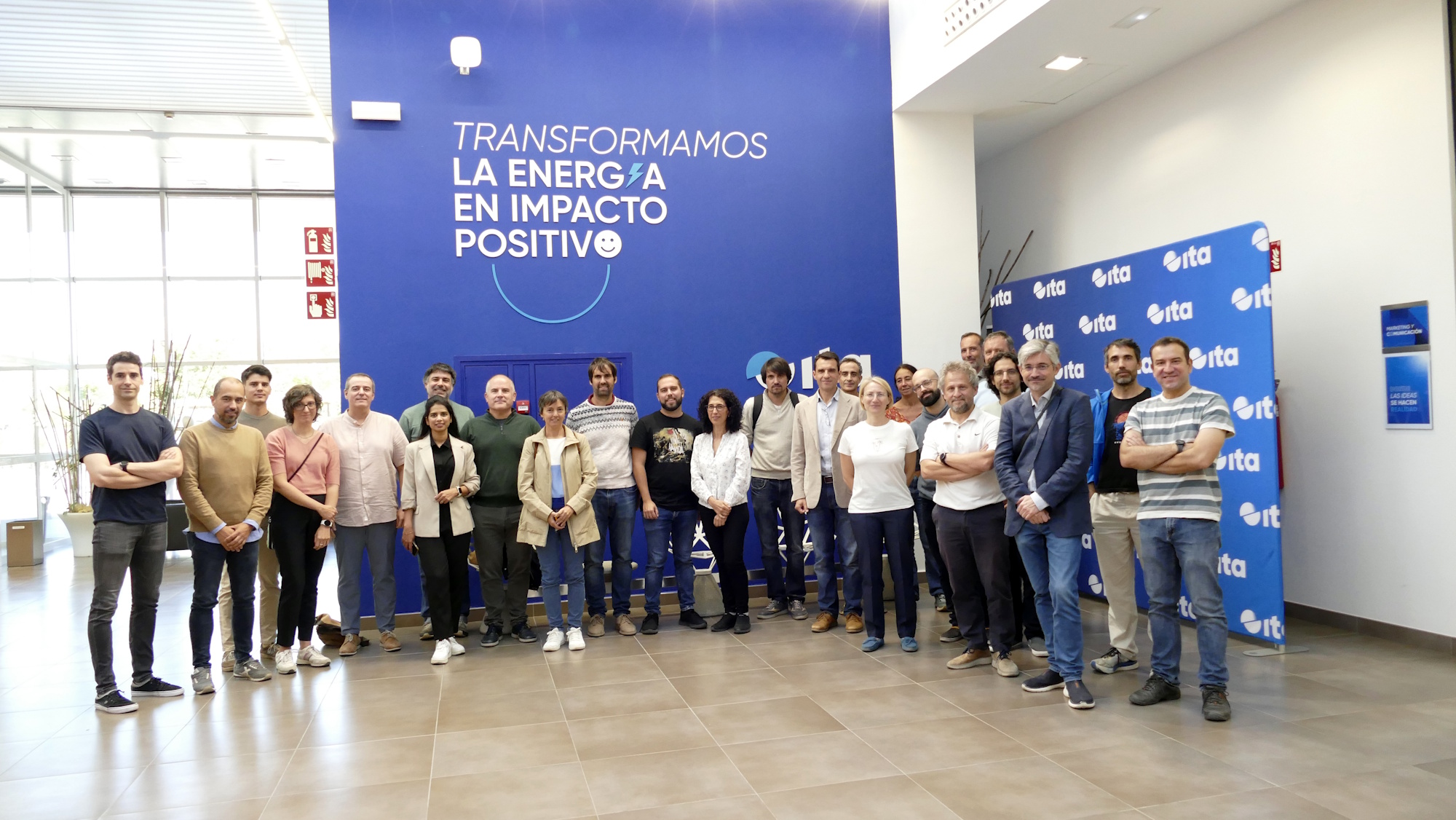
The Complementary Plan of Aragón in Astrophysics and High-Energy Physics is designed to strengthen the region’s leadership in international projects, fostering both cutting-edge research and technological innovation. The third meeting of the Plan will serve as the final session of the programme in Aragón, where each participating centre will present the latest scientific and technological achievements across their respective lines of action, together with an overview of the activities carried out during its implementation. This closing event marks a milestone to celebrate the progress achieved and to outline future perspectives.
The meeting will take place at Instituto Tecnológico de Aragón , Zaragoza.



The Javalambre Variability Survey (J-VAR) is the time-domain extension of the Javalambre Photometric Local Universe Survey (J-PLUS). J-VAR revisits up to eleven times the regions already observed by J-PLUS, using a subset of seven filters from the main survey (broad-band filters g, r, and i, and narrow-band filters J0395, J0515, J0660, and J0861). Thanks to this strategy, the survey has detected more than 8,000 minor bodies in the Solar System. We have compiled a catalog containing the photometric data of all these objects and, together with the recovered detections from J-PLUS DR3, we have performed a provisional taxonomic classification for those objects with data available in at least five filters.
To this end, we merged the templates from the Bus-DeMeo taxonomy into eight main classes, since the spectral resolution provided by the filters is insufficient to distinguish some spectral features with enough confidence for a more detailed classification.
Here we present the first results derived from this catalog, including the initial taxonomic classification for more than 1,500 objects, as well as their compositional distribution across the asteroid main belt.
We aim to recover the SFH of the Milky Way disc, disentangling its chemically distinct components, by combining J-PLUS DR3 photometry
with Gaia astrometry. We fit magnitudes and parallaxes of 1.38 million dust-corrected stars using a Bayesian multiple-isochrone fitting technique. The bright region of the colour–absolute-magnitude diagramconstrains stellar ages, while the faint region provides an empirical metallicity prior that mitigates the age–metallicity degeneracy. We use PARSEC and BaSTI isochrones, adopting both solar-scaled and α-enhanced models.
The simultaneous fitting of solar-scaled and α-enhanced isochrones reveals distinct formation epochs for chemically different disc
populations: a rapid, well-mixed, α-enhanced phase between 12.5 and 8 Gyr ago, and a more extended, lower-intensity, solar-scaled phase from
∼ 9 to 3 Gyr ago. These findings demonstrate the capability of J-PLUS multi-filter photometry, in synergy with Gaia parallaxes, to mitigate
age–metallicity degeneracies and to disentangle patterns in the SFHs associated with the thin and thick discs. The methodology is readily applicable
to forthcoming wide-field, multi-filter surveys, enabling detailed mapping of the Milky Way's temporal and chemical evolution
Extreme emission line galaxies (EELGs) constitute a population of unique systems undergoing very intense events of star formation. These objects are very rare in our immediate environment, but they are crucial for understanding the physical limits of star formation, and most importantly, the formation of the first galaxies, during the early history of the Universe. While EELGs were abundant during that epoch, their faintness prevents a detailed study of their physical properties. EELGs found at lower redshifts offer a unique opportunity to investigate the physics of that era, however a precise selection and identification of these sources is extremely challenging.
We used the third data release of the J-PLUS survey, covering 3000 deg² of the northern sky with 12 narrow and broadband filters, to identify over 1500 EELGs at low redshift (z<0.35). These galaxies were selected by a large flux difference between contiguous narrow and broadband filters, indicative of very strong emission in either the [OIII]5007 or Hα lines (associated with ionized gas due to young massive stars). This approach avoids biases inherent in previous studies using only broad bands, allows the identification of fainter systems than in spectroscopic surveys, and reaches a purity and completeness above 90% (Lumbreras-Calle et al. 2022). Fitting the J-PLUS photometry to stellar population models allows us to characterize the main properties of the galaxies (equivalent width of the lines, stellar mass, dust extinction, accurate photometric redshift...).
We have performed several follow-up observational campaigns, using different telescopes on earth (INT, GTC) and in space (HST, Chandra) to study in detail the sample, and we have taken advantage of the already available large surveys (SDSS, DESI, ALFALFA, FASHI). The spectroscopic observations on a subset of J-PLUS EELG candidates have confirmed their extreme nature and enabled the study of their detailed physical properties through faint emission lines, most notably the oxygen abundance (Lumbreras-Calle et al. 2025 in prep). We find a remarkable similarity between our nearby J-PLUS EELGs and JWST-detected galaxies in the early Universe, particularly in their combination of mass, oxygen abundance, and star formation rate.
Using the radio surveys from SKA precursors (Arecibo, FAST) we find that the EELGs have very large reservoirs of neutral gas (HI), which are much larger when the star formation events are stronger, hinting at a possible physical cause leading to this extreme galaxies. The high-resolution imaging from the Hubble Space Telescope has shown very rich systems, with a complex morphology, including young bursts of star formation with different ages.
The upcoming release of the fourth J-PLUS data release will allow these studies to move forward, finding even more extreme objects with its very large area (almost 5000 square degrees) paving the way for the deeper, more precise J-PAS survey.
We present J-HERTz (J-PLUS Heritage Exploration of Radio Targets at z < 5), a new multi-wavelength catalog combining optical narrow-band filter observations from the Javalambre Photometric Local Universe Survey (J-PLUS) with low-frequency radio data from the LOFAR Two-Metre SKy Survey (LoTSS), and infrared detections from WISE for 500,000 sources over 2100 deg² in the northern sky. The catalog features Bayesian neural network classifications of galaxies, QSOs and stars, improved combined photometric redshifts, optical-to-IR ratios as radio-loudness indicators, stellar masses and star formation rates.
J-HERTz provides a powerful dataset for exploiting radio-optical synergies, enabling studies from the origin of stellar radio emission to AGN life cycles and the role of jet activity in shaping host galaxy properties. We find an absence of Seyfert or LINER signatures in the majority of radio-loud galaxies with spectroscopic observations, suggesting a substantial population of AGN remnants are detectable only by extended relic radio lobes at low frequencies. Furthermore, spectral energy distribution fitting of their host galaxies using J-PLUS photospectra reveals significantly suppressed specific star formation rates. On the other hand, radio-quiet galaxies can have up to 100 times higher specific star formation rates. Additionally, we present a new characterisation of the radio luminosity to star formation rate relation based on ~20,000 main-sequence galaxies from our catalog.
Hydrogen emission lines provide powerful tracers of the gas that fuels star formation and shapes galaxy evolution. In this talk, I will present two complementary perspectives on galaxies in hydrogen light. First, I will discuss new J-PLUS Hα maps of nearby galaxies that reveal the distribution of ionized gas and ongoing star formation, offering insights into how feedback and environment regulate galactic ecosystems. I will then turn to the distant universe with J-PAS observations, highlighting our recent discovery of a massive, extended Lyman-α emission nebula, RaJav, that illuminates the circum-galactic medium around the quasar pairs at z=2.245.
Together, these projects demonstrate the potential of the J-PLUS and J-PAS surveys with their unique sets of 12 to 56 narrow-band filters and wide field of view to enable spatially resolved emission-line studies of galaxies across cosmic time