2026 DCPIHEP WORKSHOP - 20th Year Anniversary

America/Mexico_City
Ex Hacienda de Nogueras

Ex Hacienda de Nogueras

Hacienda Nogueras s/n, Colonia Nogueras, C.P. 28454, Comala, Colima, México.
Alexander Stuart (Universidad de Colima), Alfredo Aranda (Universidad de Colima), Maria Elena Tejeda Yeomans (Universidad de Colima)
Description

The purpose of this workshop is to bring together people interested in BSM physics in honor and memory of P.Q. Hung.  Abundant time for discussion and actual work is planned. Organization of informal seminars and talks are encouraged as the workshop develops. If you are interested in leading a specific discussion session please send us the topic and hourly sessions needed. Information regarding other activities will be posted as it becomes available.
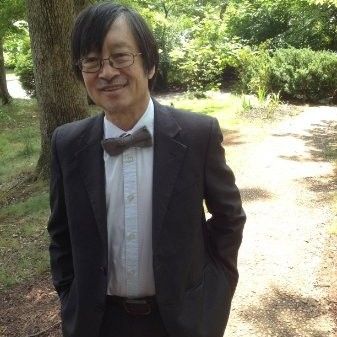
Program will be available shortly.  However, on January 9, 2026, there will be an event commemorating the life of P.Q.

WARNING: We have been made aware that recently there have been phishing attempts from "Global Travel Team", someone posing as a booking company for travel to Nogueras.  Please be aware that we have not hired anyone to take care of anything to do with travel.

Contact
Registration
Registration for 2026 DCPIHEP Workshop
Participants
    • Work Session Comala

      Comala

    • Work Session Comala

      Comala

    • Welcome Auditorio (Facultad de Ciencias)

      Auditorio

      Facultad de Ciencias

      Convener: Alexander Stuart (Universidad de Colima)
    • Coffee Break Auditorio (Facultad de Ciencias)

      Auditorio

      Facultad de Ciencias

    • In Memoriam: P.Q. Hung Auditorio (Facultad de Ciencias)

      Auditorio

      Facultad de Ciencias

      Convener: Alfredo Aranda (Universidad de Colima)
    • Lunch Colima

      Colima

    • Plenary I: Tao Han Auditorio (Facultad de Ciencias)

      Auditorio

      Facultad de Ciencias

      Convener: Alexander Stuart (Universidad de Colima)
      • 1
        Electroweak Symmetry Restoration at High Energies

        With the milestone discovery of the Higgs boson at the LHC, detailed study of its properties becomes a high priority for collider physics. After a brief overview of the properties of the longitudinal gauge bosons and the Higgs boson, we revisit the Goldstone boson equivalence theorem and define the “electroweak symmetry restoration” (EWSR) quantitatively. We present some examples to examine the EWSR via the processes with "radiation amplitude zeros” by separating out the gauge sector and the scalar section. Finally, we comment on what we learn from testing the EWSR,and make some remarks on the SM at high energies in light of the UV completion.

        Speaker: Prof. Tao Han (University of Pittsburgh)
    • 16:00
      Coffee Break Facultad de Ciencias

      Facultad de Ciencias

    • Work Session
    • Dinner TBA

      TBA

    • Outing TBA

      TBA

    • 10:00
      Coffee Break
    • Plenary II: Antonio Delgado
      • 2
        Non-invertible Peccei-Quinn symmetry, natural 2HDM alignment, and the visible axion

        We identify m12 as a spurion of non-invertible Peccei-Quinn symmetry in the type II 2HDM with gauged quark flavor. Thus a UV theory which introduces quark color-flavor monopoles can naturally realize alignment without decoupling and can furthermore revive the Weinberg-Wilczek axion. As an example we consider the SU(9) theory of color-flavor unification, which needs no new fermions. This is the first model-building use of non-invertible symmetry to find a Dirac natural explanation for a small relevant parameter.

        Speaker: Antonio Delgado (University of Notre Dame (US))
    • 12:00
      Coffee Break
    • Plenary III: Andrew Long
      • 3
        How fast are the Higgs-phase bubbles?

        The Higgs field's nonzero vacuum expectation value signals that the electroweak symmetry is spontaneously broken. In the early universe, if the primordial plasma reached temperatures above the electroweak scale, then this breaking would have occurred dynamically during the cosmological electroweak phase transition. I will discuss the speed of Higgs-phase bubble walls that would have developed during a first-order cosmological electroweak phase transition. Understanding the bubble wall speed is important if we seek to derive robust predictions for the various cosmological relics that may results from the EWPT, including gravitational wave radiation, dark matter, primordial magnetic fields, and the matter-antimatter asymmetry the universe.

        Speaker: Andrew Long (Rice University)
    • Lunch
    • Plenary IV: Miguel Angel Soto Alcaraz
      • 4
        Quantum Sensing and Radiative Decay

        A novel strategy for detecting radiative decay of very weakly interacting particles is explored by leveraging the extreme sensitivity of quantum devices, to faint electromagnetic signals. By modeling the effective electric field induced by the decay photons, the response of quantum sensors is evaluated across two particle physics scenarios: the cosmic neutrino background and two-component dark matter. We assess the discovery potential of these devices and outline the parameter space accessible under current experimental capabilities. Analysis demonstrates that quantum sensors can probe radiative decays of dark matter candidates using existing technology, while probing neutrino magnetic moments beyond current limits will require scalable quantum architectures with enhanced coherence.

        Speaker: Miguel Angel Soto Alcaraz
    • 15:30
      Coffee Break
    • Plenary V: TBD
    • Work Session
    • 10:00
      Coffee Break
    • Plenary VI: Eduardo Peinado
      • 5
        Axionless solution to the strong CP problem

        The strong CP problem in QCD remains one of the most compelling puzzles in particle physics, traditionally addressed through the Peccei–Quinn mechanism and the axion. In this talk, I will present a 2HDM extension of the Standard Model, where CP is spontaneously broken, offering a viable and testable approach to resolving the strong CP problem without invoking an axion.

        Speaker: Eduardo Peinado
    • 12:00
      Coffee Break
    • Plenary VII: León Manuel García de la Vega
      • 6
        New physics in flavor anomalies

        In this talk we will discuss scenarios where BSM physics related to dark matter and neutrinos can impact flavor observables. In particular we will focus on a scenario where the generation of Dirac neutrino masses can result in an enhancement of both $d_i\rightarrow d_j +(inv.)$ transitions and lepton flavour violating observables.

        Speaker: Prof. León Manuel García de la Vega (Universidad de Sonora)
    • Lunch
    • Plenary VIII: Kort Beck
    • 15:30
      Coffee Break
    • Plenary IX: TBD
    • Work Session
    • 10:00
      Coffee Break
    • Plenary X: Oscar Carranza Jimenez
      • 7
        Dark Matter Production in Hidden Vector Sector

        In this talk, I present ongoing work on Boltzmann framework to study dark matter in the Hidden Vector Sector model. The calculation includes all relevant processes at once: WIMP annihilations, SIMP-like, and forbidden channels. By solving the coupled evolution of the dark matter abundance, the dark scalar, and the dark-sector temperature, we can identify how different mechanisms dominate at different stages of the thermal history. This approach reveals new regions of parameter space, clarifies the transition between regimes, and provides reliable relic density predictions in the sub-GeV mass range.

        Speaker: Oscar Carranza Jimenez (Instituto de Física, UNAM)
    • 12:00
      Coffee Break
    • Plenary XI: Patrick Fitzpatrick
      • 8
        New Thermal Decoupling Windows to the Dark Sector

        Increasingly strong experimental constraints on new physics at the electroweak scale motivate us to explore new possibilities for dark matter (DM) beyond the thermal weakly-interacting massive particle (WIMP) paradigm. One important strategy to excavate the experimentally viable space of new possibilities for DM is to abandon the assumption of thermal equilibrium between the dark and Standard Model (SM) sectors, and consider the multitude of DM production scenarios in which the dark sector can thermally decouple from the SM prior to DM freezeout. Thermally decoupling DM production is equally as predictive as the thermal WIMP scenario, producing sharp experimental targets, and in many cases, as I will show, completely altering existing experimental constraints which neglect thermally decoupling effects. I will present new results for thermally decoupling freezeout production of DM in a few benchmark models, providing new experimental targets for DM searches below the electroweak scale.

        Speaker: Patrick Fitzpatrick (Instituto de Física UNAM)
    • Lunch
    • Plenary XII: TBD
    • 15:30
      Coffee Break
    • Plenary XIII: TBD
    • Work Session
    • 10:00
      Coffee Break
    • BSM in Mexico: UNAM (Myriam Mondragón)
      • 9
        Past and current research on physics Beyond the Standard Model at UNAM and a bit beyond

        We present an overview of the development of Beyond the Standard Model physics at UNAM in the past few decades. From string theory to low energy models, cosmology and astroparticle physics, the group has addressed a large range of subjects, naturally connecting to other groups in Mexico and abroad. Among the topics that have been studied are: string theory and phenomenology, aspects of field theory, supersymmetric models, neutrino physics, multi-Higgs models, precision measurements, hadron physics, dark matter, baryogenesis and leptogenesis, inflation, dark energy, and lately black holes and gravitational waves.

        Speaker: Myriam Mondragon
    • BSM in Mexico: Cinvestav (Omar Gustavo Miranda Romagnoli)
      • 10
        The search for BSM at Cinvestav, past, present, and future

        In this talk, I will give a historical review of the contributions to physics beyond the Standard Model made at Cinvestav. I will show that we have been developing several research areas over several years, which remain at the forefront of research, and I will also discuss our current interest in this exciting research area.

        Speaker: Omar Miranda (Cinvestav Centro de Investigacion y de Estudios Avanzados del IPN)
    • 13:00
      Coffee Break
    • Lunch
    • BSM in Mexico: Guanajuato (Carlos Alberto Vaquera Araujo)
    • Work Session
    • 10:00
      Coffee Break
    • BSM in Mexico: Hidalgo (Roberto Noriega-Papaqui)
    • BSM in Mexico: Puebla (Jaime Hernandez-Sanchez)
    • 13:00
      Coffee Break
    • Lunch
    • BSM in Mexico: Colima (Alexander J. Stuart)
      • 11
        BSM in Colima

        After a brief review of the history of BSM physics done at the Universidad de Colima, we discuss some current and future research being developed there.

        Speaker: Alexander Stuart (Universidad de Colima)
    • Work Session