
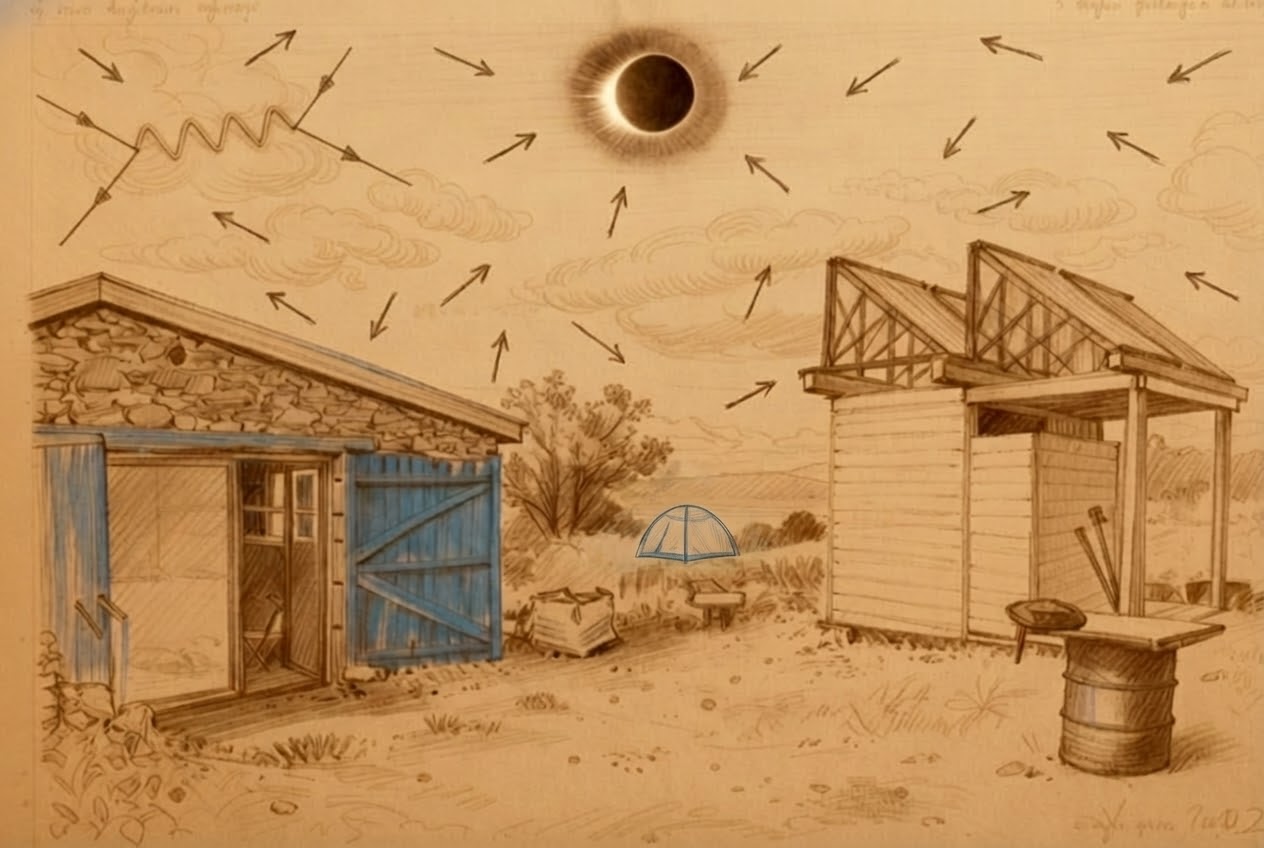
The school aims to attract graduate students as well as young postdocs interested in the areas of de Sitter physics, theoretical cosmology, holography, scattering amplitudes, open systems, and disordered systems. The primary goal is to explore the intersections among these topics, which have gained increasing attention in recent years.
This is the second edition of this school. You can find information and pictures about the first edition here.
The school is structured into four sets of blackboard lectures, complemented by discussion sessions over the course of two weeks.
Lecturers
Simon Caron-Huot (McGill University)
Leticia Cugliandolo (Sorbonne University)
Damián Galante (King's College London)
Enrico Pajer (DAMTP, Cambridge U.)
with public lectures by Leticia Cugliandolo and Damián Galante. On August 12th it is planned a public event involving the observation of the total solar eclipse and a related discussion.
Accommodation and food will be provided to all participants, while they will be asked to cover their travel expenses -- see the following paragraph for more details.
About the venue and the school's mission: This school is a part of a broader project with two primary goals. First, it seeks to organise scientific events, particularly schools, in informal settings to foster interaction and collaboration among all participants while removing economic barriers to attendance. Second, it aims to have a meaningful cultural impact on the area where it takes place. To achieve this first goal, the school will accomodate 25 participants, encouraging interaction among them and with the lecturers. The school is hosted in a traditional Galician farmhouse, recently refurbished for this purpose, located in the Ribera Sacra -- a stunning natural wine region along the Sil and Mao river canyons. Meals and accommodation will be provided. Participants will be accommodated in comfortable camping tents, equipped with mattresses and sleeping bags, within the farmhouse grounds. The lectures will take place in a dedicated building on the property, available for discussions at any time. To achieve the second goal, public events will be held alongside the scientific ones. The venue is managed by a non-profit cultural association and the scientific events will be externally funded, with any surplus being reinvested to organise educational and science popularisation activities aligned with the association's mission: promoting inquiry-based learning for the general public, with a special focus on rural areas.
Further information and the schedule can be found here.
Conference information
Extra information
The school is supported by


