QuantHEP 2026
Queen Mary University of London, Mile End Campus
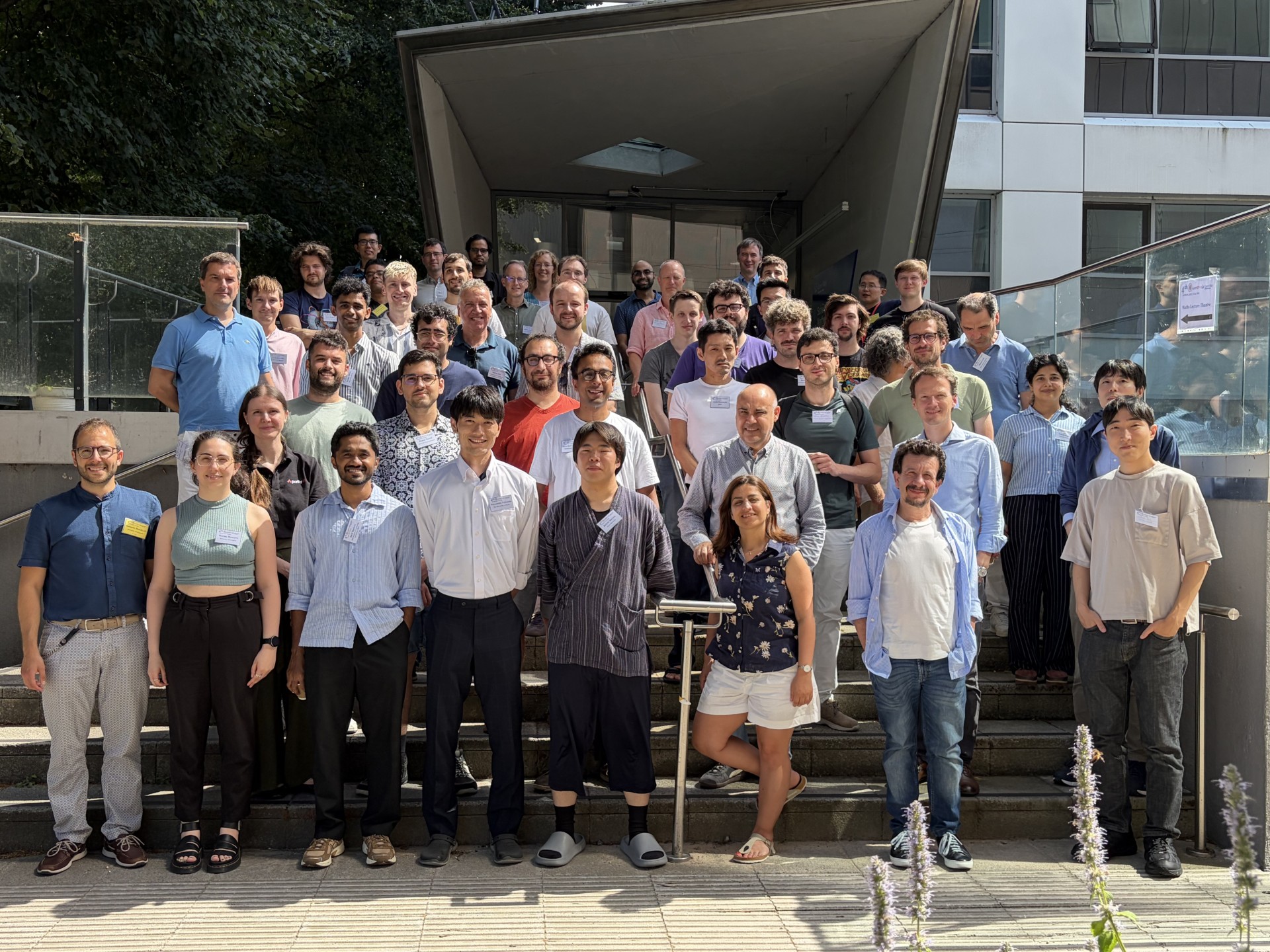
QuantHEP 2026 at London marks the fourth edition of the QuantHEP conference series (quanthep.org), dedicated to bring together researchers and students with a shared interest in the application of quantum technologies to high-energy physics, which includes quantum simulation, quantum computation and numerical methods for probing high-energy phenomena.
The conference will be held in London from July 13th to 16th, at Queen Mary University of London, Mile End campus, and is open to local staff and students.
The goal of the conference is to foster exchange of idea and facilitate brainstorming discussions on how quantum technologies can address key challenges in understanding high-energy phenomena, and these advancements can, in turn, provide new insights into Quantum Information Science.
It is possible to attend the conference using Microsoft Teams:
https://teams.microsoft.com/meet/35140624042322?p=FG1FLHzGmPsZK1C0qV
To obtain the password required to access the meeting, please emails to:
quanthep2026@gmail.com
List of invited speakers
- Steve Abel (IPPP Durham)
- Christian Bauer (Lawrence Berkeley National Laboratory)
- Alessio Celi (Universitat Autònoma de Barcelona)
- Bipasha Chakraborty (University of Southampton)
- Arianna Crippa (ParityQC)
- Luca Dellantonio (University of Exeter)
- Elisa Ercolessi (University of Bologna)
- Lena Funcke (University of Bonn)
- Tomoya Hayata (Keio University)
- Philipp Hauke (University of Trento)
- Junichi Haruna (Kyoto University)
- Joachim Kopp (University of Mainz)
- Sarah Malik (University College London)
- Marina Krstic Marinkovic (ETH Zurich)
- Max McGinley (University of Cambridge)
- Zlatko Papic (University of Leeds)
- Enrique Rico Ortega (CERN)
- Johann Ostmeyer (University of Bonn)
- Masahito Yamazaki (University of Tokyo)
- Enrico Rinaldi (Quantinuum)
- German Rodrigo (Instituto de Física Corpuscular)
- Andreas Schaefer (University of Regensburg)
- Alessandro Roggero (University of Trento)
- Sofia Vallecorsa (CERN)
- Vlatko Vedral (University of Oxford)
- Simon Williams (IPPP Durham)
- Xiaojun Yao (IQuS, University of Washington)
Participants are invited to submit abstracts. Contributions that cannot be accommodated in the schedule will be offered the option to present a poster.
Registration is now open and will close on June 10th, 2026.
- The deadline for Talk abstract submissions is May 31st, 2026
- The deadline for Poster abstract submissions is June 13th, 2026
There is no registration cost!
Travel Scam Alert! If you have received emails from any travel company, please exercise caution. We have not contacted any travel company to arrange accommodations.
For any inquiries, kindly direct your emails to: quanthep2026@gmail.com
Scientific Organizers:
Debasish Banerjee (University of Southampton)
Georg Bergner (University of Jena)
Masanori Hanada (Queen Mary University of London)
Emanuele Mendicelli (University of Liverpool)
Jinzhao Sun (Queen Mary University of London).
Conference sponsors:




-
-
Registration and Welcome Coffee Outside Maths Lecture Theatre
Outside Maths Lecture Theatre
Building number 4 on the campus map -
Welcome and Conference opening
-
1
Welcome and Conference Logistics
Welcome to the conference! We are delighted to welcome you to this edition of QuantHEP. These opening slides provide a brief introduction to the conference, including practical information, our mission, and an overview of the activities planned throughout the event.
We begin by acknowledging our sponsors and supporters, whose generous contributions have made this conference possible. We then highlight the QuantHEP conference series, its legacy, and its mission to foster collaboration at the intersection of quantum technologies and high-energy physics.
The presentation also introduces this year's participants, summarizes key conference statistics and scientific themes, and outlines the conference code of conduct, which is designed to ensure an inclusive, respectful, and welcoming environment for all attendees.
We introduce the organizing committee, provide practical information about the venue—including coffee breaks, lunches, poster sessions, and social events, as well as recommendations for local pubs.
Finally, we conclude with details about the conference's special issue in Quantum Reports and the conference white paper.Speaker: Emanuele Mendicelli (University of Liverpool (United Kingdom)) -
2
Martin Knight --- Welcome to Queen Mary University of London
-
3
Lattice Gauge Theory Challenges for Quantum Computers
For fifty years, lattice gauge theory has rested on the Euclidean path integral and importance sampling — a combined paradigm whose successes are matched only by the sharpness of its failures. These failures are exponential and few: the sign problem at finite density and non-zero θ, real-time dynamics, signal-to-noise ratios that degrade exponentially in Euclidean time, small overlaps between trial and target states, and tunneling times at first-order transitions and in topologically frozen simulations. In this talk, I revisit these five challenges from the perspective of a lattice practitioner and ask what quantum computation changes. Two of them — the sign problem and real-time evolution — are solved structurally by unitarity. The remaining three are not removed but rephrased: they resurface in state preparation and measurement, where the exponentials may or may not return depending on the algorithm. I argue that string breaking, combining statics and dynamics in a single process, is the natural community benchmark, and that quantum advantage must be measured against the best classical methods, with the error-bar culture the lattice community has built.
Speaker: Biagio Lucini (Queen Mary University of London (UK))
-
1
-
Talks Maths Lecture Theatre
Maths Lecture Theatre
Building number 4 on the campus mapConvener: Christian Walter Bauer (Lawrence Berkeley National Lab. (US))-
4
Digital Rydberg simulation of dynamical quantum phase transitions in the Schwinger model
The Z3 Schwinger model describes an approximation of one-dimensional quantum electrodynamics, which is able to capture non-perturbative features such as confinement and string breaking. We present the simulation of its quench dynamics on a digital noisy Rydberg atom platform, aiming at the observation of multiple dynamical quantum phase transitions. In order to reach long-time dynamics, we exploit an encoding dictated by the symmetries, combined with a circuit compression procedure. Focusing on the evolution of the Dirac vacuum by means of a Hamiltonian depending on a negative mass parameter, we observe resonant Rabi oscillations between the Dirac vacuum and mesonic states, in which we can clearly detect multiple dynamical phase transitions.
Speaker: Prof. elisa ercolessi (University of Bologna and INFN) -
5
Simulating quantum field theories with continuous-variable quantum computers
Non-perturbative real-time processes such as scattering and false-vacuum decay play a central role in quantum field theory, but remain challenging to simulate classically due to their highly entangled dynamics. We introduce a continuous-variable quantum computing framework for simulating interacting scalar field theories by mapping the spatially discretised theory to a lattice of qumodes. We emulate this framework using tensor networks, representing each qumode by a truncated bosonic Hilbert space and evolving the system with TEBD and Trotterised time evolution.
As applications, we study real-time scattering in (1+1)-dimensional $\phi^4$ theory, including the preparation of momentum-defined initial states and validation against analytic two-point correlators. We also simulate false-vacuum decay in a self-interacting scalar field theory, preparing a metastable vacuum and tracking the subsequent formation and growth of true-vacuum bubbles. These results establish qumode tensor networks as a scalable route to non-equilibrium scalar QFT dynamics and a useful bridge towards future CVQC implementations.Speaker: Simon Jonathan Williams (Institute of Particle Physics Phenomenology, University of Durham)
-
4
-
11:00
Coffe break
-
TalksConvener: Enrique Rico Ortega (CERN)
-
6
Ergodicity breaking meets criticality in a gauge-theory quantum simulator
Recent advances in quantum simulations have opened access to the real-time dynamics of lattice gauge theories, providing a new setting to explore how quantum criticality influences thermalization and ergodicity far from equilibrium. Using QuEra's programmable Rydberg atom array, we map out the dynamical phase diagram of the spin-1/2 U(1) quantum link model in one spatial dimension by quenching the fermion mass. We reveal a tunable regime of ergodicity breaking due to quantum many-body scars, manifested as long-lived coherent oscillations that persist across a much broader range of parameters than previously observed, including at the equilibrium phase transition point. We further analyze the electron-positron pairs generated during state preparation via the Kibble-Zurek mechanism, which strongly affect the post-quench dynamics. Our results provide new insights into nonthermal dynamics in lattice gauge theories and establish Rydberg atom arrays as a powerful platform for probing the interplay between ergodicity breaking and quantum criticality.
Speaker: Zlatko Papic (University of Leeds) -
7
Quantum Simulation of Integrable Models
We are now at the beginning of the era of utility-scale quantum computers, where quantum devices with a large number of qubits allow us to run circuits that are increasingly challenging to simulate classically. Integrable models will play unique roles in this era, since they (1) provide verifiable results, and (2) can be used to benchmark quantum devices. In this talk, I will discuss both theoretical and practical issues surrounding the quantum simulation of integrable lattice models and integrable quantum field theories.
Speaker: Prof. Masahito Yamazaki (University of Tokyo)
-
6
-
12:30
Lunch Maths Foyer
Maths Foyer
Inside Mathematical Sciences building, number 4 on the campus map -
Talks Maths Lecture Theatre
Maths Lecture Theatre
Building number 4 on the campus mapConvener: Steven Adam Abel (University of Durham (GB))-
8
Laboratory-based tests of quantum effects in the gravitational field
I will cover the basic ideas behind how to test quantum effects in the gravitational field in the laboratory. I will then review various approaches to quantum gravity and discuss why the semi-classical ones (in which gravity remains classical) cannot be compatible with the strict formulation of various symmetries (including conservation laws and the equivalence principle). I plan to conclude by commenting on my latest paper with Pablo Saldanha and Chiara Marletto on how post-selection could produce repulsive gravity if gravity were indeed a quantum field.
Speaker: Prof. Vlatko Vedral (University of Oxford) -
9
Clifford symmetries in quantum many-body systems
Obtaining the symmetries of a model is a critical step towards developing an understanding and ultimately analytically or numerically solving the model. However, finding symmetries is generally extremely complicated, often being the result of the ingenious thinking of a great mind. In this work, we complement human ingenuity with an algorithm. We leverage the classically efficient Clifford group to find symmetries for arbitrary many-body Hamiltonians via a graph representation. We demonstrate our method on examples including random Hamiltonians, the 2D transverse-field Ising model, and the Toric code. We consider instances with several hundreds of qubits and demonstrate how our approach can provide deeper understanding of the model. For instance, for all sizes of the 2D transverse-field Ising model, we determine a symmetry that, to our knowledge,was unknown
Speaker: Luca Dellantonio (University of Exeter)
-
8
-
15:00
Coffee break Maths Lecture Theatre
Maths Lecture Theatre
Building number 4 on the campus map -
Talks Maths Lecture Theatre
Maths Lecture Theatre
Building number 4 on the campus map-
10
Thermalization and Indications that Anti-flatness measures Magic
While it is generally expected that quantum computing will be much more powerful than digital computing, it is actually non-trivial to identify relevant physics problems which realize quantum advantage. Many people try to find a parameter, called Magic, which would allow to identify such systems. A good candidate is Anti-flatness and a good candidate process is the thermalization of gauge theories. In arXiv:2510.11681 we argue on the basis of simulations of quantum computers on digital ones (for small systems) that thermalization seems indeed to involve non-zero magic which is lower bounded by anti-flatness. In arXiv.2603.23948 we corroborate this indication by actual simulations on IBM quantum computers of the IBM Quantum Hub at National Taiwan University.
Speaker: Andreas Schafer (Universitaet Regensburg)
-
10
-
Contributed talk Maths Lecture Theatre
Maths Lecture Theatre
Building number 4 on the campus mapConvener: Xiaojun Yao (University of Washington)-
11
Fermionic Non-Gaussianity, Complexity, and Quantum Simulation of High-Energy Physics Models
Understanding the computational complexity of quantum many-body systems is a central challenge at the interface of quantum information science and high-energy physics. In this talk, I will present a framework for quantifying complexity in fermionic systems through fermionic non-Gaussianity, building on resource-theoretic approaches to quantum many-body states. I will introduce efficiently computable measures of fermionic “magic” and discuss their role as diagnostics of classical simulability and quantum advantage. I will then discuss the implications of these ideas for the simulation of high-energy physics models, emphasizing how non-Gaussian correlations capture the onset of computational hardness. This provides a unified perspective in which the growth of fermionic non-Gaussianity quantitatively links quantum simulation capabilities to the intrinsic complexity of high-energy phenomena.
Speaker: Paolo Stornati (Barcelona Supercomputing Center) -
12
Blind quantum computation based on parity quantum computing
Blind quantum computation (BQC) allows clients with limited quantum capabilities to delegate computational tasks to remote quantum servers while keeping the privacy of their data. However, existing BQC protocols often fail to balance resource consumption and practical feasibility, which is particularly significant in the noisy intermediate-scale quantum era. In this talk, we will introduce a more practical BQC model given by us recently based on the parity quantum computing framework. It requires the server to perform operations only on adjacent qubits and eliminates the need for additional SWAP gates when two-qubit gates should be applied to non-adjacent qubits, greatly facilitating the physical implementation on real quantum devices. Furthermore, the given BQC model ensures the privacy of client’s information and satisfies the property of verifiability which enables clients to identify dishonest servers.
Speaker: Qin Li (Xiangtan University) -
13
Quantum anomaly for benchmarking quantum computing
It is highly nontrivial to verify the correctness of large-scale quantum computations beyond the reach of classical computers. Focusing on the fact that the axial anomaly in gauge theories is exact to all orders in perturbation theory, we propose the axial anomaly as a benchmark for quantum simulations of lattice gauge theories. We simulate anomalous axial-charge production on the Quantinuum quantum computer Reimei and reproduce the anomaly coefficient within statistical uncertainties, even without error mitigation. Our results demonstrate that the axial anomaly can serve as a verification test for current and future quantum computations.
Speaker: Arata Yamamoto (RIKEN)
-
11
-
-
-
Talks Maths Lecture Theatre
Maths Lecture Theatre
Building number 4 on the campus mapConvener: Elisa Ercolessi-
14
From encoding fermions to generating particle showers: Parity methods for HEP
This talk presents two studies conducted at ParityQC on HEP applications, covering both theoretical and experimental perspectives. The first study (arXiv:2606.28236) focuses on simulating electromagnetic particle showers in calorimeters, a computationally intensive task due to the complexity of energy deposition distributions. Quantum computing offers a potential alternative, but existing approaches often require binarizing data or encoding it into gate angles, which can distort non-binary distributions. While Instantaneous Quantum Polynomial (IQP) circuits have shown promise for quantum generative modeling, they have mainly been applied to binary data. In our work, we extend parameterized IQP circuits to qudits, designing a qudit-based quantum circuit and correspondingly adapt the loss function. The method, validated on particles datasets, can be extended to other applications that utilize quantum generative machine learning for non-binary data. The first-part of the talk is supplemented by the poster ‘Qudit extension of parameterized IQP circuits: A generative quantum machine learning approach to calorimeter data’.
The second study (arXiv:2605.12600) introduces two techniques for efficient fermionic quantum simulation: a dynamically reconfigurable Jordan–Wigner transformation that preserves locality in higher-dimensional lattices, and an optimized fermionic routing scheme for implementing non-local interactions. This study enables efficient simulation, with asymptotically optimal resource scaling, of fermionic systems with applications to the Fermi–Hubbard model.Speaker: Arianna Crippa (ParityQC) -
15
Can Hilbert space fragmentation be explained with generalized symmetries?
TBA
Speaker: Marina Krstic Marinkovic (ETH Zurich) -
16
Topological Terms in Lattice Gauge Theories: A Hamiltonian Perspective
Topological terms are notoriously difficult to study with standard Monte Carlo methods due to the sign problem. I review recent progress using sign-problem-free Hamiltonian approaches, including exact diagonalization, tensor networks, and quantum computing, applied to topological terms in (1+1)D, (2+1)D, and (3+1)D lattice gauge theories, both Abelian and non-Abelian. I focus in particular on the first study of the $\theta$-term in (3+1)D non-Abelian SU(2) Yang-Mills theory, and close with an outlook on reaching larger volumes and, eventually, SU(3) gauge theory.
Speaker: Lena Funcke (University of Bonn)
-
14
-
11:00
Coffee break Maths Lecture Theatre
Maths Lecture Theatre
Building number 4 on the campus map -
Talks Maths Lecture Theatre
Maths Lecture Theatre
Building number 4 on the campus mapConvener: Jinzhao Sun (Queen Mary University of London, UK)-
17
Quantum simulation of Discrete Non-Abelian lattice gauge theories: From the formation of gluelumps to thermalization dynamics
Non-Abelian gauge theories are a main frontier of current quantum simulation with relevance to high-energy physics. In this talk, I will argue why the theories with discrete dihedral gauge symmetries are ideal candidates for near-term devices: These theories fit nicely to the resources available in current qudit quantum hardware such as based on trapped ions. In the recent past, we have spent considerable effort to explore the physics of these dihedral gauge theories, where we find extremely rich phenomenology, from the formation of gluelumps to tunable thermalization dynamics and to the existence of scar states.
Speaker: Philipp Hauke (University of Trento) -
18
Toward ab-initio continuum limit with quantum methods
In this talk, I will first motivate the need for resource-efficient formulations of Hamiltonian lattice gauge theory beyond one spatial dimension. Then, I will introduce the Renormalized Dual Basis (RDB) as a framework that works efficiently for all coupling values in both Abelian and non-Abelian gauge theories. For the Abelian case, I will demonstrate the scalability and superior performance of the RDB compared to alternative formulations. Finally, I will show how combining the RDB with the iPEPS algorithm enables infinite-lattice computations in two spatial dimensions and their ab-initio continuum limit.
Speaker: Prof. Alessio Celi (Universitat Autònoma de Barcelona)
-
17
-
12:30
Lunch Maths Foyer
Maths Foyer
Inside Mathematical Sciences building, number 4 on the campus map -
Talks Maths Lecture Theatre
Maths Lecture Theatre
Building number 4 on the campus mapConvener: Lena Funcke (University of Bonn)-
19
Efficient Quantum Computing for Lattice QED and Error Correction Codes for Pure SU(2) Lattice Gauge Theories
Quantum computing for lattice gauge theories (LGT) has drawn rapidly growing interest from a variety of physics communities, which has the potential of overcoming sign problems in Euclidean lattice approach and is suitable for real-time nonperturbative simulation. In this talk, I will review the Kogut-Susskind Hamiltonian for LGT in the electric basis and some studies of performing quantum simulations for pure SU(2) LGT on hardware. Then I will discuss a field basis for lattice QED in the Coulomb gauge, using which I can prove bounds for qubit and gate costs rigorously. Finally, I will explain two error correction codes that are constructed by converting Gauss's law constraints into stabilizers for the minimally truncated SU(2) LGT.
Speaker: Xiaojun Yao (University of Washington) -
20
Onset of thermalization of q-deformed SU(2) Yang-Mills theory on a trapped-ion quantum computer
Quantum simulation is a promising approach to studying real-time dynamics in lattice gauge theories, but experimental studies have so far been largely restricted to Abelian models or to one-spatial dimension. In this talk, I will present a quantum simulation of a (2+1)-dimensional non-Abelian lattice gauge theory, that is, a q-deformed $\mathrm{SU(2)}_3$ Yang–Mills theory on a trapped-ion quantum computer. By focusing on the integer-spin sector, the model is described by Fibonacci anyons while retaining essential non-Abelian fusion algebra. Using quantum circuits based on $F$-moves, we simulate the real-time dynamics and examine the impact of hardware noise, together with possible strategies for its mitigation.
Speaker: Tomoya Hayata (Keio University)
-
19
-
15:00
Coffee break Maths Lecture Theatre
Maths Lecture Theatre
Building number 4 on the campus map -
Talks Maths Lecture Theatre
Maths Lecture Theatre
Building number 4 on the campus mapConvener: Paolo Stornati (Barcelona Supercomputing Center)-
21
Probing Confinement with Superconducting Circuits: From Z₂ String Dynamics to Continuous U(1) Electrodynamics
Understanding confinement and gauge-field dynamics beyond the reach of classical computation is one of the driving motivations for quantum simulation. I will present two complementary advances using superconducting circuits as a platform for lattice gauge theories (LGTs).
First, I will report on a digital quantum simulation of the Z2-Higgs model in (2+1) dimensions on a superconducting processor with up to 144 qubits and circuit depths reaching 192 two-qubit layers. Matter and gauge fields are mapped directly onto vertex and link qubits of a heavy-hex architecture. Combining error suppression, mitigation, and correction strategies, we observe in real time the string modes of motion of electric flux tubes connecting dynamical charges, providing a direct window into the stringy nature of confinement.
Second, I will introduce a superconducting-circuit architecture for analog quantum simulation of compact U(1) LGT that exploits the intrinsic infinite-dimensional Hilbert space of phase and charge variables. Gauss's law emerges exactly from local charge conservation, without auxiliary stabilizers, penalty terms, or Hilbert-space truncation, while the magnetic plaquette interaction is generated perturbatively through Josephson nonlinearities. Numerical diagonalization confirms the emergence of compact electrodynamics and coherent vortex excitations. Together, these results establish superconducting circuits as a scalable, versatile platform for probing non-perturbative gauge dynamics.
Speaker: Enrique Rico Ortega (CERN)
-
21
-
Contributed talk Maths Lecture Theatre
Maths Lecture Theatre
Building number 4 on the campus mapConvener: Paolo Stornati (Barcelona Supercomputing Center)-
22
Studying 2+1D fermionic systems with adaptive variational quantum algorithms
In this talk, I present my recent work on applying ADAPT-VQE to (2+1)-dimensional fermionic systems. Scalable variants of ADAPT-VQE have recently been applied to (1+1)-dimensional lattice field theories. However, these approaches often become trapped in excited states unless symmetry-informed operator pools are employed. I demonstrate how symmetry-informed operator pools help to avoid this issue in a (2+1)-dimensional system of Wilson fermions.
Speaker: Nico Dichter (University of Bonn) -
23
Background electric field effects in (2+1)-QED from digital quantum simulation
I study the effects of a $c$-number background electric field (BEF) on $(2+1)$-dimensional QED in the staggered Hamiltonian formulation - a setting in which the standard Euclidean Monte Carlo approach suffers from a sign problem, but which remains accessible to Hamiltonian quantum simulation. After digitizing the gauge and fermionic degrees of freedom onto qubits (Gray-encoded links, Jordan-Wigner fermions) and reducing to the physical Hilbert space via Gauss' law, I prepare the groundstate using a gauge-invariant VQE built from symmetry-preserving quantum circuits. Running on realistic hardware noise models with a combination of QEM techniques (measurement error mitigation, symmetry verification, and zero-noise extrapolation), I examine three features: the BEF-induced screening phase structure (reminiscent of the Schwinger model), the change in the static-charge string tension and confinement, and - more preliminarily - the effect on chiral symmetry breaking. I discuss how the digitization scales with lattice size and gauge-field truncation, and argue that this approach offers a practical route to background-field physics in gauge theories that are otherwise obstructed by a sign problem.
Speaker: James Hancock (University of Plymouth) -
24
Preparing thermal states of frustrated quantum spin systems using 139 qubits
Finite-temperature properties of strongly correlated quantum matter are central to condensed matter, chemistry, and high-energy physics, yet are often inaccessible to classical methods such as quantum Monte Carlo (QMC). Here, we investigate dissipative thermal state preparation of frustrated spin systems using digital quantum computers. We focus on two paradigmatic models on the kagome lattice: the antiferromagnetic Heisenberg model (AFHM), whose finite-temperature properties are inaccessible to QMC due to a severe sign problem, and the antiferromagnetic Ising model (AFIM), which serves as a sign-problem-free benchmark. Using IBM quantum processors, we prepare approximate thermal states of the AFIM on kagome lattices with up to 79 spins coupled to 60 environment qubits. We observe the emergence of a robust steady state with an adjustable effective temperature that persists in circuits with over 1000 layers of two-qubit gates. We further study the scalability of the dissipative protocol through classical statevector simulations of the AFIM and AFHM. On lattices with up to 24 sites, we find that the circuit depth to reach thermal equilibrium is independent of system size and grows at most linearly with inverse temperature. These results establish engineered dissipation as a promising approach to finite-temperature quantum simulation of frustrated matter, and point toward regimes where quantum devices may outperform classical methods.
Speaker: Mr Lucas Katschke (Department of Physics and Arnold Sommerfeld Center for Theoretical Physics (ASC), Ludwig Maximilian University of Munich, 80333 Munich, Germany; Munich Center for Quantum Science and Technology (MCQST), 80799 Munich, Germany)
-
22
-
17:30
Break
-
Poster Session with Refreshments Room MB-B11 (Mathematical Sciences Social Hub)
Room MB-B11
Mathematical Sciences Social Hub
-
25
A Quantum Algorithm for the Quantum Mpemba Effect and Its Application to the Schwinger Model
The quantum Mpemba effect is a counterintuitive phenomenon in which a state with more strongly broken symmetry initially relaxes faster toward symmetry restoration. This phenomenon has recently attracted significant attention across various fields, including condensed matter physics, high-energy physics, and quantum information science. However, investigate the quantum Mpemba effect requires simulating non-equilibrium dynamics, which is challenging for quantum systems with a large number of degrees of freedom.
In this work, we propose a quantum algorithm to efficiently estimate the quantum Mpemba effect. Our protocol combines the SWAP test with ideas from quantum phase estimation, and the required number of measurements is independent of the system size. This feature makes the method suitable for studying large quantum many-body systems and quantum field theories. As an application, we consider the lattice Schwinger model with a $\theta$ term and demonstrate that our approach enables the study of the quantum Mpemba effect in a quantum field theory setting.Speaker: 晴伸 藤村 (Harunobu Fujimura) (大阪大学) -
26
A ribbon ZX calculus for gauge theory
ZX calculus provides a graphical formalism for reasoning about quantum processes, built from two interacting Frobenius algebras associated with the Z and X bases of a qubit. While it has found widespread application in quantum information and computing, its relationship to quantum field theory has only recently begun to be explored. In this work, we further develop this connection by providing a generalization of ZX calculus to two-dimensional Yang Mills theory with a compact gauge group. The key observation is that both frameworks can be organized around the Hopf Frobenius algebraic structure associated with a group algebra, which can in turn be described by the diagrammatics of two dimensional topological quantum field theory. Given the well known relationship between gauge theory and gravity in two and three dimensions, our work paves the way for applications of ZX to low dimensional gravity.
Speaker: Gabriel Wong (Oxford math institute) -
27
A Universal, Scalable Framework for Quantum Simulation of Lattice Gauge Theories
Simulating non-Abelian lattice gauge theories on quantum computers remains challenging, particularly in (3+1)-dimensions when using compact variables. The orbifold lattice formulation offers a universal and scalable framework for quantum simulation of SU(N) theories in arbitrary dimensions by using cartesian coordinates. Monte Carlo studies ($\href{https://arxiv.org/abs/2506.00755}{\mathrm{arXiv{:}2506.00755}}$ and $\href{https://arxiv.org/abs/2604.15132}{\mathrm{arXiv{:}2604.15132}}$) demonstrate the recovery of the Kogut-Susskind formulation for SU(2) and SU(3) in (2+1)-dimensions at large scalar mass. A linear counterterm reduces the scalar mass, and simplified Hamiltonians $H_1$ and $H_2$ lower quantum resource requirements while reproducing the same physics.
Speaker: Emanuele Mendicelli (University of Liverpool (United Kingdom)) -
28
Axion dark matter searches with FLASH: status and prospects from INFN and the University of Liverpool
The axion is a well-motivated dark-matter candidate — a pseudoscalar particle originally proposed to resolve the "strong CP problem" — with a predicted mass spanning a broad range from peV to a few meV. Axions gravitationally clustered within our galaxy may be detected using haloscopes: resonant cavities immersed in a static magnetic field that stimulates the conversion of axions into microwave photons.
After a brief introduction to axion physics, this talk presents the status and prospects of axion dark-matter searches at INFN, with particular focus on the University of Liverpool contribution. Central to this effort is FLASH, a large-scale haloscope to be constructed by repurposing a superconducting solenoid of 1.4 m radius, 2.2 m length, and 1.1 T field strength. FLASH will probe axions in the ~1 μeV mass range, and extend its reach to dark photons and high-frequency gravitational waves. Signal readout will exploit quantum sensing technologies — including SQUIDs, and quantum amplifiers — to approach the quantum noise limit and maximise sensitivity. Following the recent refurbishment of its cryogenic lines and control system, the magnet was successfully energised at approximately 2700 A, restoring a 1.1 T field for the first time in nearly two decades.
The talk will also highlight complementary projects currently under study and development in Liverpool, within the framework of the Northwest Quantum Network.Speaker: Paolo Beltrame (University of Liverpool) -
29
Counterdiabatic quantum optimization for gauge theories
The Quantum Approximate Optimization Algorithm (QAOA)[1]
is one of the leading variational quantum algorithms used to prepare
the ground state of gauge theories. The design of QAOA is under-
pinned by the adiabatic theorem. Recently, there has been a proposed
variation of QAOA, DC-QAOA[2], that incorporates counterdiabatic
driving in order to speed up the adiabatic process, leading to reduced
circuit depths and runtimes. In this work, we use QAOA and DC-
QAOA, along with other counterdiabatic variations[3, 4], to find the
ground state of the Schwinger model and compare the results to show
how counterdiabatic driving can be used to improve the ground state
preparation of gauge theories.References:
[1] Edward Farhi, Jeffrey Goldstone, and Sam Gutmann. A quantum ap-
proximate optimization algorithm, 2014.[2] P. Chandarana, N. N. Hegade, K. Paul, F. Albarran-Arriagada, E. Solano,
A. del Campo, and Xi Chen. Digitized-counterdiabatic quantum approx-
imate optimization algorithm. Physical Review Research, 4(1), February
2022.[3] Pranav Chandarana, Narendra N. Hegade, Iraitz Montalban, Enrique
Solano, and Xi Chen. Digitized counterdiabatic quantum algorithm for
protein folding. Physical Review Applied, 20(1), 2023[4] Ruoqian Xu, Sebastian V. Romero, Jialiang Tang, Yue Ban, and Xi Chen.
Digitized counterdiabatic quantum optimization for bin packing problem.
EPJ Quantum Technology, 12(1), August 2025.Speaker: Ethan Laval (University of Southampton) -
30
Ergodicity breaking in quantum simulations of gauge theories
Recent quantum simulation experiments by Google Quantum AI have realized disorder-free localization in lattice gauge theories without explicitly sampling disorder realizations. In such schemes, however, the effective disorder is generated by finite-dimensional gauge or ancilla degrees of freedom, raising a basic question: when does a truncated gauge field faithfully reproduce the physics of many-body localization (MBL)? We address this question in a Z2 lattice gauge theory dual to a mixed-field Ising chain with n-level bond disorder, directly motivated by recent quantum simulation experiments. Combining exact diagonalization and infinite matrix product state techniques, we show that binary disorder (n = 2) does not support a robust localized regime on accessible system sizes and times. Instead, its nonergodic signatures are better understood as slow prethermal dynamics arising from energy-scale separation and approximate Hilbert-space fragmentation. By contrast, already n = 4 yields strong MBL-like behavior, including Poissonian level statistics, area-law eigenstate entanglement, strongly nonthermal entanglement spectra, and persistent memory of local observables in the thermodynamic limit. Our results identify gauge-field truncation as a relevant physical control parameter—not merely a numerical or hardware limitation—and establish the minimum local Hilbert-space structure required for disorder-free quantum simulators to faithfully emulate localization physics.
Speaker: Tanmay Bhore (University of Leeds) -
31
Exact stabilizer scars in two-dimensional U(1) lattice gauge theory
The complexity of highly excited eigenstates is a central theme in nonequilibrium many-body physics, underpining questions of thermalization, classical simulability, and quantum information structure. In this work, considering the paradigmatic Rokhsar-Kivelson model, we connect quantum many-body scarring in Abelian lattice gauge theories to an emergent stabilizer structure. We identify a distinct class of scarred eigenstates, termed sublattice scars, originating from gauge-invariant zero modes that form exact stabilizer states. Remarkably, although the underlying Hamiltonian is not a stabilizer Hamiltonian, its eigenspectrum intrinsically hosts exact stabilizer eigenstates. These sublattice scars exhibit vanishing stabilizer Rényi entropy together with finite, highly structured entanglement, enabling efficient classical simulation. Exploiting their stabilizer structure, we construct explicit Clifford circuits that prepare these states in a two-dimensional lattice gauge model. Our results demonstrate that the scarred subspace of the Rokhsar-Kivelson spectrum forms an intrinsic stabilizer manifold, revealing a direct connection between stabilizer quantum information, lattice gauge constraints, and quantum many-body scarring.
Speaker: Sabhyata Gupta (Institut für Theoretische Physik, Leibniz University Hannover) -
32
Exploring High-Order Product Formulas for Real-Time Evolution
Real-time evolution is a key primitive for quantum simulation of lattice field theories and spin models, but practical implementations are constrained by circuit depth and accumulated error. Trotter-Suzuki methods remain widely used for Hamiltonian simulation because they compile directly into structured circuits with clear error-resource tradeoffs. We present new highly efficient families of product formulas at fourth- and sixth-order based on the Omelyan optimisation method, and report ongoing progress toward eighth order schemes—a regime that has seen comparatively limited exploration. Using the Heisenberg XXZ model as a benchmark, we evaluate the practical performance of schemes. To support reproducible, circuit level studies, we also introduce qiskit-omelyan, an open-source Qiskit package that generates efficient time-evolution circuits for parameterized product formulas. Finally, we report preliminary noise-aware studies using standard noise models, highlighting when Trotter error and hardware noise trade off.
Speaker: Marko Maležič (University of Bonn / Helmholtz Institute for Radiation and Nuclear Physics) -
33
Lattice QED$_3$ with staggered and Wilson fermions: finite density and topology
In this talk, we present recent results on lattice QED$_3$ at finite density with both staggered and Wilson fermions, focusing on density-induced phase transitions and topological phases. On the one hand, we demonstrate the identification of density-induced phase transitions for two staggered fermion flavors using VQE inference runs on IBM quantum hardware. On the other hand, we use exact diagonalization to uncover a rich phase diagram for two Wilson fermion flavors in the presence of a chemical potential, featuring a variety of topological phases, including Chern insulator and quantum spin Hall phases. We discuss the resulting insights into the interplay between fermion discretization, topology, and finite-density physics in QED$_3$, as well as the implications for future quantum simulations.
Speaker: Simran Singh (HISKP, University of Bonn) -
34
Preparation and detection of quasiparticles for quantum simulations of scattering
We introduce a method for the selective preparation and detection of quasiparticle wave packets, based on creation operators that generate dressed, localized excitations on top of interacting vacua of (quasi-)one-dimensional quantum lattice theories. This method exploits maximally localized Wannier functions (MLWFs) constructed from quasiparticle bands at intermediate system sizes, enabling the construction of unitary local dressed creation operators. The algorithm allows for species-resolved wave-packet preparation and detection, enabling the separation of known quasiparticle contributions from unknown resonances. We test this approach with matrix product states (MPS) on pure hardcore Hamiltonian QCD on a ladder lattice, detecting scattering outputs and mass resonances.
Speaker: Mattia Morgavi (Università degli Studi di Padova) -
35
Quantum Algorithm for Scattering in Staggered Massive Schwinger Model on a Circle
We revisit the massive Schwinger model on a circle via the staggered fermion. Given the periodic boundary condition, the translation invariance is well defined on the lattice, and so is the momentum. Due to the topology, the relic zero-mode electric field is still dynamical after all others integrated out via the Gauss's law. We demonstrate how the gauge invariance, particularly the large gauge transformation, can be realized in the real-time quantum algorithms. We further illustrate on the quantum hardware the scattering of two wave-packets of vector mode, based on the strong-coupling analysis.
Speaker: Zong-Gang Mou (University of Southampton) -
36
Qudit extension of parameterized IQP circuits: A generative quantum machine learning approach to calorimeter data
Simulating electromagnetic particle showers in calorimeters is a key task in HEP. To model these complex, correlated distributions on a quantum circuit, the energy data are reduced to binary or encoded into gate angles. When applied to non-binary distributions, these methods exhibit notable limitations: mapping integer numbers into qubit-compatible binary representations often destroys the original metric structure of the data. Instantaneous Quantum Polynomial (IQP) circuits have been proven useful in quantum generative learning models. Expectation values of IQP circuits can be estimated classically, while sampling remains hard. This means that training can be carried out using classical computing resources, while generation necessitates a quantum device. However, IQP circuits mainly focus on the generation of binary distributions. In our work, we extend parameterized IQP circuits to qudits, developing the framework for addressing the non-binary energy deposits from single-particle electron showers. We design a qudit-based quantum circuit and correspondingly adapt the loss function. The method can be extended to other applications that utilize quantum generative machine learning for non-binary data.
This poster provides an extension of the talk: ‘From encoding fermions to generating particle showers: Parity methods for HEP’ and is based off the preprint arXiv:2606.28236.
Speaker: Robert Banks (ParityQC) -
37
Sample-Based Krylov Quantum Diagonalization for Matrix Quantum Mechanics
We apply the Sample-Based Krylov Quantum Diagonalization (SKQD) algorithm to the SU(2) bosonic two-matrix model, a gauge theory sharing the quartic commutator-squared interaction and bosonic truncation structure of the BFSS and BMN matrix models relevant to holography. Using exact statevector simulation, we demonstrate that SKQD achieves machine-precision ground-state energies (~10^-16) at Fock-space cutoff Λ = 2 (6 qubits) across all tested values of the 't Hooft coupling λ ∈ {0.5, 1.0, 2.0}, outperforming the Variational Quantum Eigensolver (VQE) results of Rinaldi et al. by over ten orders of magnitude. At larger cutoffs Λ = 3 and Λ = 4 (12 qubits), SKQD converges to machine precision with appropriately chosen Krylov dimension and shot count, maintaining clear superiority over VQE at all couplings. We additionally execute SKQD on the IBM Heron r2 superconducting processor ibm_kingston at Λ = 2 with shallow Trotter circuits, demonstrating that the algorithm recovers the exact ground-state energy from hardware-sampled bitstrings even when approximately half of the sampled basis states arise from device noise - a direct empirical demonstration of SKQD's noise resilience. We verify our Hamiltonian construction against published exact diagonalization results to ~10^-9, perform a complete gauge-singlet analysis, and present preliminary measurements of the Fock-mode entanglement entropy between the two matrix subsystems, which vanishes in the free limit and grows monotonically with coupling. This work constitutes the first application of SKQD to matrix quantum mechanics, extending the algorithm's reach beyond condensed matter, lattice gauge theory, and quantum chemistry into the domain of gauge theories with holographic significance.
Speaker: Dr Ashutosh Tripathi (Asia Pacific Center for Theoretical Physics (APCTP)) -
38
SU(2) Quantum Link Model on the (2+1)-d Square and Honeycomb Lattices
In Wilson's formulation of lattice gauge theories, the gauge fields are represented using link variables which exist in an infinite-dimensional Hilbert space. Quantum link models promote these link variables to operators such that the Hilbert space in finite-dimensional, thus giving a potential avenue to explore quantum simulation. We investigate the SU(2) gauge theory quantum link model in (2+1)-dimensions on both the square and honeycomb lattices.
Speaker: Alexander Tomlinson (University of Southampton) -
39
Symmetry-protected topology and deconfined solitons in a multi-link Z2 gauge theory
With the advent of quantum simulators, exploring exotic collective phenomena in lattice models with local symmetries and unconventional geometries is at reach of near-term experiments. Motivated by recent progress in this direction, we study a $\mathbb{Z}_2$ lattice gauge theory defined on a multi-graph with links that can be visualized as great circles of a spherical shell hosting the $\mathbb{Z}_2$ gauge fields. Elementary Wilson loops along pairs of these bonds allow to identify a dynamical gauge-invariant flux, responsible for Aharonov-Bohm-like interference effects in the tunneling dynamics of charged matter residing on the vertices. Focusing on an odd number of links, we show that this leads to state-dependent tunneling amplitudes underlying a phenomenon analogous to the Peierls instability. We find inhomogeneous phases in which an ordered pattern of the gauge fluxes spontaneously breaks translational invariance, and intertwines with a bond order wave for the gauge-invariant kinetic matter operators. Long-range order is shown to coexist with symmetry protected topological order, which survives the quantum fluctuations of the gauge flux induced by an external electric field. Doping the system above half filling leads to the formation of topological soliton/anti-soliton pairs interpolating between different inhomogeneous orderings of the gauge fluxes. By performining a detailed analysis based on matrix product states, we prove that charge deconfinement emerges as a consequence of charge-fractionalization. Quasiparticles carrying fractional charge and bound at the soliton centers can be arbitrarily separated without feeling a confining force, in spite of the long-range attractive interactions set by the small electric field on the individual integer charges.
Speaker: Enrico Calogero Domanti (Instituto de Física Teórica UAM-CSIC Madrid) -
40
Topological defect-resolved relational observables for quantum simulations of color confinement
I propose a defect-resolved benchmark program for quantum simulations of color confinement in non-Abelian gauge theory. The starting point is the dimensional reduction of symmetric $SU(2)$ instantons: an $SO(2)$-symmetric instanton gives a hyperbolic monopole on $H^3$, while an $SO(3)$-symmetric instanton gives a hyperbolic vortex on $H^2$. These analytic configurations define controlled topological sectors for Hamiltonian lattice gauge theory. I then formulate confinement diagnostics using relational observables defined with respect to a local color quantum reference frame. Defects obstruct the global definition of colored relational observables, whereas gauge-invariant Wilson and disorder operators remain well defined. This suggests a quantum-information diagnostic of confinement as the loss of globally defined colored relational operators after Gauss-law projection and defect-sector summation. I will present the Hamiltonian observable dictionary and minimal benchmarks for future tensor-network and quantum-computing studies, including center flux, defect-resolved Wilson loops, relational string correlators, and Gauss-law-resolved entanglement.
Speaker: Kei-Ichi Kondo (Chiba University) -
41
Toward quantum simulation of confinement from symmetric instantons and the dimensionally reduced hyperbolic defects
We discuss a controllable reduced sector of four-dimensional Euclidean Yang--Mills theory obtained from symmetric instantons through conformal equivalence and dimensional reduction. In this framework, circle-symmetric and spherically symmetric instantons give rise to hyperbolic magnetic monopoles on $H^3$ and hyperbolic vortices on $H^2$, providing a unified description of topological defects relevant to confinement. The reduced sector retains nontrivial confinement diagnostics: in a dilute semiclassical regime, ensembles of these defects yield area-law behavior of Wilson loops. We also emphasize a bulk-boundary viewpoint in which hyperbolic monopole data can be encoded by suitable boundary data. [arXiv: 2507.20372[hep-th]]
From the perspective of QuantHEP, this construction suggests a useful strategy for isolating lower-dimensional effective models that preserve key confinement observables while being more amenable to numerical treatment and, potentially, to quantum simulation or quantum-algorithmic implementation. We outline how hyperbolic reduced models may serve as benchmark settings for studying Wilson-loop observables, topological sectors, and boundary reconstruction in gauge theory.Speaker: Kei-Ichi Kondo (Chiba University) -
42
Variational Monte Carlo algorithm for Hamiltonian lattice QED in 2+1D coupled to Wilson fermions
We present a Hamiltonian-based variational Monte Carlo algorithm for (2+1)-dimensional lattice QED with Wilson fermions. The ground state of the model is approximated by a gauge-invariant variational ansatz. The optimal variational parameters are obtained by minimizing the energy expectation value, which can be efficiently evaluated via Monte Carlo sampling for any given parameter set. Unlike most Hamiltonian approaches, we represent the gauge degrees of freedom in a continuous, infinite-dimensional basis, thus avoiding any truncation. The fermionic sector is modeled as a Gaussian state for each gauge configuration, allowing an exact evaluation of the fermionic part of expectation values. We show that this method captures the system’s physics well, even in sign-problem regimes. Using two fermion flavors at nonzero isospin chemical potential as a test case, we identify density-induces phase transitions in the mass–chemical potential plane and demonstrate access to regimes beyond the reach of conventional Lagrangian-based Monte Carlo methods.
Speaker: Pranay Naredi (Deutsches Elektronen-Synchrotron (DESY), The Cyprus Institute) -
43
Yb-Based Molecular Spin Qubits as Tunable Electric-Field Quantum Sensors
Quantum sensing for particle-physics applications often relies on coherent quantum systems in which weak external perturbations are converted into measurable shifts in transition frequency or accumulated quantum phase1,2. Molecular spin qubits provide a chemically tuneable platform for developing spin-based quantum sensing. In these systems, an applied electric field perturbs the spin Hamiltonian, producing an electric-field-dependent transition frequency, ∆𝜐 = 𝑘𝐸, and hence a measurable phase shift, ∆𝜙 = 2𝜋 ∫ 𝑘𝐸(𝑡)𝑦(𝑡)𝑑𝑡 3. Systems with appreciable spin-orbit coupling and ligand-field interactions are especially promising because these interactions can enhance the coupling between electric-field induced changes in molecular structure and the effective spin Hamiltonian 4.
We use pulsed ESR to primarily investigate the spin–electric field coupling (SEC) of Yb(trensal) diluted in a diamagnetic host5. We compare the dependence of the SEC on the orientation of an applied electric field with respect to the crystal. In contrast to the behaviour expected for a purely axial response4, Yb(trensal) exhibits an SEC even when the electric field is oriented perpendicular to the molecular C3 axis. This is still observed in geometries where the C3 axis is perpendicular to both the electric and magnetic fields, with a magnitude comparative to the axial response. In addition, we also look at the effects of adding the methoxy group in the ortho and para positions to the phenoxide group, exploring the Yb(trenovan) and Yb(trenpvan) compounds respectively6.
Speaker: Daisy Lindley (Queen Mary University of London)
-
25
-
-
-
Talks Maths Lecture Theatre
Maths Lecture Theatre
Building number 4 on the campus mapConvener: Joachim Kopp (Johannes Gutenberg University Mainz)-
44
String breaking, matrix models, and "universal" circuits
TBA
Speaker: Enrico Rinaldi (Quantinuum) -
45
Reviewing Time Evolution Methods for Quantum Systems
The state of the art of Suzuki-Trotter and other time evolution methods is reviewed, focussing especially on the progress made over the last few years. A central part of this talk is the estimation of error bounds that has improved greatly within less than a decade. Moreover, a comprehensive overview of generalisations, related methods and alternatives to Trotterization is provided. Depending on the audience's interest, this can include time-dependent Hamiltonian dynamics, processed methods, multi-product formulae, symplectic integrators, TDVP for tensor networks, quantum circuit optimisation, Crouch-Grossman methods and more.
Speaker: Johann Ostmeyer (University of Bonn) -
46
Towards experimentally relevant quatum simulations
I will make the case for transitioning from quantum simulations that are easiest to do given the current hardware constraints to quantum simulations that are directly relevant to the experimental program.
Speaker: Christian Walter Bauer (Lawrence Berkeley National Lab. (US))
-
44
-
11:00
Coffee break Maths Lecture Theatre
Maths Lecture Theatre
Building number 4 on the campus map -
Talks Maths Lecture Theatre
Maths Lecture Theatre
Building number 4 on the campus mapConvener: Matthew Wingate (University of Cambridge)-
47
Quantum Field Theory through the lens of Tensor Networks
Tensor Networks are a powerful framework for simulating quantum many-body systems while keeping the growth of entanglement under computational control, and as such are a testbed for ideas about how QFT may ultimately be encoded in quantum computers. In this talk, I will describe how Tree Tensor Networks can be adapted to real time Hamiltonian simulation of quantum field theory, with particular emphasis on theories containing multiple interacting scalar fields. After introducing Tree Tensor Networks and their relation to renormalisation, I will focus on field-space truncation and tensor-network representation of the Hamiltonian. I will discuss initial state preparation (i.e. preparation and characterisation of the interacting QFT vacuum), followed by real-time simulations of wave-packet scattering and resonant particle production, tunnelling and other intrinsically non-perturbative phenomena. These examples illustrate how tensor networks can provide a complementary perspective on quantum field dynamics in regimes that are difficult to access using conventional perturbative techniques.
Speaker: Steven Adam Abel (University of Durham (GB)) -
48
Gauge invariant scalable quantum simulation of Quantum Electrodynamics beyond one spatial dimension
We present a fully gauge-invariant quantum algorithm for real-time simulations of Quantum Electrodynamics in 2+1 and 3+1 dimensions. Gauge symmetry is preserved exactly through lattice discretisation, digitisation, and qubitisation, ensuring that Gauss's law is automatically satisfied throughout the evolution. Using efficient finite-dimensional representations of bosonic gauge fields, we construct a scalable route toward the large Hilbert space limit of higher-dimensional QED and benchmark the approach on current quantum hardware using quantum error mitigation techniques.
Speaker: Bipasha Chakraborty (University of Southampton)
-
47
-
12:30
Lunch Mathematical Sciences Social Hub, Room MB-B11
Mathematical Sciences Social Hub, Room MB-B11
Inside Mathematical Sciences building, number 4 on the campus map -
TalksConvener: Alessio Celi (Universitat Autònoma de Barcelona)
-
49
Theoretical predictions for colliders at high perturbative orders
We discuss the perspectives for reaching better and faster theoretical predictions for the HL-LHC and future colliders by leveraging quantum computing methodologies able to circumvent the current computational barriers.
Speaker: German Rodrigo (IFIC UV-CSIC) -
50
Quantum Simulation of Collective Neutrino Oscillations
In extreme astrophysical environments like supernova explosions, the large neutrino density can lead to collective flavor oscillations driven by neutrino-neutrino interactions. These phenomena are important to describe flavor transport and have potentially important consequences for both the explosion mechanism and nucleosynthesis in the ejected material. Even simple models of neutrino-neutrino interactions require the solution of a challenging many-body problem whose exact solution requires exponential resources in general. In this talk I will describe the physics of collective flavor oscillations and present the recent efforts to simulate the real-time flavor dynamics of two-flavor neutrinos using current generation quantum computers based on both superconducting qubits as well as trapped ions.
Speaker: Alessandro Roggero (University of Trento - TIFPA)
-
49
-
Contributed talk Maths Lecture Theatre (Maths Lecture Theatre)
Maths Lecture Theatre
Maths Lecture Theatre
Convener: Alessio Celi (Universitat Autònoma de Barcelona)-
51
Towards Quantum Simulation of Neutrino–Nucleus Many-Body Dynamics
Neutrino oscillation experiments require an accurate understanding of neutrino-nucleus interactions. While the initial weak interaction is well understood, predicting the experimentally observed final states remains a major challenge because the interaction excites a strongly correlated nuclear many-body system whose subsequent quantum evolution is difficult to describe with existing theoretical approaches.
In this talk, I will present a new research programme that explores analogue quantum simulation with ultracold atomic gases as a novel approach to studying neutrino–nucleus many-body dynamics. By exploiting universal features shared by strongly interacting quantum systems, ultracold atoms offer a highly controllable platform for investigating real-time many-body dynamics beyond the capabilities of current classical methods. I will discuss the underlying concepts, the opportunities offered by quantum simulation, and the potential impact of this approach on future neutrino interaction physics.
Speaker: Minoo Kabirnezhad (University of Oxford)
-
51
-
15:15
Coffe break Mathematical Sciences Social Hub, Room MB-B11
Mathematical Sciences Social Hub, Room MB-B11
-
Talks Maths Lecture Theatre
Maths Lecture Theatre
Building number 4 on the campus mapConvener: Emanuele Mendicelli (University of Liverpool (United Kingdom))-
52
Supernova neutrinos on a quantum computer
In ultradense neutrino gases, which exist for instance in supernovae and in the early Universe, the flavour states of different neutrinos might become entangled. This would render classical simulations of these systems, which are already extremely challenging as is, unfeasible. In this talk, we discuss the conditions under which quantum entanglement may become phenomenologically relevant, and we present new algorithms for simulating entangled neutrino gases on quantum computers.
Speaker: Joachim Kopp (Johannes Gutenberg University Mainz)
-
52
-
Contributed talk Maths Lecture Theatre
Maths Lecture Theatre
Convener: Emanuele Mendicelli (University of Liverpool (United Kingdom))-
53
Quantum Simulation of False Vacuum Decay on Current Quantum Hardware
I will present work in progress on the quantum simulation of false
vacuum decay in the O’Brien–Fendley lattice spin chain. This process
describes the decay of a higher-energy phase via quantum tunnelling,
leading to the formation and expansion of “bubbles” of a lower-energy
phase. We simulate these dynamics using Suzuki–Trotter decompositions of
the time evolution operator, implemented on current IBM quantum hardware
at the 100+ qubit scale. The decay is tracked through the time evolution
of a simple observable (magnetisation), and benchmarked against tensor
network simulations using the time-dependent variational principle
(TDVP), providing a direct comparison between quantum hardware and
classical methods. Beyond serving as a technical benchmark, this setup
explores false vacuum decay in a model with a well-defined continuum
limit, allowing current quantum devices to be assessed on a physically
meaningful phase transition in quantum field theory.Speaker: James Ingoldby (Durham (IPPP)) -
54
Towards quantum simulations of perturbative QFT processes
A flagship application of quantum computing is the simulation of other quantum systems. In this talk I will present advances towards the use of quantum computers to simulate scattering in the highest-energy regime of QCD probed by colliders like the LHC. In particular, I will present techniques for calculating Feynman diagrams and their interferences using a quantum computer. The algorithms are demonstrated on a unique state-of-the-art 98-qubit ion-trap machine.
Speaker: Herschel Chawdhry (Florida State University) -
55
Scattering Amplitudes on a Quantum Annealer
Perturbative quantum field theory typically expresses scattering amplitudes as sums over exponentially many Feynman diagrams. Here we introduce a binary-optimization approach to all-loop scattering amplitudes, based on recent “surfaceology” representations in which Feynman diagrams correspond to triangulations of marked surfaces. We show how to define degenerate QUBO problems whose solutions correspond to the locus of valid diagrams at a given loop order, and which are amenable to solution on modern quantum annealers. We also clarify the symmetry reductions, preprocessing, and postprocessing strategies needed to realise sufficient coverage and sampling uniformity, and demonstrate performance on a variety of solvers (including d-wave). We will comment on natural extensions of this work from our phi^3 test case to quantum field theories with colored degrees of freedom and higher-order interactions.
Speaker: Graham Van Goffrier (University of Southampton)
-
53
-
-
-
Talks Drapers Lecture Theatre
Drapers Lecture Theatre
Building number 26 on the campus mapConvener: Georg Bergner-
56
The CERN Quantum Technology Initiative
Recent results from the Quantum Technology Initiative at CERN
Speaker: Dr Sofia Vallecorsa (CERN) -
57
Entanglement transitions in tensor networks and shallow quantum circuits
Quantum states generated from random tensor networks have been the subject of intense interest across a broad range of fields. In high-energy physics, random tensor networks constitute a tractable toy model of holographic dualities [Hayden et al 2016, Vasseur et al 2019]. In the theory of quantum computing, they describe the states generated by random quantum circuits, which have emerged as an important setting for exploring quantum computational advantage [Boixo et al 2017, Arute et al 2019].
In this talk, I will describe a series of results that pertain to phase transitions in entanglement arising in random tensor networks. As various parameters are tuned (e.g. the bond dimension of the tensor network), the quantum states described by these tensor networks can undergo an abrupt change in their entanglement scaling, from weak "area-law" entanglement, to strong "volume-law" entanglement. We provide the first mathematically rigorous results on these transitions, and relate these to the computational complexity of contracting the tensor network, and of simulating random shallow circuits. I will also describe a new prediction regarding the statistical properties of these states, which suggests that the distribution of states arising in the volume-law phase is captured by the so-called Scrooge ensemble [Josza et al 1994].
Based in part on M. McGinley, W. W. Ho, D. Malz, PRX 15, 021059 (2025)
Speaker: Max McGinley
-
56
-
11:00
Coffe break Drapers Lecture Theatre
Drapers Lecture Theatre
Building number 26 on the campus map -
Talks Drapers Lecture Theatre
Drapers Lecture Theatre
Building number 26 on the campus mapConvener: Bipasha Chakraborty (University of Southampton)-
58
Quantum computing techniques in particle physics
I highlight some of the applications of quantum machine learning to various problems across particle physics and the recent measurements and discussions on measuring Bell's inequality violation and magic states at the LHC.
Speaker: Sarah Malik -
59
Gauge and Homological Structures in Quantum Error Correction
Gauge theory, quantum error correction, and homology theory share a common mathematical backbone that, when made explicit, becomes a practical toolkit for fault-tolerant quantum computation. A CSS code is naturally a length-2 chain complex in which the $X$-stabilizers act as Gauss-law generators and the code space is the gauge-invariant subspace, the toric code being the prototypical realization of a $\mathbb{Z}_2$ lattice gauge theory. Building on this correspondence, I present two results. First, I introduce a gauge-field formalism in which logical gates are written as exponentials of polynomials of operator-valued cochains—the lattice gauge fields—on the underlying chain complex. Requiring no special structure on the code, the construction applies to general CSS codes and yields explicit physical-gate decompositions of logical $S$, $H$, $CZ$, and $T$ gates whose action depends only on the cohomology class of the logical qubits. Second, I show that the transversal implementability of logical Pauli-$Z$ rotations has a purely homological origin: their logical action is classified by a $\mathbb{Z}_{2^m}$-module extending logical Pauli operators to higher levels of the Clifford hierarchy, and transversality is governed by compatibility and lifting obstructions on homology classes beyond the usual $\mathbb{Z}_2$ coefficient. From a high-energy-physics viewpoint, a level-$m$ transversal gate is a gauge-invariant ``$2^{m-1}$-th root of a Wilson loop.'' Together these results offer a unifying language for designing logical gates and point toward fault-tolerance from lattice gauge theory and algebraic topology. This talk is based on arXiv:2511.15224 and arXiv:2602.14499.
Speaker: Dr Junichi Haruna (Kyoto University)
-
58
-
Contributed talk Maths Lecture Theatre
Maths Lecture Theatre
Building number 26 on the campus mapConvener: Bipasha Chakraborty (University of Southampton)-
60
Phase transitions in parametrized quantum circuits
Phase transitions are among the most intriguing phenomena in physical systems, yet the physics near criticality remain challenging to study using classical algorithms. Parameterized quantum circuits (PQCs) offer a promising approach to investigating such regimes on practical quantum computers. However, in order to use it to probe critical behavior, a PQC itself should be non-trivial and exhibit a phase transition and non-analyticity--a property that has not yet been clearly identified. In this work, we identify a mechanism for generating non-analyticities in PQCs. As a concrete realization, we construct a class of sequential PQCs whose observable expectation value is a non-analytic function of the circuit parameter in the infinite volume limit, showing that the prepared PQC states undergo a phase transition at the non-analytic points. The entanglement and the identified order parameter have distinct behaviors in different phases, revealing the phase diagram of the PQC state. We show that classical simulation of this PQC based on tensor networks and Pauli propagation gets less efficient in the vicinity of the phase transition point, indicating a route towards practical quantum advantage using PQCs with phase transitions.
Speaker: Xiaoyang Wang (RIKEN-iTHEMS)
-
60
-
12:50
Lunch Math Social Hub (Room MB-B11)
Math Social Hub (Room MB-B11)
Inside Mathematical Sciences building, number 4 on the campus map -
Contributed talk Drapers Lecture Theatre
Drapers Lecture Theatre
Building number 26 on the campus mapConvener: Nico Dichter (University of Bonn)-
61
Early Fault-Tolerant Ground State Energy Estimation for Nuclear Systems
Descriptions of atomic nuclei involve highly-complex many-body interactions, stemming from Quantum Chromodynamics. In the context of High Energy Physics, the experimental pursuit of new physics calls for increasingly precise simulations, testing the limits of classical computing. Quantum computing offers a first-principles-based approach to exploring phenomena such as neutrino-nucleus scattering by describing nuclear responses.
In view of recent developments in ground-state energy estimation algorithms suited for the Early Fault-Tolerant era, we perform an initial study of their application to nuclear models. Our goal is to demonstrate the applicability of these methods to problems of importance to experimental physics. We consider the nuclear pionless Effective Field Theory in 1D and 2D lattices for several system sizes. This theory is well understood, and suitable for the study of light nuclei, making it an appropriate vehicle for early evaluation of nuclear physics applications of quantum computing.
An initial approximation of the ground state and its energy was obtained classically using the Hartree-Fock method, to providing a larger initial state overlap through cheap classical estimation. The Lin and Tong algorithm for ground state energy was then implemented. In this talk I will share promising results for the cases tested, showing a marked improvement in Hartree-Fock estimates. The resource requirements suggest this approach is a viable candidate for medium-term application in light nuclei.
Speaker: Marina Maneyro (University of Liverpool) -
62
Real-time dynamics of non-Abelian gauge theories: from Tensor Networks to Quantum Processors
Simulating real-time dynamics of non-Abelian gauge theories is a long-standing challenge for current classical and quantum algorithms. This talk covers recent attempts at large-scale simulations of SU(2) lattice gauge theory with dynamical matter, using both classical tensor network methods and quantum hardware. The Loop-String-Hadron (LSH) framework, equipped with manifestly gauge-invariant states and operators within a local Hamiltonian structure, is used for SU(2) gauge theory in 1+1 dimensions. In the first half of the talk, results from state-of-the-art tensor network simulations on lattices of up to 128 sites are presented. Continuum extrapolations of static observables are performed, and the dynamics of string breaking are probed by studying entanglement production and transport properties across diverse mass regimes. The second half turns to results from a 120-qubit simulation on the state-of-the-art IBM Heron processor. By comparing these methods side-by-side, we identify the parameter regime in which quantum devices provide robust, reliable data with minimal error mitigation, while classical methods increasingly struggle to do so. The talk concludes with a discussion on how to push the boundary of classical computing and combine it with quantum computing to yield a hybrid workflow for lattice gauge theories.
Speaker: Emil Mathew (BITS Pilani KK Birla Goa Campus)
-
61
-
Contributed talk Drapers Lecture Theatre
Drapers Lecture Theatre
Convener: Lucas Katschke (LMU (University of Munich))-
63
Error-Mitigated Quantum Simulation of Lattice Gauge Theory
We present the results of simulations of lattice gauge theory (LGT) based on the loop-string-hadron formulation, performed on a Quantinuum trapped-ion quantum computer. We performed two error mitigation approaches: one based on a depolarizing noise model and the other based on error detection via post-selection using the Gauss’s law constraint. Both methods improve the results and achieve close agreement with noiseless simulations.
Speaker: Toshiaki Kaji (University of Tokyo (JP)) -
64
Hilbert space fragmentation at the origin of disorder-free localisation in the lattice Schwinger model
Lattice gauge theories, the discrete counterparts of continuum gauge theories, provide a rich framework for studying non-equilibrium quantum dynamics. Recent studies suggest disorder-free localization in the lattice Schwinger model, but its origin remains unclear.
Using a combination of analytical and numerical methods, we show that Hilbert space fragmentation emerges in the strong coupling limit, constraining particle dynamics and causing sharp jumps in entanglement entropy growth within charge sectors. By analyzing jump statistics, we find that entanglement growth follows a single-logarithmic or weak power-law dependence on time, rather than a double-logarithmic form. This suggests a single ergodicity-breaking regime that mimics many-body localization in finite systems due to fragmentation effects.
Our findings clarify the nature of disorder-free localization and its distinction from conventional many-body localization, highlighting how gauge constraints influence thermalization in lattice gauge theories. We further discuss the possibility of simulating the model on quantum hardware.
Reference: Jeyaretnam, J., Bhore, T., Osborne, J.J. et al. Hilbert space fragmentation at the origin of disorder-free localization in the lattice Schwinger model. Commun Phys 8, 172 (2025)
Speaker: Dr Jared Jeyaretnam (University of Nottingham)
-
63
-
Closing remarks Drapers Lecture Theatre
Drapers Lecture Theatre
Convener: Emanuele Mendicelli (University of Liverpool (United Kingdom))-
65
Closing and Goodbye
The 4th QuantHEP conference brought together researchers from high-energy physics, quantum information science, and quantum technologies to explore the emerging role of quantum computing in High Energy Physics. The conference featured 27 invited talks, 15 contributed talks, and 20 posters covering topics including quantum simulation of lattice gauge theories, quantum algorithms for high-energy physics, NISQ hardware demonstrations, real-time dynamics, quantum gravity, neutrino physics, many-body systems, and quantum approaches to Feynman integrals.
This short closing preentation summarizes the main highlights of the meeting, acknowledges the contributions of all participants, speakers, organizers, and sponsors, and looks ahead to future editions of the QuantHEP conference series.
Speaker: Emanuele Mendicelli (University of Liverpool (United Kingdom))
-
65
-